Jeep Compass Stop/Start Unavailable: What the Message Means and What to Do
The short answer
A Stop/Start unavailable message on a Jeep Compass usually means the Engine Stop-Start (ESS) system has decided not to shut the engine off at stops. Engine Stop-Start is the feature that switches the engine off when the vehicle comes to a halt and restarts it when the brake is released. The engine, transmission and normal driving are generally unaffected. In many cases the system is simply waiting for its operating conditions to be met. If the message persists across many drives, or reads as a service warning, the cause is more often battery health or a stored fault.
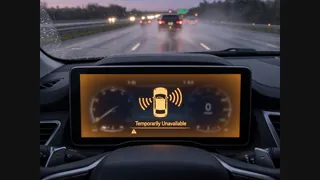
The exact wording differs by model year, instrument cluster and market. Depending on the vehicle, you may see Stop/Start Not Ready, Stop/Start Unavailable, or a message that adds Service Required. A plain not-ready or unavailable message usually reflects a temporary condition. A message that mentions service points to a fault the vehicle has detected. The owner's manual for your specific year is the authoritative reference for which messages your cluster uses and what each one means.
Which Compass models this applies to
Engine Stop-Start is mainly associated with the second-generation Compass, sold from the 2017 model year onward. Availability depends on powertrain, trim and market, and not every Compass is equipped with it. Plug-in hybrid (4xe) versions sold in some markets manage engine shutdown differently from conventional ESS, so this guide applies mainly to non-hybrid gasoline models. If your vehicle has no Stop/Start switch or menu setting, it may not have the feature.
Common reasons the system stays inactive
Stop-start systems in general, including Jeep's, check a set of conditions before allowing an automatic engine stop. The conditions below are typical of these systems. The precise list and thresholds for a given Compass are not supplied here, so check the owner's manual for your model year.
Battery state of charge is too low, or the battery is aged or weak; Engine coolant has not reached normal operating temperature; Outside temperature is very hot or very cold; High climate-control demand, such as maximum air conditioning, heating or defrost; Driver seatbelt is unbuckled, or a door or the hood is open; The vehicle has not exceeded a minimum speed since the last automatic stop; Large steering input, a steep grade, or certain transmission or four-wheel-drive modes; The system has been switched off with the Stop/Start button or menu setting
Short trips are a frequent contributor. Brief drives may not give the engine time to warm up or the battery time to recover charge. In that case the system may stay unavailable even though nothing is wrong.
When it points to a problem
A message that persists on long, warm drives, or that specifically calls for service, suggests the system has detected a fault rather than an unmet condition. The battery is a common factor in stop-start complaints generally, because the system needs a healthy battery for repeated restarts. Many stop-start vehicles also use a battery sensor to monitor charge and condition. If a battery has been replaced with an incorrect type, or the new battery was not registered where the vehicle requires it, the system may stay disabled. Whether a particular Compass requires battery registration, and which battery type it specifies, depends on the model year and should be confirmed with the manual or a dealer. That specific information was not supplied for this guide.
Practical next steps
Confirm the system has not been switched off with the Stop/Start button or setting; Make a longer drive with the engine fully warm, belts buckled, doors closed and moderate climate settings, and see whether the message clears; Have the battery load-tested, especially if it is several years old or the vehicle sits for long periods; If the battery was recently replaced, confirm it matches the specified type and ask whether registration or a sensor reset is required; If a service message appears or the issue persists, have the vehicle scanned for diagnostic trouble codes; Ask a dealer whether any recalls or technical service bulletins cover stop-start behavior for your vehicle
Is it safe to keep driving?
If the only symptom is that the engine no longer shuts off at stops, the practical effect is the loss of the feature's potential fuel savings in stop-and-go traffic. A weak battery, however, can eventually cause starting problems unrelated to stop-start, which is a reason to test it rather than ignore a recurring message. Any other warning lights, slow cranking or electrical faults alongside the message should be diagnosed promptly.
Gaps in this guide
No model-year-specific specifications, official message definitions, battery requirements or test findings were supplied for this article. The guidance above reflects how stop-start systems generally behave. Your Compass owner's manual and a dealer diagnostic scan are the reliable sources for your vehicle's exact behavior.