Car Compass Calibration

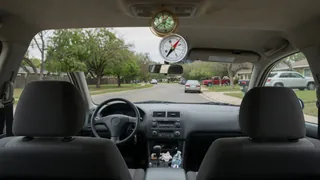
A vehicle compass that consistently points the wrong way or displays an incorrect heading can make navigation confusing. Car compass calibration is the process of clearing magnetic interference errors and teaching the compass module how the vehicle sits relative to magnetic north. This becomes necessary after battery disconnection, tire changes, driving near strong magnets, or when the display setting no longer matches the vehicle orientation. Calibration usually involves a short drive in a circle or accessing a specific display setting, and the exact procedure depends on the vehicle manufacturer.
Essential answer
Car compass calibration corrects the electronic compass so its displayed heading matches the vehicle's true orientation relative to magnetic north. The compass module reads the earth's magnetic field, but nearby steel, wiring, speakers, and even the vehicle's own body can distort that signal. Calibration teaches the module to ignore steady magnetic interference from the vehicle itself, leaving only changes caused by an actual turn. Without this reference direction stored, the display may show north when the vehicle faces east, or it may freeze on a single heading.
The correct calibration procedure varies by make and model, so manufacturer-dependent codes or menu paths require vehicle-specific confirmation. On many vehicles, the process involves pressing and holding a compass or information button until a calibration mode appears, then driving slowly in a complete circle away from large metal structures. A fault code alone is not proof a compass part has failed; it can indicate an interrupted calibration, a communication error, or a stored offset that a fresh procedure can clear. Interpreting the symptom and confirming the correct method comes before replacing components.