Start Stop Light On in a Jeep: What It Means and What to Do
The short answer
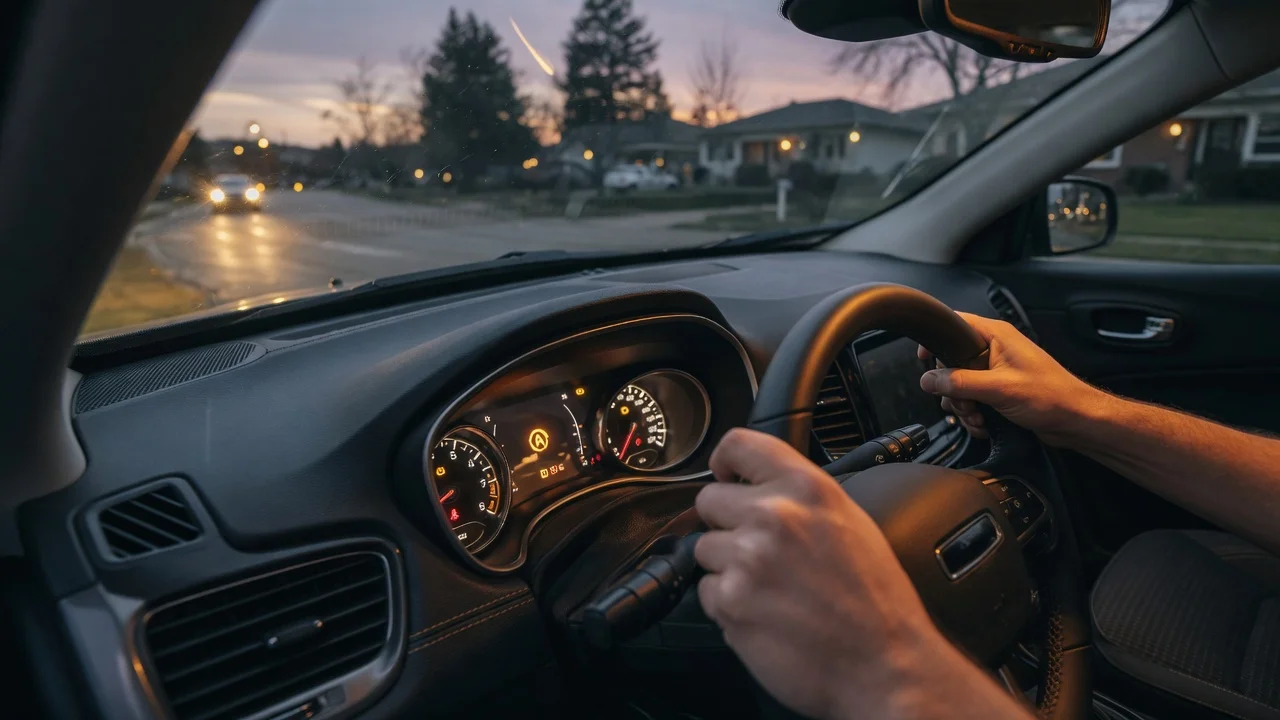
A start-stop light in a Jeep usually relates to the Engine Stop-Start (ESS) system, which shuts the engine off when the vehicle comes to a stop and restarts it when the driver releases the brake. Whether the light signals a problem depends on which indicator is showing. One kind of indicator simply confirms the system is working or has stopped the engine. Another means the system has been switched off with the dashboard button. A third, typically an amber light or a message such as a service warning, points to a fault or a condition that is preventing the system from operating.
The exact icons, colours and messages vary by model, model year, instrument cluster and market. ESS has been fitted to many Jeep models, including versions of the Wrangler, Gladiator, Cherokee, Grand Cherokee, Compass and Renegade, but not every powertrain or trim has it. The owner's manual for the specific vehicle is the authoritative reference for what each symbol means.
Telling the indicators apart
Indicator type | General meaning | Typical action; Status indicator, often an "A" inside a circular arrow | The system is active or the engine is currently auto-stopped | None; this is normal operation; Light on the ESS off button | The driver has deactivated the system | None required; on many models the system re-enables at the next ignition cycle; Amber light or unavailable message | Operating conditions are not met, so the system is temporarily on hold | Usually none; it often clears once conditions change; Service or fault message | The system has detected a fault and is disabled | Have the system diagnosed
Colours and wording differ between clusters, so the table describes the general categories rather than an exact match for every Jeep.
Why the system may not engage
The ESS system is designed to stay inactive when stopping the engine could affect comfort, safety or the battery. A notice that the system is unavailable is often caused by normal conditions rather than a defect. Commonly cited conditions include:
Battery state of charge too low to support a restart; Engine not yet at normal operating temperature; High heating, cooling or defrost demand from the climate system; Very hot or very cold outside temperatures; Driver's seat belt unbuckled, driver's door open, or hood open; Large steering angle, or the vehicle on a steep grade; Four-wheel-drive low range selected, on equipped models; Too short an interval since the last restart, or a stop that is too brief
Which conditions apply, and how they are thresholded, depends on the model and software calibration. The list above is not exhaustive for every Jeep.
When the light points to a fault
If a service message persists across several drives, or appears together with other warnings, the system has likely logged a fault. Battery condition is a frequent factor, because ESS depends on reliable restart capacity. Some Jeep models, notably the JL-generation Wrangler and related applications, use a secondary auxiliary battery to support the stop-start function, and a weak auxiliary battery is a commonly reported cause of start-stop service warnings on those vehicles. This is an owner-reported pattern rather than a documented specification for every vehicle, and other components such as sensors or the main battery can also be involved.
Diagnosis normally involves reading stored trouble codes and testing battery health with suitable equipment. If the vehicle is under warranty, a dealer can confirm whether the repair is covered.
Is it safe to keep driving?
A start-stop fault on its own generally disables only the automatic stop function, so the engine continues to run normally while the vehicle is stopped. However, a start-stop warning linked to battery health can be an early sign of a charging or battery problem that could later affect normal starting. If other warning lights appear, or if the engine is slow to crank, treat the issue as more urgent and have the vehicle checked promptly.
Practical next steps
Identify which indicator is showing and compare it with the owner's manual for the exact model and year; If the button light is on, the system has been switched off by the driver or remains off from a previous setting; press the button to re-enable it if desired; If an unavailable notice appears, check the simple conditions first, such as seat belt, doors, hood, climate settings and engine temperature; If a service message persists, have the battery or batteries tested and any stored fault codes read; Do not assume the auxiliary battery is the cause without testing, even on models where it is a common culprit
Gaps to keep in mind
This guide does not draw on model-specific technical documentation, so it cannot confirm the precise icon, colour or message for a given vehicle, the exact operating thresholds, or which model years use an auxiliary battery. Confirm those details in the owner's manual or with a dealer before acting on a specific diagnosis.