Snow Chains Explained: When to Use Them, How to Fit Them and What They Cost
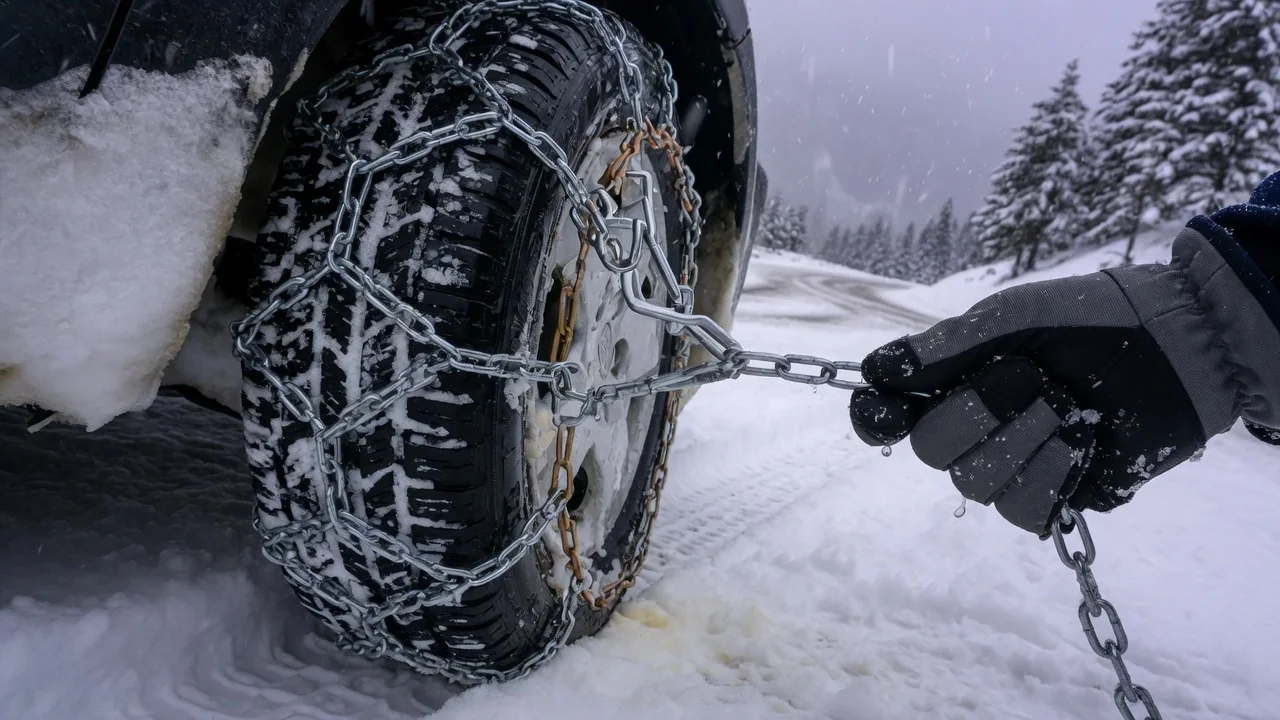
Snow chains can turn a tense mountain drive into a controlled one, but only if you know what they are, when to use them and how to put snow chains on correctly. This guide explains how tire chains work, where chain controls apply on trips to places like Big Bear Lake or Yosemite National Park, what drives snow chains prices, and which alternatives or rentals make sense.
What Snow Chains Are and How They Grip Snow
Snow chains are removable traction devices that wrap around a tire's tread and sidewalls, held in place by inner and outer fasteners and a tensioner. Ladder chains run straight cross links over the tread, diamond or zigzag patterns keep metal in more continuous contact with the road, and low-profile cable chains use steel cable wrapped in rollers for vehicles with limited space. Whether you call them tire chains or, in British spelling, chains for tyres, the purpose is the same.
They work because rubber tread cannot cut into hardpacked snow, while steel links press through the surface and create edges that resist sliding. That added bite helps with acceleration, braking and cornering grip. Chains only help the wheels wearing them, which is why the drive wheels matter most. The trade-offs are noise, vibration and a much lower safe speed, and running on bare pavement can wear the road, break links and shorten the life of the chains.
When Snow Chains Are Recommended or Required, Including Mountain Trips Like Big Bear
A recommendation means conditions favor chains; a posted chain control means the law requires them, or an approved equivalent, to continue. Rules and enforcement vary by state and road, so check official road condition and chain control updates right before leaving for Big Bear Lake, Yosemite National Park or any mountain driving destination, and carry chains even when the forecast looks mild. Some 4WD and AWD vehicles on snow-rated tires may be exempt at certain control levels yet still be required to carry chains, so read the posted requirements.
When shopping a brand such as SCC, judge it the same way as any other chain: it must be listed for your exact tire size, meet your vehicle's clearance needs and come with clear manufacturer guidance. The owner's manual is the final authority. It may call for SAE Class S clearance, meaning low-profile chains only, and some vehicles with tight wheel well clearance restrict or prohibit chains entirely because links can strike brake lines, suspension parts or bodywork.
How to Put Snow Chains on Tires Safely
Learning how to put snow chains on tires is far easier in a dry driveway than on a freezing shoulder, so do a practice fitting at home and confirm the chain size matches the size printed on the tire sidewall. On the road, pull completely off the roadway or into a designated chain-up area, set the parking brake, switch on the hazard lights, and wear gloves and visible clothing. Stay out of the traffic side whenever possible.
The general sequence is to drape the chain over the tire, connect the inner fastener behind the wheel, then the outer one, center the chain on the tread and tension it. Designs differ, so the chain maker's instructions take priority. Drive a short distance, then stop to re-check and retighten. Stop immediately if you hear slapping or links striking the bodywork. Keep under the speed the chain maker specifies, avoid spinning the wheels, and remove the chains once roads are clear.
Do You Need Snow Chains on All Four Tires?
Chains normally go on the drive wheels: the front pair on front-wheel-drive vehicles and the rear pair on rear-wheel-drive vehicles, because those tires deliver engine torque to the road. With 4WD and AWD the answer is less obvious, so follow the owner's manual, which may name a specific axle or recommend chains on all four wheels. Guessing can stress the driveline or put chains where clearance was never designed for them.
Chaining a single axle changes handling. Front-only chains can leave the rear end willing to slide under braking or in a downhill curve, while rear-only chains may leave the steering tires with less bite than the driven ones. Fitting all four wheels balances steering and braking grip, but it means buying two sets, and clearance limits may apply differently front and rear, since steering wheels sweep through more space as they turn.
Do Snow Chains Work on Ice?
Snow chains do work on ice in the sense that they generally give far better grip than unchained tires, because the metal links concentrate the vehicle's weight onto small contact points that dig into ice and hardpacked snow. Design matters: patterns that keep more chain in contact with the surface, or cross members shaped with extra edges, tend to hold more consistently than widely spaced links that leave gaps of rubber between them.
They do not make icy roads safe. Smooth glare ice, steep grades and abrupt steering, braking or throttle inputs can still start a skid, and stopping distances remain much longer than on dry pavement. Drive slowly, make every input gentle and leave extra following distance so that you can slow down without hard braking. When conditions exceed what chains can manage, the right decision is to wait, turn back or stay off the road.
How Much Snow Chains Cost and What Drives the Price
How much snow chains cost depends less on brand name than on a handful of design factors. Tire size sets the amount of material, while chain type separates basic steel link sets from cable chains and textile covers. Hardened alloys, self-tensioning mechanisms and low-clearance designs add to the price. Larger truck and SUV tires often need heavier, more expensive chains, and equipping all four wheels doubles the outlay because it takes two sets rather than one.
Frequency of use should guide the choice between buying and renting. Someone who makes one winter trip may be better served by snow chains rentals or by paying an installer at a chain-up area, while regular mountain drivers tend to get better value from owning a set of snow tire chains. Beware false economy: the wrong size or poor quality brings a bad fit, possible damage to wheels or bodywork, and the expense of buying again.
Snow Chain Rentals, Rental Cars and Alternatives to Chains
Rental cars and snow chains are a tricky combination, because rental companies often limit or prohibit chain use. Read the rental agreement and ask the rental location before fitting chains or heading into chain-control areas. Ask about vehicles with AWD or snow-rated winter tires, check whether shops near the mountains rent or sell chains in the right size, and understand who is liable if a chain damages the car.
Legitimate alternatives include winter tires, textile snow socks and cable chains, each easier to live with than heavy link chains, though whether an alternative to snow chains satisfies a posted control depends on local rules. DIY snow chains made from rope, zip ties or improvised hardware are a poor idea: they can snap, tangle around brake or suspension components, and fall short of legal requirements. Purpose-built, correctly sized traction devices are the safer choice.