Shop for Brake Rotors: What to Check Before You Buy
The short answer: buy the rotor that exactly matches your vehicle's year, make, model, trim and brake package. Then choose a type and quality tier that suits how you drive, and replace rotors in pairs on the same axle along with fresh brake pads. That holds whether you are browsing AutoZone brake rotors, comparing Bosch brake rotors with other brands, or shopping elsewhere. The main exception is when your vehicle has an optional brake package, such as a towing, heavy-duty or performance setup. Those packages can use different rotor sizes than the base model, so a lookup by model alone can return the wrong part.
Brake Disc vs Rotor: Is There a Difference?
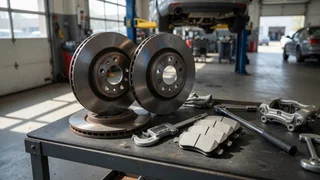
No. A brake disc and a brake rotor are the same part. It is the flat metal disc that turns with the wheel and that the brake pads clamp against to slow the vehicle. In the US, "rotor" is the usual term in parts catalogs. "Brake disc" is more common in other markets and in some manufacturer literature. If you search for either term, you are looking at the same component.
Confirm Vehicle Fitment First
Fitment matters more than any other choice. A rotor of the wrong diameter, thickness, offset or bolt pattern either will not install or will not work correctly with your caliper (the clamp that holds the pads). Before you compare brands or prices, gather these details:
Model year, make, model and trim, exactly as listed on your registration or the door-jamb label; Engine and drivetrain (for example, 2WD vs 4WD or AWD), because these can change brake hardware; Any brake, towing, police, heavy-duty or performance package; Whether you need front or rear rotors; they are usually different parts; Your vehicle identification number (VIN), which many parts lookups can use to narrow results; The part number or dimensions stamped on your current rotor, if it is original or a known-good replacement
If a store's vehicle lookup returns more than one rotor for your car, do not guess. The difference is usually a package or a production split within the model year. Compare rotor diameter against your existing part, or ask the counter staff to check by VIN.
Rotor Types and Who They Suit
Type | What it is | Typical fit; Solid | A single plate of metal with no internal cooling vanes | Rear axles and lighter vehicles where the original design is solid; Vented | Two faces joined by internal vanes that move air and shed heat | Most front axles; the standard choice for everyday driving; Slotted | Vented rotor with grooves cut into the faces | Drivers who tow, carry heavy loads or brake hard often; may add some pad wear and noise; Drilled, or drilled and slotted | Holes, and sometimes slots, through the faces | Mainly appearance or specific performance uses; not necessary for typical commuting
In most cases, replace a rotor with the same basic design your vehicle came with. A vented front rotor should be replaced with a vented rotor. Slotted or drilled rotors are an optional upgrade, not a requirement. For normal driving, a quality plain vented rotor usually makes more practical sense than a performance-styled one.
Coatings and Finish
Many rotors carry a protective coating on the hat (the center mounting section), the edge and the cooling vanes. The coating slows rust on surfaces the pads never touch. This mostly affects appearance, especially behind open-spoke wheels, and helps longevity in wet or salted-road climates. Uncoated rotors often ship with an oily anti-rust film that must be cleaned off with brake cleaner before installation. Coated rotors usually need less prep, but read the packaging. The coating on the braking surface wears off during the first stops, which is normal.
Choosing Among the Best Brake Rotor Brands
No single brand is the best brake rotor for every vehicle. Quality varies by product line, not just by name. Established brands such as Bosch, retailer house brands, and original-equipment suppliers all typically sell several tiers. When comparing options, look at these points rather than the label alone:
Construction: whether the rotor matches the original design, such as vented vs solid and the same dimensions; Corrosion protection: coated vs uncoated, which matters more in wet or winter-salt regions; Intended use: daily driving, towing and hauling, or performance; Warranty terms: length, and what they actually cover, since many exclude normal wear; Consistency of reviews for your specific vehicle, not just the brand overall; Whether the rotor is sold alongside a matched pad line from the same brand
Entry-level rotors can be reasonable for an older vehicle you plan to keep only a short time. If you drive in heavy traffic, live in a hilly area, tow, or keep vehicles for many years, a mid or upper tier with good corrosion protection is usually the better value.
Buying Rotors at AutoZone or Another Parts Store
Large parts retailers, AutoZone included, let you enter your vehicle and filter rotors by fitment, then compare several brands and tiers side by side. To get the most out of that process:
Enter the full vehicle details, including trim and engine, and add the VIN if the option exists; Read the fitment notes on each listing; they often name the brake package or a production date range; Compare rotor diameter in the listing against your current rotor before buying; Check stock at your local store if you need the part the same day, and confirm both rotors for the axle are available; Ask about the return policy for unopened parts in case the fitment turns out wrong; Check whether the store offers tool loans for items like a caliper piston tool or a torque wrench
Replace or Resurface? Check the Wear Limits
Every rotor has a minimum thickness, often stamped on the hat or edge as "MIN TH" or similar. Below that limit, the rotor cannot absorb heat or resist warping properly and must be replaced. If your rotors are above the limit and only lightly grooved, resurfacing on a brake lathe may be possible. However, many modern rotors are thin enough that machining leaves little margin, and new rotors are often competitively priced. Replace rather than resurface if the rotor has:
Thickness at or near the stamped minimum; Deep scoring or a pronounced lip at the outer edge; Cracks, heat spots or blue discoloration; Vibration in the brake pedal or steering wheel that returns after resurfacing; Heavy rust pitting on the braking faces
Pair Rotors With the Right Brake Pads
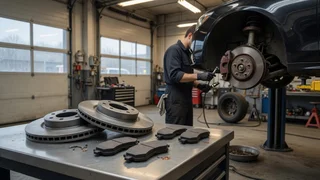
Install new pads whenever you install new rotors. Old pads have worn to the shape of the old rotor's surface and will not seat evenly on a fresh one. Choose a pad friction material that matches your driving:
Ceramic: generally quieter, with lower dust; a common choice for daily drivers; Semi-metallic: often better heat tolerance for towing, hauling or spirited driving; may be noisier and dustier; Organic: softer and quiet, but tends to wear faster; usually found on lighter vehicles
Replace or reuse hardware according to its condition. This includes abutment clips, anti-rattle springs and caliper slide pins. Worn hardware causes noise and uneven pad wear, even with new parts.
After Installation
After installation, clean the rotor faces of any protective oil and torque the caliper bracket bolts and lug nuts to your vehicle's specification. Torque the lug nuts in a star pattern; uneven lug torque is a common cause of rotor runout and pedal pulsation. Pump the brake pedal before driving to seat the caliper pistons. Then follow the pad maker's bed-in procedure, typically a series of moderate stops from speed without coming to a full stop, to transfer an even layer of friction material onto the rotor. Check the brake fluid level, since pushing the caliper pistons back raises it. If the fluid is dark or past its service interval, plan a flush.
Quick Checklist Before You Buy
Year, make, model, trim, engine and drivetrain confirmed; Brake package identified, and front vs rear selected; Rotor design matches the original (vented or solid, correct diameter); Tier chosen for your driving, climate and how long you will keep the vehicle; Rotors bought in an axle pair, with matching new pads and needed hardware; Return policy and warranty terms understood; Torque specs and bed-in procedure on hand before installation