Brake Pad and Rotor Replacement Cost: What Drives the Price and How to Compare Quotes
There is no single price for a brake pad and rotor job. The total depends on three things: the parts your vehicle requires, the labor time listed for your model, and the shop's hourly rate. Rotor replacement cost changes the most from one vehicle to another. Pads alone are usually the cheaper part of the job, and adding rotors raises both the parts bill and, in many cases, the labor time. The biggest swing factor is your exact vehicle fitment. Model year, trim, brake package and whether the job is front, rear or both can change the quote far more than the choice of shop.
The short answer
Expect the cost to be quoted per axle, meaning both front wheels or both rear wheels together. Brakes are always serviced in pairs on the same axle so braking stays even side to side. A typical quote combines parts, labor and sometimes a shop supplies fee. Three conditions push the price up: you need new rotors rather than pads alone, your vehicle has large or performance-oriented brakes, or the shop finds a related problem such as a sticking caliper or old brake fluid. If you get a quote that seems unusually high or low, ask which of these items it includes before comparing it with others.
What a pad and rotor job includes
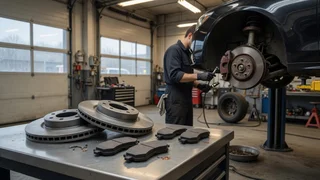
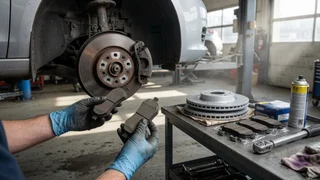
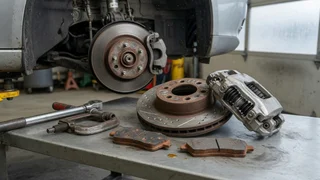
Brake pads are the replaceable blocks of friction material that clamp against the brake rotors, the metal discs that turn with the wheels. The caliper is the hydraulic clamp that holds the pads and squeezes them when you press the pedal. A standard pad and rotor replacement usually covers these steps:
Removing the wheels and the caliper, then removing the old pads and rotors; Cleaning the caliper bracket and the hub mounting surface; Installing new hardware such as abutment clips or shims, if supplied or quoted; Lubricating the caliper slide pins and pad contact points; Installing the new rotors and pads, then reinstalling the caliper and wheels; Torquing the wheel fasteners to specification; Bedding in the new pads, either on a test drive or with instructions for the owner
Some quotes include all of this, and others list hardware, lubricant or the test drive separately. Ask for an itemized estimate so you know what you are paying for.
What drives the parts cost
Parts prices vary with vehicle size, brake design and quality tier. Heavier vehicles, trucks and SUVs generally use larger rotors and pads than compact cars, and vehicles with optional performance or towing brake packages often use different, more expensive components than the base model.
Rotor design: plain solid rotors, vented rotors, and drilled or slotted rotors differ in price. Two-piece or carbon-ceramic rotors on high-performance models cost far more than conventional cast iron rotors. Rotor coating: some rotors have a protective coating on the non-braking surfaces to slow rust. This can raise the price, but it can help appearance and longevity in wet or salted-road climates. Pad compound: organic pads are generally quiet and inexpensive but wear faster. Semi-metallic pads tend to handle heat well but can be noisier and dustier. Ceramic pads are typically quieter and produce less visible dust, usually at a higher price. Brand and tier: original-equipment parts, branded aftermarket parts and economy parts can all fit the same vehicle while differing in materials, noise control and lifespan. Hardware and sensors: some vehicles use electronic pad wear sensors that are meant to be replaced with the pads, which adds to the parts bill.
Labor cost to replace brake pads and rotors
Most shops calculate labor by multiplying a published labor time for your vehicle by their hourly rate. The labor time, often called book time, is a standard estimate of how long the job should take. Some shops charge a flat price per axle instead. Hourly rates differ by region and by shop type. Dealerships, independent repair shops and chain service centers often price labor differently.
Replacing rotors along with pads usually adds labor compared with a pads-only job, because the caliper bracket must come off and the hub surface should be cleaned. Several situations can add more time:
Rotors rusted or seized to the hub, which can take extra time to remove; Rotors held on by retaining screws that are stuck or stripped; Rear brakes with an electronic parking brake, which may require a scan tool to retract the caliper piston; Rear disc brakes with a separate drum-style parking brake built into the rotor hat; Corroded or seized caliper slide pins that need cleaning or replacement; Front hub designs where the rotor sits behind the hub, so the hub must be removed to replace the rotor
If the labor quote looks high, ask whether your vehicle has one of these designs. That is often the explanation, and it will apply at any shop.
Do you actually need new rotors?
Not every pad replacement requires new rotors, and this decision has the biggest effect on the bill. Every rotor has a minimum thickness, usually stamped on the rotor itself, and a rotor worn to or below that wear limit should be replaced. Thinner rotors hold less heat and can be more prone to warping and vibration.
Rotors are commonly replaced when a shop finds one or more of these conditions:
Thickness at or near the minimum specification; Deep grooves or scoring, often from pads worn down to the metal backing; Cracks, heat spots or blue discoloration from overheating; Excessive runout or thickness variation, which often feels like pedal pulsation or steering wheel shake when braking; Heavy rust or a pronounced lip at the outer edge of the braking surface
Resurfacing, also called turning or machining, shaves a thin layer off the rotor to restore a flat surface. It can be an option when the rotor is still well above minimum thickness after machining. Many shops now replace rotors instead because replacement parts are often affordable and machining removes material the rotor needs for heat capacity. If a shop recommends new rotors, it is reasonable to ask for the measured thickness and the minimum specification so you can see the margin for yourself.
Related repairs that can change the total
Some add-ons are legitimate and some are optional. Knowing the difference helps you read a quote.
Brake fluid service: brake fluid absorbs moisture over time, which lowers its boiling point. Many manufacturers specify a replacement interval in the owner's manual. A fluid flush can be done at the same visit but is a separate service with its own cost. Caliper replacement: worth doing if a caliper is leaking, has a seized piston, or causes uneven pad wear. A caliper in good working order does not need to be replaced just because the pads and rotors are. Caliper slide pin service: cleaning and lubricating or replacing the slide pins helps the new pads wear evenly. Brake hoses: cracked, swollen or leaking flexible hoses should be replaced. Hoses in good condition can stay. Wear sensors: if your vehicle has them and they have been triggered, they usually need replacing.
Uneven wear between the inner and outer pad, or between the left and right sides, is a common sign of a caliper or slide pin problem. Fixing it helps the new parts last.
Confirm vehicle fitment before you buy or approve
Brake parts are not universal within a model name. The same model can use different rotor diameters, thicknesses or caliper designs depending on model year, trim, engine, drivetrain and optional packages such as towing or sport brakes. Front and rear brakes almost always use different parts. Vehicles sold in different markets can also differ.
Use your VIN when ordering parts or requesting a quote, so the parts match the vehicle's original build; Check whether your vehicle has an optional brake package; it often appears on the original window sticker or build sheet; Confirm whether the quote is for the front axle, the rear axle or both; If the vehicle has rear drum brakes, rotor pricing applies only to the front
How to compare brake quotes
Two quotes for the same vehicle can differ a lot simply because they cover different work. Line them up item by item before deciding.
What to check | Why it matters; Front, rear or both axles | Front brakes usually cost more and wear faster; quotes for different axles are not comparable; Pads only or pads and rotors | Adding rotors raises both parts and labor; Rotor replacement or resurfacing | Machining and replacement are priced differently; Part brand and pad compound | Quality tier affects noise, dust and lifespan as well as price; Hardware, sensors and lubricant | Some quotes include them; others add them later; Labor method | Book time multiplied by the hourly rate versus a flat per-axle price; Add-on services | Fluid flush, calipers or hoses should be listed separately with a stated reason; Shop fees and taxes | Supplies and disposal fees can change the final total; Warranty | Coverage on parts and labor varies by shop and part line
DIY versus a shop
Doing the job yourself removes the labor charge, which can be a large share of the total. It does require proper jack stands, a torque wrench, the right sockets and, on some vehicles, a scan tool to service an electronic parking brake. Brakes are a safety-critical system. If you are not confident in properly torquing the fasteners, servicing the caliper slides and bedding in the pads, a shop is the safer choice. A middle option is to buy quality parts yourself and ask a shop to install them, though many shops will not warranty customer-supplied parts and some decline the work.
Your next step
Ask for an inspection that includes measured pad thickness and rotor thickness compared with the minimum specification, then request an itemized quote by axle. With those numbers in hand, you can decide whether you need pads alone or pads and rotors, compare shops on equal terms, and judge whether any add-on services are justified for your vehicle.