Shop for Brake Pads and Calipers Together: What to Check Before You Buy
Brake pads and calipers are often sold side by side and sometimes bundled, but most brake jobs do not require new calipers. Pads wear out on a regular schedule. A healthy caliper can last through several sets of pads. Buying both together makes sense when the caliper has a real problem, when you are refreshing an entire axle on an older or high-mileage vehicle, or when a loaded caliper kit fits your plans and budget better than separate parts. This guide covers how to tell which situation you are in and what to confirm before you order.
The short answer
Replace pads alone if the calipers slide freely, do not leak, apply and release evenly, and show no damage. Buy pads and calipers together if a caliper is seized, sticking, leaking fluid, has a torn piston boot with corrosion behind it, has stripped or damaged threads, or is causing uneven pad wear. Calipers are normally replaced in pairs on the same axle so braking stays balanced from side to side. Rear calipers with an integrated parking brake, mechanical or electronic, deserve extra attention because their design and fitment vary more than typical front calipers.
How pads and calipers work together
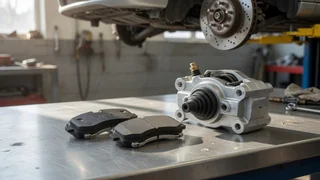
The caliper is the hydraulic clamp that sits over the brake rotor. When you press the pedal, brake fluid pushes one or more pistons in the caliper, and those pistons squeeze the brake pads against the rotor. The pads carry the friction material, the compound that actually wears away as it converts motion into heat. Most passenger vehicles use floating calipers, which slide on guide pins and have pistons on one side. Some performance and heavier-duty applications use fixed calipers with pistons on both sides.
Because the parts depend on each other, a failing caliper usually shows up as a pad problem first. A sticking piston or seized slide pin can keep one pad dragging against the rotor, wear it much faster than its partner, overheat the rotor, and make the vehicle pull to one side. Putting new pads into a caliper with this kind of fault tends to repeat the same wear pattern.
Signs the calipers should be replaced along with the pads
One pad is worn noticeably more than the other on the same wheel, or one side of the axle is worn far more than the other. The pad is tapered, thicker at one end than the other, which points to slide pin or bracket problems. The vehicle pulls to one side when braking or drifts while coasting. A wheel is much hotter than the others after a drive, or you notice a burning smell from one corner. Brake fluid is wet around the caliper, piston or bleeder screw, or the fluid level drops with no other leak in the system. The piston dust boot is torn and the piston surface shows rust or pitting. The piston will not retract smoothly when the pads are changed. Slide pins are seized, or the bleeder screw is seized or broken off. The caliper body or mounting threads are cracked, corroded through or damaged.
A spongy pedal on its own is not proof of a bad caliper. Air in the lines, old brake fluid, a worn master cylinder or a leaking hose can cause the same feel. Find the cause before buying parts.
When buying both together can still make sense
Even with no obvious failure, some owners replace calipers during a pad job. Common reasons include a vehicle with high mileage or a history of road salt exposure, where seized pins and corroded pistons are likely soon; original calipers that are already showing early leaks or sticky slides; a planned full axle refresh with new rotors, pads, calipers and fresh fluid at the same time; and wanting a known starting point on a newly purchased used vehicle. Whether that is worth it depends on how long you plan to keep the vehicle and the condition of the existing parts. It is a judgment call, not a requirement.
Confirming vehicle fitment
Brake parts are one of the areas where year, make and model alone may not be enough. The same model can use different brake sizes depending on trim, engine, drivetrain, towing package, performance package or production date. Confirm these details before you order.
Model year, and production month if the parts catalog splits a year. Market and trim level, since US-market vehicles can differ from other regions. Engine and drivetrain, such as two-wheel or all-wheel drive. Optional brake, towing, heavy-duty or performance packages. Front or rear axle, and left or right side for calipers. Rotor diameter and thickness if the catalog lists more than one size. Parking brake type on the rear: drum-in-hat, caliper-integrated mechanical, or electronic parking brake. Whether the caliper comes with or without the mounting bracket.
The VIN is the most reliable way to narrow fitment when a parts lookup offers it. If the catalog shows two or more options for your vehicle, compare the old parts to the listing photos and specifications, or check the brake package details on the vehicle, before choosing. When differences cannot be resolved from the listing, ask the seller to confirm against the VIN instead of guessing.
Loaded, semi-loaded and bare calipers
Caliper listings use terms that affect what you actually receive. Exact contents vary by brand and seller, so read the box contents on the specific listing.
Type | What it usually includes | Who it suits; Bare or unloaded caliper | Caliper body and piston only | Buyers who already have pads, hardware and a bracket they plan to reuse; Caliper with bracket | Caliper plus mounting bracket | Jobs where the bracket is corroded or its slide pins are seized; Loaded caliper | Caliper, often with bracket, pads and hardware already installed | Buyers who want matched parts in one purchase and a faster install
A loaded caliper is the most literal way to shop for brake pads and calipers together, but the included pads may not be the friction material you would otherwise pick. If you have a preference for pad type or noise and dust behavior, check which compound comes in the kit or buy the caliper and pads separately.
New versus remanufactured calipers
Many replacement calipers are remanufactured: a used core is cleaned, inspected, and rebuilt with new seals, boots and other wear parts. New calipers are built from new castings. Both can work well when made to a good standard. Remanufactured units are commonly sold with a core charge, a refundable deposit returned when you send back your old caliper. Check the seller's core return conditions, such as whether the old caliper must be intact and drained, before you remove it. Finish matters too: coated or plated calipers resist corrosion better than bare metal, which helps in climates where roads are salted.
Choosing brake pads
Pads are grouped mainly by friction material. Specific behavior depends on the formulation, so treat these as general tendencies rather than guarantees.
Friction material | General characteristics | Typical use; Organic (NAO) | Quiet and gentle on rotors; tends to wear faster and tolerate less heat | Light-duty everyday driving where the original equipment used it; Semi-metallic | Strong heat tolerance and bite; can be noisier and produce more dust and rotor wear | Heavier vehicles, towing, hard or repeated braking; Ceramic | Quiet, low visible dust, consistent feel in normal driving | Daily driving on many passenger cars and crossovers
A sensible default is to match the friction type the vehicle came with, unless you have a clear reason to change, such as regular towing or complaints about dust or noise. Also check whether the pads include new shims, clips and slide pin grease, whether they have a mechanical wear indicator, and whether your vehicle needs an electronic wear sensor that should be replaced with the pads.
Don't forget the rotors
Pads should contact a flat, sound rotor surface. Every rotor has a minimum thickness, usually stamped on the rotor itself or listed in service information. A rotor worn below that limit, or one that is cracked, deeply scored, heat-spotted or causing pedal pulsation, should be replaced. If a caliper has been dragging, the rotor on that wheel has often been overheated and may need replacement as well. Many owners now replace rotors with pads rather than machining them, especially when the rotor is close to its wear limit.
Brake fluid and bleeding
Replacing a caliper opens the hydraulic system, so the brakes must be bled afterward to remove air. Use the brake fluid type specified for your vehicle, typically shown on the reservoir cap or in the owner's manual, and do not mix incompatible fluid types. Brake fluid absorbs moisture over time, so a caliper replacement is a convenient moment to flush old fluid if it is due. Vehicles with ABS or stability control may have specific bleeding procedures. Some electronic parking brake systems need a scan tool or a set procedure to retract the rear pistons for service.
Buying checklist
Diagnose first: confirm whether the calipers are actually faulty or only the pads are worn. Buy per axle: pads as an axle set, calipers as a left and right pair. Verify fitment by VIN, trim, brake package and rear parking brake type. Decide between bare, bracketed or loaded calipers based on what you will reuse. Choose a friction material that matches your driving and the original equipment. Check rotor thickness and condition against the minimum marked on the rotor. Include new hardware, slide pin grease, wear sensors if fitted, and enough of the correct brake fluid. Review core charge terms and the warranty before removing old parts. Plan for bleeding the brakes and, if needed, a parking brake service procedure.
Safety and when to use a shop
Brake work affects every stop the vehicle makes. Pads and rotors are a common do-it-yourself job, while caliper replacement adds hydraulic work and bleeding that must be done correctly. If you are unsure how to bleed the system, are working on a vehicle with an electronic parking brake, or have a pedal that feels soft or sinks after the repair, have a qualified technician inspect it before driving. After any brake service, bed in new pads according to the pad maker's instructions and test the brakes at low speed first.
Bottom line
Shop for brake pads alone when the calipers are healthy, and buy pads and calipers together when a caliper is sticking, leaking or damaged, or when you are deliberately refreshing a whole axle. In either case, confirm fitment by VIN and brake package, check rotor wear limits, choose friction material that suits your driving, and budget for fresh brake fluid and a proper bleed whenever a caliper is replaced.