Shop for brake pads and calipers together
The short answer
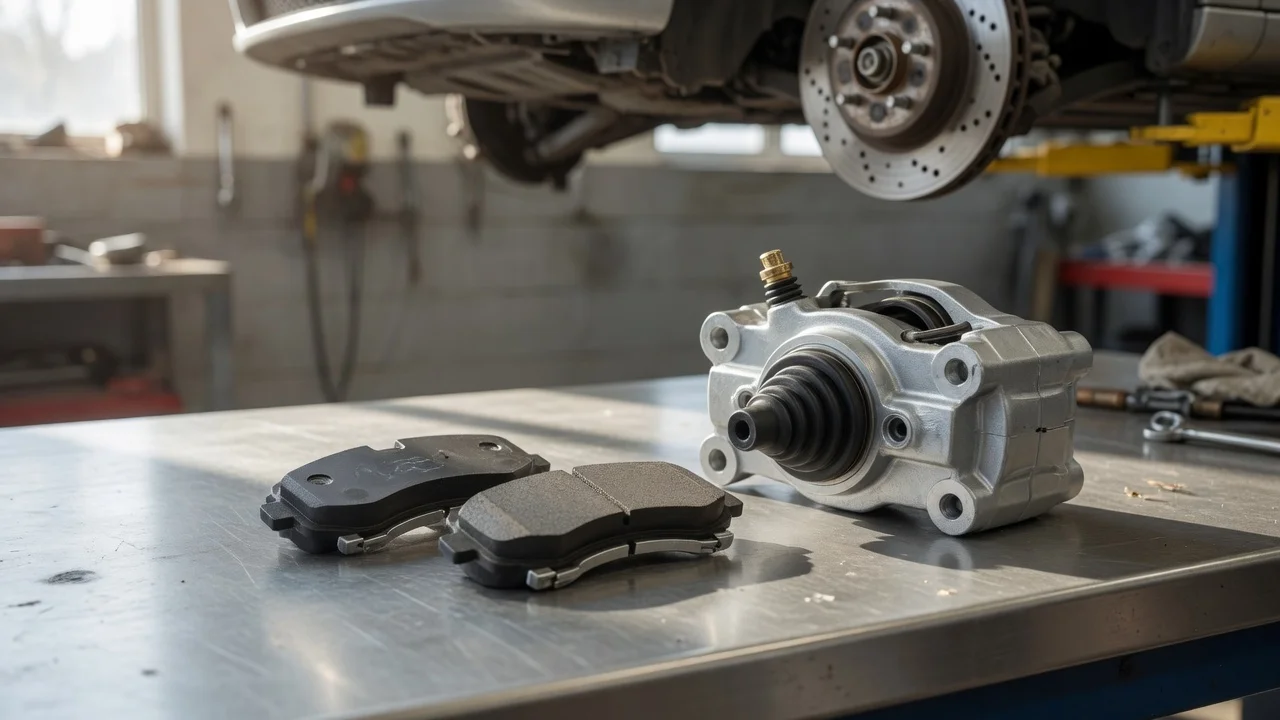
Buy pads and calipers together only when the calipers actually need replacing. Calipers are not routine wear items, so a normal pad change does not require them. If a caliper is sticking, leaking or damaged, replacing it with pads in the same job makes sense. Buying both as a matched set also helps, because the pads must fit the exact caliper and bracket on your vehicle. The answer changes in two cases: when your model year, trim or brake package uses a different caliper than the base car, and when your calipers are healthy. In the first case, fitment must be confirmed before you buy anything. In the second, new pads and fresh hardware are usually enough.
Signs the calipers should be replaced with the pads
A caliper is the clamp that holds the brake pads and pushes them against the rotor (the disc that turns with the wheel) when you press the pedal. Look for these signs when deciding whether to replace calipers along with pads:
Brake fluid leaking around the piston, which is the part that pushes the pad, or at the bleeder screw. A piston that is seized, retracts poorly or will not push back smoothly. Slide pins that are seized or badly corroded and do not free up after cleaning. Uneven pad wear, such as one pad much thinner than its partner or one side of the axle wearing faster. The vehicle pulls to one side when braking, or one wheel runs noticeably hotter or drags. A torn piston dust boot with corrosion behind it. A stripped or seized bleeder screw, or damaged mounting threads.
If none of these apply, a caliper can usually be reused. Clean and lubricate the slide pins and fit new abutment clips, which come with many pad sets.
Confirming that pads and calipers fit your vehicle
Pads are made for a specific caliper and bracket design. Fitment can differ within a single model name, so match parts to your exact vehicle rather than the model alone. Check each of the following:
Model year, including mid-year changes. Some vehicles changed brake parts partway through a model year. Market or region, because export and domestic versions can use different brake hardware. Trim and brake package. Sport, performance, towing, heavy-duty and police or fleet packages often use larger or different calipers. Powertrain and drivetrain. Engine choice, hybrid or electric versions, and 2WD versus AWD can change the brake setup. Front versus rear axle, and left versus right side. Calipers are often side-specific because the bleeder screw must sit at the top. Rear calipers with an electric parking brake. These have a motor and need specific replacement parts and a service procedure. The part numbers cast or stamped on your current calipers. Use these to confirm a match when catalog listings branch into several options.
Entering your VIN (vehicle identification number) in a parts catalog or giving it to a dealer parts counter is the most reliable way to settle these differences. If a listing offers several choices for your model and you cannot tell which one you have, compare against the part numbers or rotor size on the car itself before buying. Do not guess.
Loaded or bare calipers
Calipers are sold in two common forms. A loaded caliper arrives with pads and mounting hardware already fitted. A bare caliper is the caliper alone, and you supply the pads separately. Many replacement calipers are remanufactured units sold with a core charge, a refundable deposit returned when you send back the old caliper. Check the seller's core terms before you buy.
Option | Advantages | Trade-offs; Loaded caliper | Pads and hardware are matched to the caliper by the supplier; fewer separate parts to source; quicker installation | Limited or no choice of pad compound or brand; check what pad type is included; Bare caliper plus separate pads | Free choice of pad compound and brand; can reuse a recently fitted set of good pads if appropriate | You must confirm that the pads and hardware fit the caliper yourself; more parts to order
Replace by axle, not by corner
Pads are always replaced as a set for both wheels on the same axle. Calipers are also commonly replaced in pairs on an axle so braking stays balanced from side to side, especially when the calipers are of similar age. Replacing a single caliper is sometimes done after isolated damage. Uneven braking or pulling afterward is a sign the two sides are not performing alike.
Other parts and work to plan for
Rotors: inspect them for minimum thickness, scoring, cracks and runout (wobble) against the vehicle's specifications. Replace or resurface them if they are out of specification. Hardware: new abutment clips, slide pin boots and the correct brake lubricant, if not included with the parts. Copper or crush washers for banjo-style brake hose fittings, which are typically single-use. Brake hoses: inspect for cracks, bulging or internal collapse while the caliper is off. Brake fluid: opening the hydraulic system to swap a caliper means the brakes must be bled to remove air. Use the fluid type specified for your vehicle. Electric parking brake service mode: many vehicles need a scan tool or a set procedure to retract the rear calipers.
Brakes are a safety-critical system. Have a qualified technician do the job or inspect it if you are unsure about any step, particularly bleeding the brakes or servicing an electric parking brake.
Choosing a pad type
When you buy bare calipers, or loaded calipers with a choice of pads, the pad compound is the main decision:
Ceramic pads are generally chosen for low dust and quiet operation in everyday driving. Semi-metallic pads are often chosen for heavier loads, towing or repeated hard braking, at the cost of more dust and noise. Organic (non-asbestos organic) pads are typically softer and quieter but tend to wear faster.
Check what the vehicle maker originally fitted. Make sure any alternative pad is listed for your exact brake setup.
What this guide cannot confirm
No specific vehicle, model year, market or trim was given here. That means this guide cannot confirm which calipers or pads fit your car, whether your model has more than one brake package, or what the parts cost. It also cannot cover warranty, core charge or availability terms from any seller. Confirm these with a VIN-based parts lookup, the markings on your existing calipers or a dealer parts department before ordering.