Ultimax2 Brake Pads: What to Check Before You Buy
The short answer
Whether Ultimax2 brake pads suit your vehicle depends on two things: the exact pad set listed for your vehicle and the friction material that set uses. The information available here does not include the manufacturer, published specifications, test results, pricing or a fitment catalog for the Ultimax2 line. Treat the brand name as a starting point. Confirm the specific part number against your vehicle before you buy.
The answer changes most when your vehicle has more than one brake option. Some vehicles of the same model year use different brake systems depending on trim, powertrain, towing or performance packages, or the market where the vehicle was sold. In that case, a pad that fits one version may not fit another.
Confirm fitment for your exact vehicle
Fitment means the pad's shape, backing plate and hardware match your brake caliper. Gather these details before you search a parts catalog:
Model year, make and model; Trim level and any brake-related package, such as heavy-duty, towing or sport; Engine and drivetrain, such as front-wheel drive, all-wheel drive, hybrid or electric; The market where the vehicle was originally sold; Which axle you are servicing: front or rear; Rear brake type, such as disc, drum, or disc with an integrated parking brake
If a catalog lists more than one Ultimax2 part number for your vehicle, the difference usually depends on one of these details. Your vehicle identification number (VIN) or the brake caliper itself can settle which version you have. The most reliable check is to compare the new pads with the old ones you remove, before you install anything.
Identify the friction material
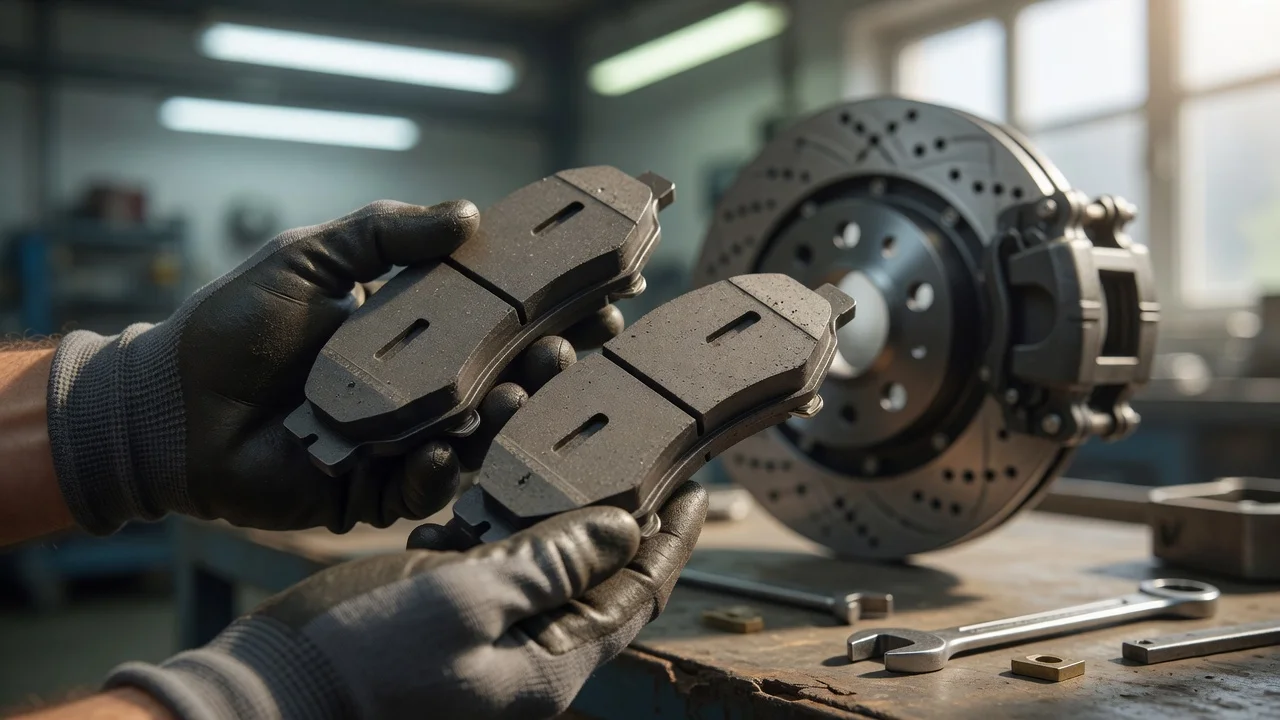
The friction material is the compound bonded to the pad's steel backing plate. It largely determines noise, brake dust, wear on the rotors and how well the pads perform under heavy use. The supplied information does not say which compound Ultimax2 pads use, and the compound may differ from one part number to another. Check the packaging or the product listing for one of these common types:
Type | Typical strengths | Typical trade-offs; Ceramic | Quiet operation, low visible dust, smooth feel in daily driving | Often costs more; may suit heavy towing or sustained hard braking less well; Semi-metallic | Handles heat well, suits heavier vehicles and towing | Can be noisier, produce more dust and wear rotors faster; Organic (non-asbestos organic) | Soft, quiet and gentle on rotors | Usually wears faster and fades sooner under heat
These are general traits of each pad type, not measured results for Ultimax2 pads. Choose the type that matches your driving. If your vehicle originally came with a particular compound, staying with that type is usually the safest default.
Other details to compare before ordering
Included hardware: whether the box contains clips, shims, anti-rattle springs or wear sensors your vehicle needs; Wear sensors: some vehicles use electronic sensors that are sold separately and may need replacing along with the pads; Warranty terms: the length of coverage and whether it covers only defects or also wear; Rotor condition: new pads on scored, warped or undersized rotors may be noisy and wear unevenly; Break-in instructions: follow the bedding procedure on the packaging, which deposits an even layer of pad material on the rotors
Information gaps to resolve
The available material does not establish who makes or sells Ultimax2 pads, where they are sold, what they cost, how they perform in independent testing or which vehicles they cover. To fill these gaps, read the packaging or listing for the specific part number. If a fitment result looks uncertain, ask the seller or a qualified technician to cross-check it against your VIN.
Next step
Look up the Ultimax2 part number listed for your exact year, model, trim, powertrain and axle. Confirm the friction material and included hardware. Then compare the warranty with alternatives that fit your vehicle. If you are not confident doing brake work yourself, have the pads installed and inspected by a qualified technician, since brakes are a safety-critical system.