O'Reilly Auto Parts Brake Pads: What to Check Before You Buy
O'Reilly Auto Parts sells brake pads for most passenger cars, SUVs and light trucks sold in the US, including its own store-brand lines and pads from other brands. Choosing the right set depends on three things: an exact match to your vehicle, a friction material that suits how you drive, and whether the rest of the brake system (rotors, hardware, calipers and fluid) is in good enough condition to use with new pads. If your vehicle has a performance, towing or heavy-duty brake package, the correct pad can differ from the standard version of the same model, so fitment needs extra care.
Start With Exact Vehicle Fitment
Brake pads are not universal. Even within one model year, a vehicle can use different calipers and pad shapes depending on trim, engine, drivetrain, wheel size or optional brake packages. A pad that fits a base model may not fit the same car with a larger brake option.
When searching the O'Reilly catalog or asking at the counter, have this information ready:
Year, make and model; Trim level and engine size; Drivetrain (two-wheel drive, all-wheel drive or four-wheel drive); Which axle you are servicing: front or rear; Any special brake package, such as heavy-duty, towing, police or performance; Your VIN, which helps the store narrow down options when a model has several brake configurations
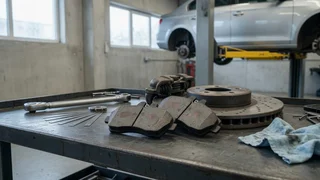
If the catalog shows more than one pad for your vehicle with notes such as rotor diameter or caliper type, check those details against your car before buying. Comparing the new pads with the old ones before installation is a simple way to catch a mismatch, since backing plate shape, wear sensor location and clip style should match.
Understand Friction Material Types
The friction material is the part of the pad that presses against the rotor to slow the vehicle. It affects stopping feel, noise, brake dust, rotor wear and how the pad handles heat. Most pads at a parts store fall into three general categories.
Material | Typical strengths | Typical trade-offs | Often suited to; Organic (non-asbestos organic) | Quiet, gentle on rotors, soft pedal feel | Wears faster, more sensitive to high heat | Light, everyday commuting in smaller vehicles; Semi-metallic | Handles heat well, strong bite, durable under load | More noise and dust, can wear rotors faster | Trucks, towing, heavier vehicles, spirited driving; Ceramic | Quiet, low visible dust, consistent feel, long life in normal use | Usually costs more, may not suit very heavy-duty use | Daily drivers, sedans, crossovers and SUVs in normal service
A good starting point is to match what the vehicle came with from the factory, then adjust based on how you use it. If you tow, carry heavy loads or drive in hilly terrain, a semi-metallic or heavy-duty formula is often the better choice. If noise and wheel dust bother you and your driving is mostly normal commuting, ceramic is a common pick.
Compare Brands and Quality Tiers
O'Reilly carries its own store brand, BrakeBest, along with other brands, and usually offers several quality levels for the same vehicle. Lower tiers are typically aimed at basic replacement, while higher tiers tend to add features such as better noise-damping shims, chamfers and slots, included hardware, or friction formulas designed for longer life or lower dust. Exact features vary by product line and vehicle, so check the product description for the specific pad rather than assuming every tier includes the same parts.
When comparing options, look for:
Whether new clips, shims or other hardware are included; Whether a wear sensor is included or needs to be transferred, if your vehicle uses one; The friction material type for that specific part number; Whether the pad is described as designed for standard or heavy-duty use; The warranty terms for that particular line
Check the Brake Rotors at the Same Time
New pads work best on a smooth, flat rotor that is within its minimum thickness. Every rotor has a minimum thickness specification, often stamped on the rotor itself. Below that limit, the rotor cannot absorb and shed heat properly and should be replaced.
Signs that rotors need attention include pulsation in the brake pedal or steering wheel when braking, deep grooves or a raised lip at the outer edge, blue heat discoloration, cracks, or heavy rust on the braking surface. Many modern rotors are thin enough that replacement is more practical than resurfacing. If you replace rotors, buy them for the same axle and confirm the diameter matches your brake setup, since that is a common point of variation between trims.
Calipers, Hardware and Brake Fluid
The caliper is the clamp that pushes the pads against the rotor. Before installing new pads, check that caliper slide pins move freely and the piston retracts smoothly. A sticking caliper or seized slide pin can cause uneven pad wear, pulling to one side and rapid wear of the new pads.
Replace worn or corroded clips and shims, and use brake-specific lubricant on contact points as the pad instructions direct. Keep lubricant off the friction surface and the rotor.
Brake fluid absorbs moisture over time, which lowers its boiling point and can contribute to internal corrosion. Check the fluid level and condition when doing pads. Use only the fluid type your vehicle specifies, which is usually printed on the reservoir cap or in the owner's manual. Do not mix incompatible fluid types. If the fluid is dark or the vehicle is due for a fluid change under its maintenance schedule, a flush is often done alongside a pad job.
Know When Pads Actually Need Replacing
Pads should be replaced before the friction material wears down to its minimum limit. Your vehicle's service information lists the specific wear limit. Common signs include a high-pitched squeal from a built-in wear indicator, a brake pad warning light on vehicles with electronic sensors, grinding noises that can mean metal-to-metal contact, longer stopping distances, or visibly thin pads seen through the wheel.
Replace pads on both sides of the same axle together, even if one side looks less worn. Uneven wear from one side to the other is often a sign of a caliper or hardware problem worth fixing at the same time.
Warranty, Returns and Store Services
Warranty coverage on brake pads varies by product line, and some pad warranties cover only the pads themselves, not labor or other parts. Ask the store or read the product details for the specific part number before buying, and keep your receipt. If you are unsure whether a pad fits, ask about the return policy for unused parts before installation.
O'Reilly stores commonly offer a loaner tool program, which can help if you need a specialty tool such as a caliper piston compressor for a one-time job. Availability of specific tools and services varies by location, so check with your local store.
Quick Buying Checklist
Confirm year, make, model, trim, engine, drivetrain and axle, and have your VIN available; Check for any special brake package that changes the part number; Choose a friction material that matches your driving and vehicle load; Compare quality tiers by included hardware, noise features and warranty; Inspect or measure rotors and decide whether they need replacement; Check caliper slide pins and piston movement; Check brake fluid level, type and condition; Compare the new pads with the old ones before installing; Keep the receipt and note the warranty terms
If any part of the brake system shows damage beyond worn pads, such as leaking fluid, a seized caliper or a soft pedal, have it diagnosed before driving further. Brakes are a safety-critical system, and a professional inspection is a reasonable next step if you are not confident in the repair.