Service 1994 Mustang Rear Brakes
The Short Answer
Servicing the rear brakes on a 1994 Mustang starts with one question: does your car have rear drums or rear discs? The 1994 model year was the first of the redesigned SN95 generation, and the rear brake hardware depends on trim. The base V6 car is generally associated with rear drum brakes, while the GT and the SVT Cobra are generally associated with rear disc brakes. Because individual cars may have been modified or equipped differently, confirm the setup on your own car before buying parts. The parts, tools and procedure for drums and discs are different.
How to Tell Which Rear Brakes You Have
The quickest check is visual. With the rear wheel removed, or looking through the spokes, you will see one of two designs:
Drum brakes: a round, closed metal housing (the drum) covers the braking parts. The shoes and springs are inside it and are not visible until the drum is removed. Disc brakes: a flat rotor (disc) is visible, with a caliper clamped over its edge. The caliper is the housing that holds the brake pads and the hydraulic piston.
Trim matters for more than drum versus disc. The Cobra used different brake components from the GT, so parts listed for one disc-equipped 1994 Mustang may not fit another. Use the trim and, where possible, the vehicle identification number when ordering parts.
What a Rear Drum Brake Service Involves
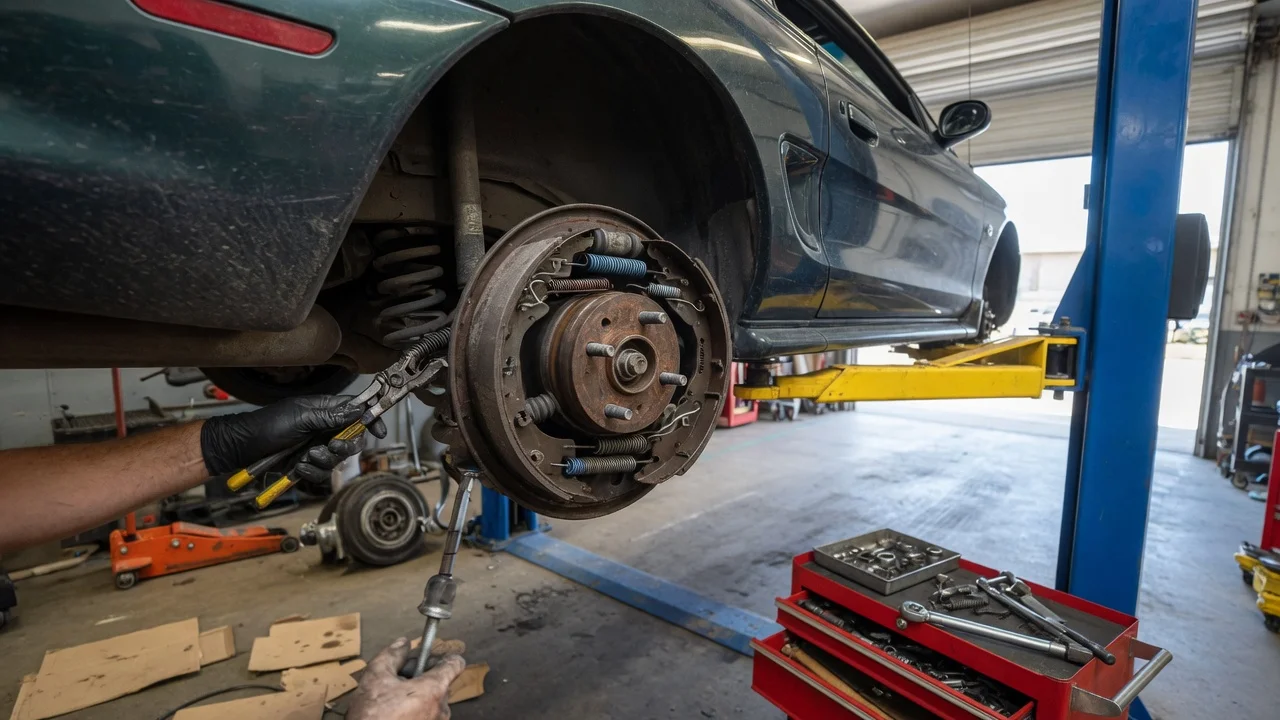
On drum-equipped cars, a typical service means removing the drum and checking the shoes, the springs and the self-adjuster. The self-adjuster is the mechanism that keeps the shoes close to the drum as the linings wear. You should also check the wheel cylinder for leaks and measure the drum for wear. Worn shoes are normally replaced as an axle set, meaning both rear wheels together.
Work on one side at a time so the other side can serve as a visual reference for how the springs and hardware go back together. Check the wheel cylinder for fluid seepage behind the rubber boots. Leaking fluid can contaminate new shoes. Check the drum's inside diameter against the maximum limit, which is usually stamped on the drum or listed in the service manual. After reassembly, adjust the shoes so the drum turns with only light drag. Then check that the parking brake works correctly.
What a Rear Disc Brake Service Involves
On disc-equipped cars, a typical service means removing the caliper, replacing the pads, and checking the rotor's thickness and condition. Rear calipers on many cars of this era have the parking brake built into the caliper. On those calipers, the piston usually has to be rotated back into its bore rather than simply pushed in, using a caliper piston tool. Confirm how your specific caliper retracts before forcing it, because pressing a screw-type piston straight back can damage it.
Measure the rotor against the minimum thickness stamped on it or listed in the service manual. Replace or resurface it if it is below that limit or badly scored. Clean and lubricate the caliper slides and pad contact points so the pads can move freely. Inspect the brake hose and caliper for leaks or damage. Pump the brake pedal before driving to seat the pistons against the new pads, and check that the parking brake still holds.
Specifications to Confirm Before You Start
The source material for this guide does not include verified factory specifications. You will need to get the following figures for your exact trim from a factory service manual or a reliable repair database: rotor and drum dimensions, wear limits, caliper bracket and lug nut torque values, and the recommended brake fluid type. If your car has optional anti-lock brakes (ABS), check the manual for any extra steps when opening the hydraulic system or bleeding the brakes.
When to Get Professional Help
Pad and shoe replacement is a common do-it-yourself job if you have the right tools and follow the procedure carefully. Have a qualified technician take over if you find leaking hydraulic parts, a spongy pedal after bleeding, a parking brake that will not adjust properly, or uneven braking. Rear brakes affect stability under hard stops, so any doubt about correct reassembly is a reason to have the work checked before driving.