Seat Belt Stuck or Not Retracting: What to Check
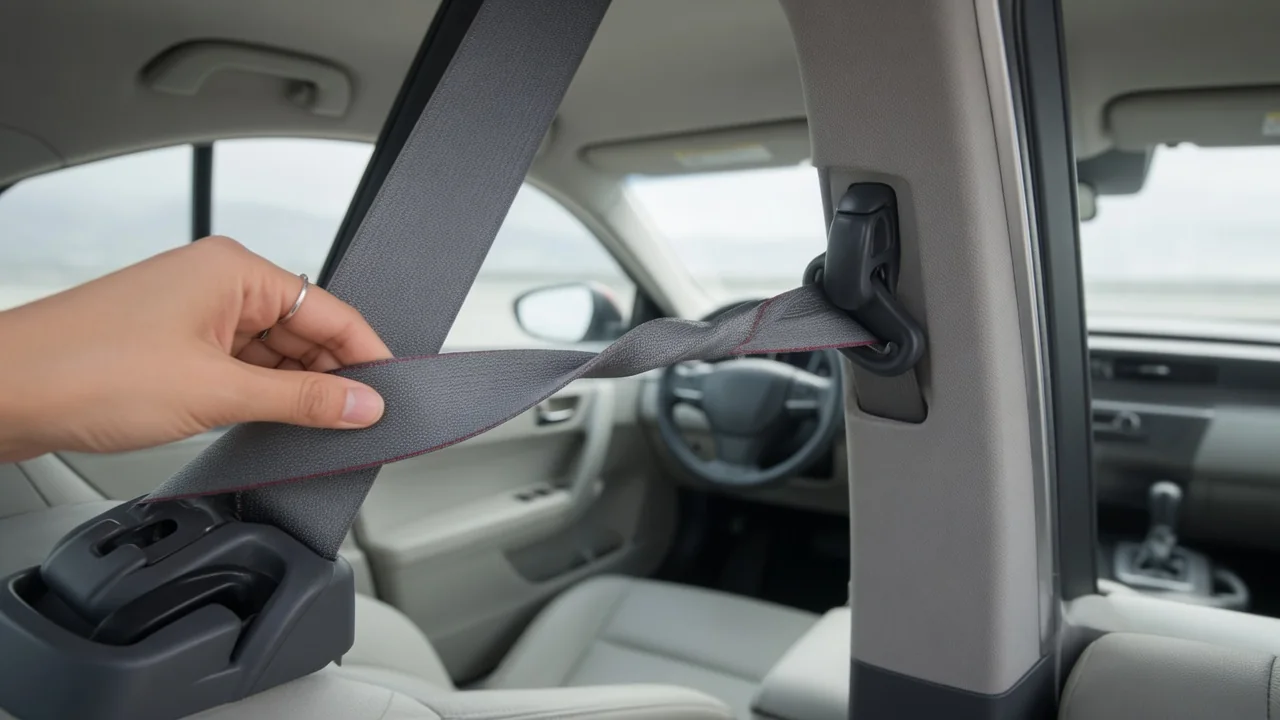
A jammed seat belt feels urgent the moment it happens. The belt might be locked partway out, refuse to pull from the pillar, hang slack, or hold you in place at the buckle. Many cases have simple causes you can check yourself. Others point to the retractor or pretensioner. Here is how to tell the difference, and how to fix only what is safe to fix.
Why a Seat Belt Jams: How the Locking Retractor Works
Most seat belts use an emergency locking retractor. This is a spring-loaded spool with sensors that lock the webbing when it is pulled sharply or when the vehicle tilts, brakes hard, or slows suddenly. So a seat belt stuck in a locked position is not automatically a broken part. Often the mechanism is doing exactly what it was designed to do, just at an inconvenient moment, such as after a quick yank or while parked on a steep driveway.
It helps to name the problem precisely. The belt may be locked partway out, it may not pull out at all, it may not retract, or the buckle may not release. Each one points somewhere different. Common causes that aren't faults include twisted webbing, a strap pinched in the door or caught in a seat track or trim panel, and parking on a slope. Designs vary by make, model, and year, so check the owner's manual for your vehicle first.
Stuck in a Buckled Seat Belt: Getting Out Safely
If you are stuck in a seat belt, stay calm and take tension off the latch first. Lean slightly toward the buckle so the belt goes slack, then press the release button firmly and straight down. Your body weight pulling against the belt, or a belt cinched tight by a locked retractor, puts load on the latch plate. That can make the button feel frozen even when the buckle is fine, and easing the pressure is often enough to free it.
Look into the buckle opening for coins, crumbs, or dried soda, but don't pry inside the mechanism with keys or screwdrivers. If someone truly cannot get free and is in danger, such as from fire or rising water, call emergency services. Cutting the webbing is a last resort, and the belt can't be used again until it is replaced. A buckle that sticks repeatedly should be inspected or replaced, not tolerated.
How to Unlock a Seat Belt That Is Locked in Place
If your seat belt has locked in place, start with a simple reset. Let the belt retract fully, guiding it so it doesn't twist on the way back. Then pull it out slowly and steadily, without jerking it. A smooth pull keeps the lock that reacts to fast webbing movement from engaging. Letting the belt rewind completely also gives the internal locking catch a chance to disengage.
If the lock reacts to tilt, the angle of the vehicle matters. On some designs, moving the car to level ground or gently rocking it side to side lets the sensor settle and releases the belt. Also check the seat. A steep recline or an unusual seat position can hold a seat-mounted retractor at an odd angle. If the belt stays locked after these steps, the retractor likely needs professional diagnosis.
Seat Belt Won't Pull Out: Safe Things to Check
If a seat belt won't pull out and feels jammed, follow the visible webbing from the buckle up to the guide loop near the top. Look for twists, folds, or snags where the belt passes through the guide, along the pillar trim, and at the edge of the seat. A folded belt can bunch up inside the guide loop and act like a wedge. Untwisting the webbing while gently feeding it back toward the retractor often frees it.
If the belt still won't extend at all after a full retract and a slow, steady pull, the problem may be inside the retractor. The lock may not be releasing, or the spool may be damaged. Don't force it with repeated hard tugs, which only set off the lock again. A belt that can't be worn properly is a safety problem, and nobody should sit in that seat until it is repaired.
Seat Belt Won't Retract: Possible Causes and What to Look For
The opposite problem is a seat belt that won't retract. The webbing may hang loose against the door, rewind slowly or only partway, or go back only if you feed it by hand. Before blaming the retractor, look at the webbing. Dirt, spilled drinks, sunscreen, and skin oils make the strap sticky, and that friction drags at the guide loop. Frayed edges can catch in the same way.
A reasonable first step for a belt that won't retract is gentle cleaning with mild soap and water. Let it dry fully extended, clamped so it stays out. Avoid oils, silicone sprays, and other lubricants on the webbing or retractor, because they can change how the belt slides and locks. A weak or broken retractor spring is a problem inside the unit, and it is not an owner repair.
What You Can Fix at Home vs. What Needs a Professional
Safe home fixes for a stuck seat belt stay on the outside of the system. You can let it retract fully and then pull it out slowly, untwist the webbing, and clear anything pinched in the door or seat track. You can also clean the buckle opening and the webbing surface. These steps solve many everyday jams and carry little risk. None of them involves opening, removing, or adjusting any seat belt hardware.
Retractors and buckles may be linked to seat belt pretensioners and the airbag system. Pretensioners can contain small explosive charges and are wired to the airbag control module. Owners should not take these parts apart or remove them. Pretensioner work and seat belt replacement should be done by a dealer or qualified technician following the manufacturer's procedures. It is also worth checking for an open recall or warranty coverage through the manufacturer or an official VIN recall lookup, without assuming one exists.
When a Stuck Seat Belt Means You Should Stop and Get It Inspected
A seat belt locked after an accident needs special attention. Many belts have pretensioners that fire in a crash to pull the webbing tight. Once they fire, the belt usually stays locked or stops retracting. A belt in that state may not protect anyone in the next collision, so it needs professional inspection or replacement. The same applies if an airbag or seat belt warning light comes on along with the belt problem.
A warning light suggests the restraint system has stored a fault code, which a technician can read and interpret. The code alone doesn't prove which part has failed, and confirming it takes testing specific to your vehicle. Visible damage is a clear reason to stop using the belt. That includes cuts, fraying, burn marks, stiff or melted webbing, or a cracked buckle housing. Until the belt is repaired, don't let anyone ride in that seat.