How Does a Seat Belt Retractor Lock During a Sudden Stop?
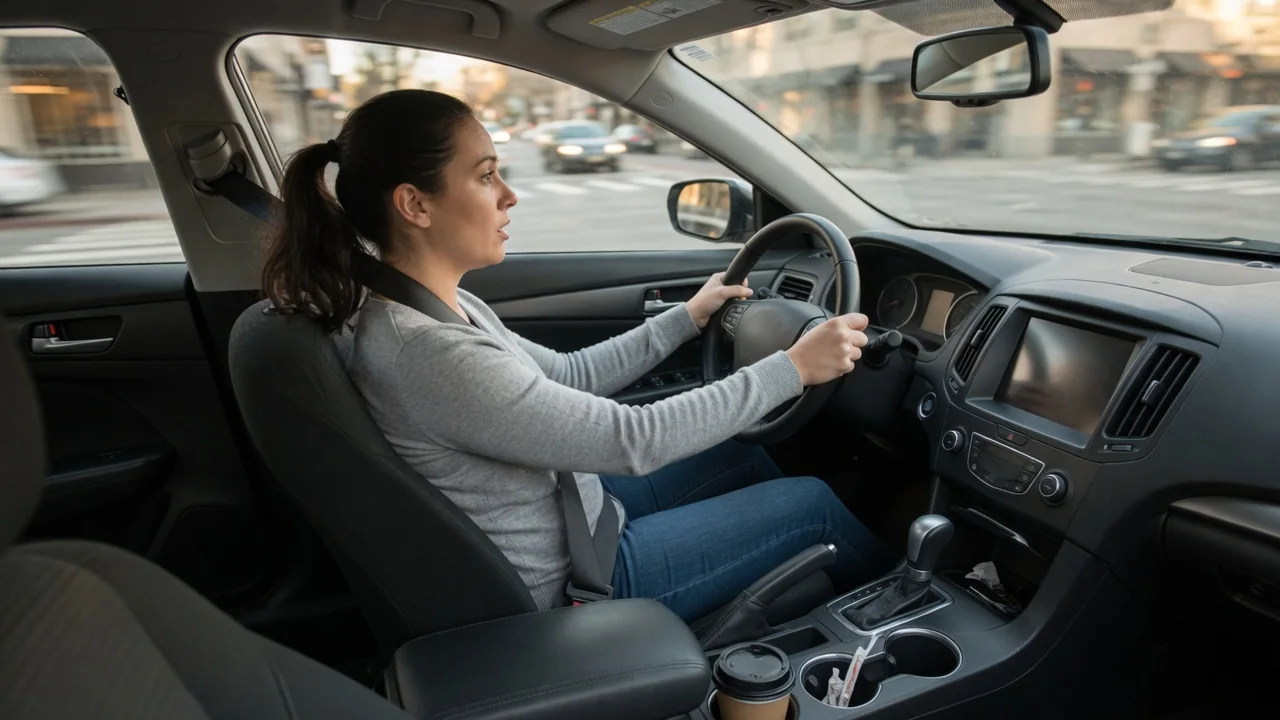
A seat belt feels loose and cooperative right up to the moment the car brakes hard, and then it holds firm. Understanding how a seat belt retractor locks during a sudden stop comes down to inertia: small mechanical parts inside the retractor respond to rapid deceleration or a fast pull on the webbing and block the spool. Here is the high-level picture of that process.
Normal movement
In ordinary driving, the retractor behaves like a spring-loaded reel. The webbing winds around a spool, and a coiled spring applies light, constant tension that takes up slack without pinning the occupant to the seat. Leaning forward to adjust the radio or reach the glovebox draws webbing out smoothly, and sitting back lets the spring reel it in again. This free-running state is the unlocked mode of what engineers call an emergency locking retractor, and it is where the belt spends nearly all of its life.
The spool carries a toothed ratchet wheel on one end, and a locking pawl sits nearby, held clear of those teeth while conditions are calm. Nothing electronic is needed for this basic arrangement; it is purely mechanical in most designs. Drivers can observe it by pulling the belt slowly with the vehicle parked on level ground: the webbing should extend evenly and return without hesitation. Retractor location, spring tension, and the feel of that pull differ between vehicles, and between front and rear seating positions.
Locking trigger
Two sensing methods commonly trigger the lock, and many retractors combine both. The first senses the vehicle itself. A small weighted element, often a ball in a cup or a pendulum, rests in a neutral position during steady driving. When the car decelerates sharply, inertia keeps that mass moving forward relative to the housing. Its movement tips a lever that pushes the pawl into the ratchet teeth, and the spool can no longer rotate in the payout direction. The webbing stops extending almost immediately.
The second method senses the webbing. If the belt is yanked out quickly, as happens when a body pitches forward, the spool accelerates faster than a small inertia-driven or centrifugal clutch component can follow. That lag swings a latch outward and engages the lock. This explains why a sharp tug on a parked car's belt makes it catch, while a slow pull does not. The vehicle-sensing mass can also respond to steep tilt or hard cornering, although the thresholds involved are set by each manufacturer.
When inspection is needed
A retractor that fails to behave predictably deserves professional attention. Warning signs include a belt that will not lock when tugged sharply, one that stays locked and refuses to extend on level ground, webbing that retracts slowly or stops partway, and visible fraying, cuts, or stiffness in the fabric. Slow retraction is sometimes caused by dirt on the webbing or a twisted belt dragging through the guide loop instead of the mechanism itself, so the symptom alone does not identify the cause.
Collisions are another reason. Many modern belts incorporate pretensioners that tighten the webbing during a crash and load limiters that let it yield in a controlled way; these are generally single-use, and vehicle makers typically specify inspection or replacement of belt assemblies after an impact. An illuminated airbag or restraint warning light also calls for diagnosis. Any stored fault code should be treated as a starting point for testing, because codes are manufacturer-dependent and may point to wiring, connectors, or a sensor and not the retractor.
Everyday Use and Observations
Most drivers feel inertial locking without thinking about it. Braking firmly for a yellow light, descending a steep driveway, or leaning forward quickly to check for cross traffic can all make the belt catch for a moment. Easing the webbing back a little usually releases the pawl, and the belt extends again. A belt that locks while the car is parked on a steep hill is typically the vehicle sensor reacting to the angle, which is normal behavior and not a defect.
Some retractors also have a switchable mode intended for securing child seats: pulling the webbing all the way out makes it ratchet as it retracts and stay locked until fully rewound. People occasionally trigger this by accident and assume the belt is jammed. Whether a given seating position has this feature, and how it is engaged, varies by vehicle, so the owner's manual is the right reference. Rear belts, center positions, and belts mounted in the seat itself can also feel different from the driver's belt.
Limits and Next Steps
Locking the spool is only one part of occupant restraint. Once the pawl engages, the webbing still stretches slightly and any slack already in the belt remains, which is why a snug lap portion low across the hips and a flat shoulder strap matter. Bulky coats, twisted webbing, and clips that hold the belt loose all reduce how well the locked retractor can do its job. The mechanism also works alongside airbags and seat design, and it cannot compensate for a belt worn incorrectly.
A simple tug test in the driveway offers reassurance, but it does not verify the vehicle-sensing element, the pretensioner, or the anchor hardware. Retractors are sealed safety components, and opening one, lubricating it, or bypassing a restraint fault is not a sensible home project, especially where pyrotechnic pretensioners are involved. If a belt behaves oddly, the practical next steps are to check for recalls, consult the owner's manual, and have a qualified technician evaluate the assembly using the service information for that specific vehicle.