Rusty Brake Lines: How to Assess and Clean Surface Rust
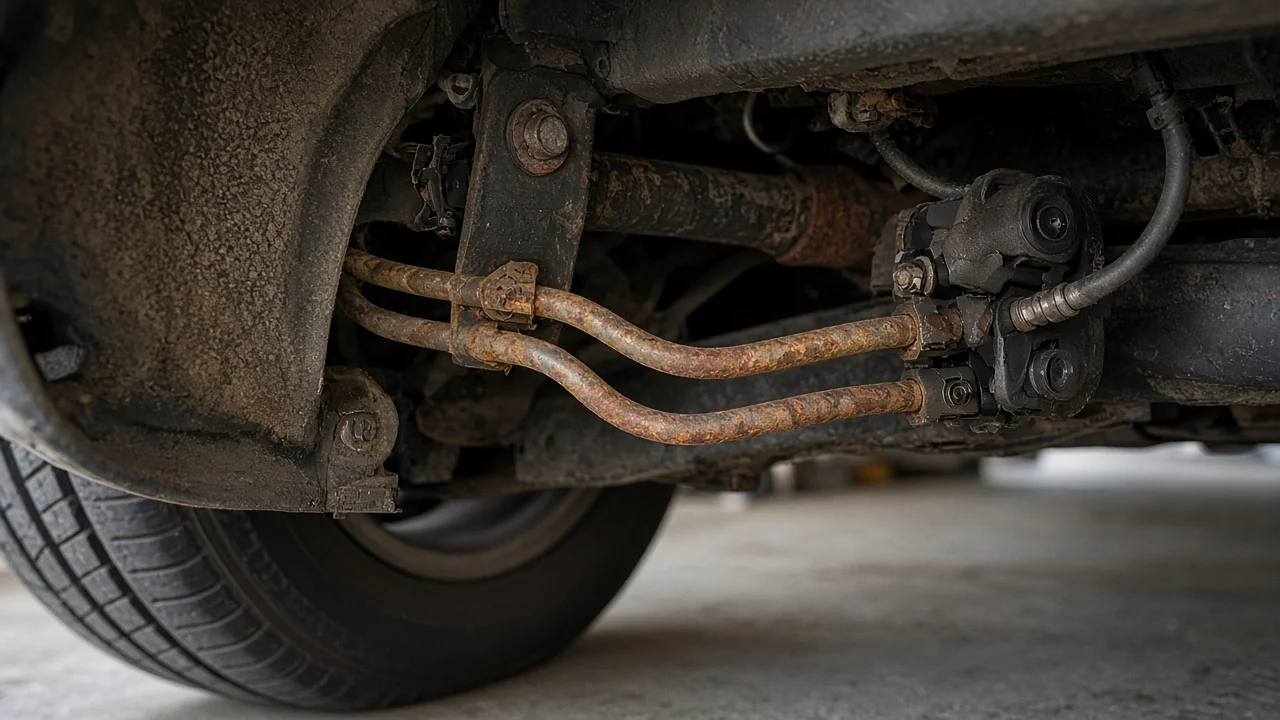
Rust on steel brake tubing raises two very different concerns: harmless cosmetic oxidation and weakening wall loss. Many vehicles show orange surface staining long before the tube is unsafe, especially where factory coatings have worn thin. The goal is to distinguish light scale from deep pitting without mistaking red dust for structural damage. Cleaning can restore a clearer view of the metal, but it cannot add thickness back. On a hydraulic brake system the hard line carries pressurized brake fluid, so the assessment must focus on wall integrity rather than appearance alone.
Direct answer
The essential answer is that light surface rust on a brake line can often be cleaned and inspected, but the line is safe only if the remaining steel wall is sound and free of significant pitting. A thin orange film that wipes away to smooth metal is normally cosmetic. Deep flaking, blistering, or visible craters indicate corrosion damage that reduces wall thickness under brake fluid pressure and can cause sudden leakage. Because a failed line is not a gradual pad wear issue like thin friction material or a warped rotor, it should be treated as a hydraulic failure risk unless inspection proves otherwise.
The condition of the rest of the hydraulic circuit also matters. Corrosion often concentrates where a line passes near a caliper, along a bracket, or where road spray collects against a fitting. A flexible hose may look fine while a nearby hard line is weakened. If a caliper is leaking at its piston seal, fluid can wash away protective film and accelerate rust. Similarly, the wear limits of a brake rotor or pad do not predict the condition of the tubing. The only useful judgment is the remaining wall thickness and whether the line can hold system pressure.
How to proceed
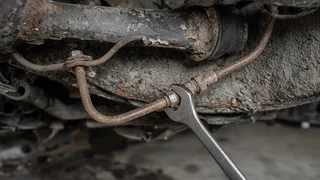
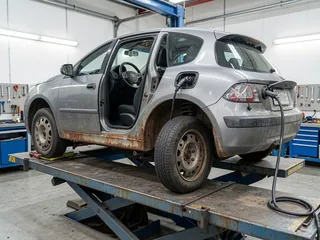
Begin by supporting the vehicle safely and locating the metal hard lines in the wheel arches, along the frame, and near the master cylinder. Wipe away loose dirt with a rag, then use a non-metallic brush to remove flaking scale. A light solvent or brake cleaner helps remove grease, but keep strong chemicals away from rubber seals and caliper boots. The purpose of cleaning is not to polish the line; it is to expose the metal so that you can see whether the rust is only on the surface or has created cavities. Avoid scraping with a file or screwdriver, because removing sound steel can create a weak spot where none existed.
After cleaning, look at the tube under good light. Uniform staining is usually acceptable if the line is solid and dry. Pits, cracks, wet spots, or blisters indicate that corrosion has penetrated the original coating and reduced wall thickness. If there is any doubt, have the line pressure-tested or replaced. A surface treatment such as a rust converter may slow cosmetic staining, but it cannot repair structural loss. When a line is suspect, the reliable next step is replacement rather than repeated cleaning, because the brake fluid pressure inside the tube does not allow a thin-walled section to be treated as a serviceable wear item.