How Bad Is Rust on a Car? How Much Rust Is Too Much
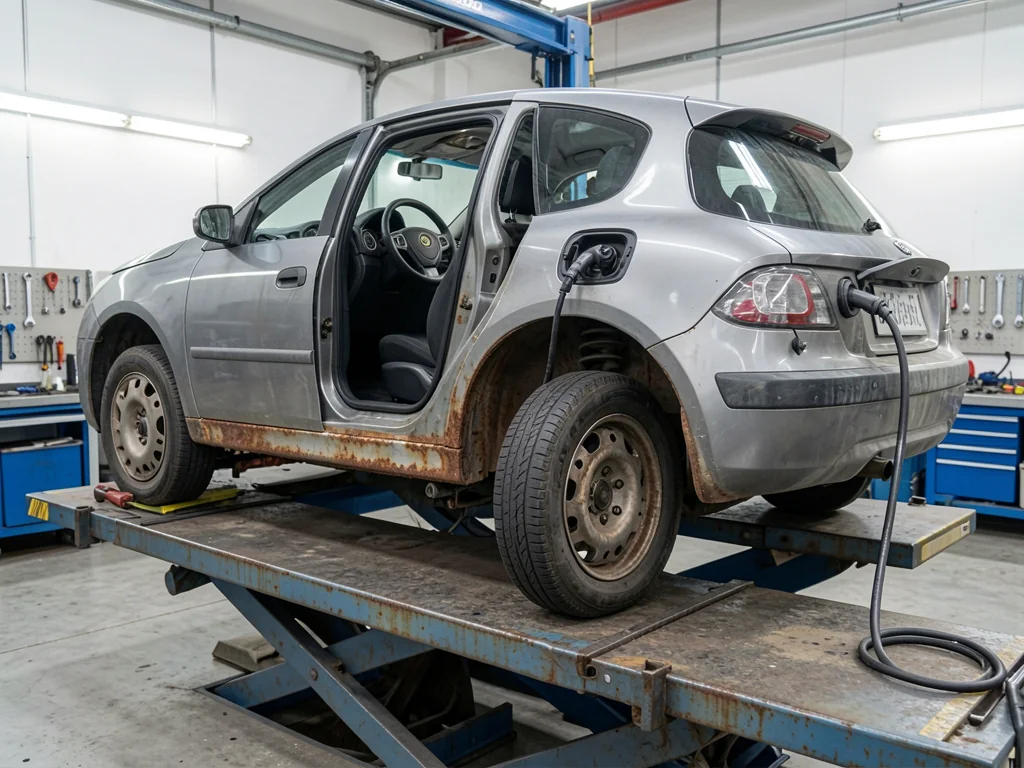
How bad rust is on a car depends on location, depth, and whether remaining metal can still do its job. Surface corrosion underneath is common after moisture and road salt, but rust on the bottom of a car is not automatically harmless. How much rust is too much comes down to cosmetic staining versus structural corrosion, scale, and holes that change safety, repair cost, and whether a rusty used car is worth buying.
What Rust Can Tell You About a Car’s Condition
Rust damage on a car is a condition clue, not a single verdict. Orange film on a painted fender and brown scale on a frame rail can look similar in photos, yet they tell different stories about remaining metal. Color alone cannot establish safety. Severity depends on location, how far oxidation has eaten through the steel, how widely it has spread, and whether the part still carries load, holds fasteners, or contains fluid. Corrosion consumes thickness over time, so a panel that still looks intact can already be thinner than it appears.
Visible rust on a car is a reason to look closer, not proof that the whole vehicle is unsafe. A small patch of surface corrosion may stay cosmetic, while the same stain near a rocker panel, suspension mounting point, or brake line can hide structural corrosion. Photographs and seller descriptions cannot confirm remaining metal thickness or the condition of enclosed sections. Concealed corrosion in seams, under coatings, and behind interior trim is common, so an underbody inspection and hands-on assessment of function matter more than a listing that simply calls the rust light or heavy.
Recognizing Surface Rust, Scaling, and Perforation
Surface oxidation often starts as a thin, dusty film on exposed steel. As it progresses, rust scale flakes away, metal can pit, and paint may blister or lift. Bubbling paint and swollen seams can mean corrosion is working under the finish while the outer skin still looks closed. Metal perforation is later: a hole, a soft edge, or a cavity you can see through. Those signs show how far damage has gone visually; they still do not tell you whether the part is cosmetic sheet metal or a load-bearing structure.
The same hole in a lower fender lip and in a frame rail is not the same problem. Cosmetic panels can often be repaired or replaced for appearance, while structural corrosion at load paths, rocker panels, or mounting points can change how the body carries weight. Repair is not just filling a hole. Surrounding steel may be thinned, laminated, or contaminated, which can make a lasting weld or patch difficult. Car rust damage therefore needs professional assessment of remaining metal, not a judgment based only on how large the visible spot looks.
How to Assess Rust Underneath a Car
Some rust under a car is expected. Exposed steel on the underside sees water, dirt, and road salt, so light surface corrosion on shields, unused brackets, and other non-structural pieces is common. There is no universal answer to how much rust under a car is normal, because climate, age, coatings, and prior repairs vary. Rust under a car is bad when it attacks function. An underbody inspection should focus on frame rails, subframes, floor seams, suspension mounting points, and brake and fuel lines rather than on whether the bottom looks uniformly brown.
Bad rust under a car often shows as heavy scale, visible holes, distorted seams, or crumbling metal around fasteners. Those signs around frame rails and mounts matter more than a dusty film on a heat shield. Stay with safely accessible views from the sides, through wheel openings, and on a proper lift. Never crawl beneath a car supported only by a jack, and do not scrape or probe suspect metal. A professional lift inspection is needed to see inaccessible areas and judge what visible corrosion means for remaining structure.
When Rust Is Too Much for a Purchase to Proceed
How much rust on a car is too much is not a percentage of the body or a patch of a certain size. Acceptability depends on structural integrity and whether affected parts can still do their jobs. Perforated structural sections, deteriorated attachment points, and corroded brake or fuel lines are reasons to pause a purchase until a qualified inspector reports findings. Fresh undercoating, patchwork, and painted-over seams can block a reliable visual assessment. That coating does not prove a seller hid damage, but it does mean a clean-looking underside is not confirmed sound metal.
Treat repairs as feasible only after a qualified assessment of remaining metal, surrounding condition, and any inspection requirements that apply. A tidy patch on a rocker panel or floor does not establish that enclosed sections are sound. If suspected corrosion could compromise braking or structural attachment, skip a test drive until that risk is evaluated on a lift. Rust underneath a car is bad enough to stop the sale when holes, flaking mounts, or line damage remain unexplained, and waiting for professional findings is safer than assuming the car will behave normally on the road.
What “Rust Bucket” and “Car Cancer” Mean
Rust bucket car is informal language, not a factory condition grade. People use it for a vehicle that looks heavily corroded: flaking scale, holes, crumbling sills, or an underside that has clearly lost metal. Car cancer rust is slang for corrosion that seems to spread or come back after a repair, often because hidden damage was left in seams, box sections, or under old patches. Neither phrase measures remaining thickness or safety. They are shortcuts that describe appearance and frustration, and they still need to be translated into specific locations and findings.
Rust is bad on a car because it is an electrochemical process encouraged by moisture, road salt, and trapped dirt, not a contagious disease jumping from one vehicle to another. Calling a listing a rust bucket or saying it has car cancer should lead to practical questions: which areas are affected, what a lift inspection found, what rust work was done, and what damage remains unresolved. Those answers matter more than the nickname. Recurring scale after a cheap patch often means surrounding steel was already compromised, not that corrosion has a personality.
Deciding Whether a Rusty Used Car Is Worth Buying
Should I buy a car with rust underneath? Start with an independent prepurchase inspection that documents corrosion locations, structural concerns, areas that could not be seen, and any follow-up testing needed. Ask for repair records and photographs of prior rust work. Receipts show that someone billed for labor or parts; they do not prove the condition of hidden metal behind a patch or under new coating. Whether rust on a car is bad enough to reject the deal depends on documented findings, because light underside staining and perforated rails are not the same purchase.
Get written estimates and include uncertainty where corrosion may continue into enclosed sections or beneath previous repairs. Base the decision on confirmed safety, repair feasibility, total ownership budget, and whether you can complete the documented work. Rust damage on a car can still be a reasonable buy when remaining structure is sound and the cost is known. Walk away when a meaningful inspection is refused, structural condition stays unresolved, or required repairs exceed what you can spend. A rusty used car is worth buying only when those conditions are met, not because the price looks low.