How to Fix Small Rust Spots and Surface Rust on a Car
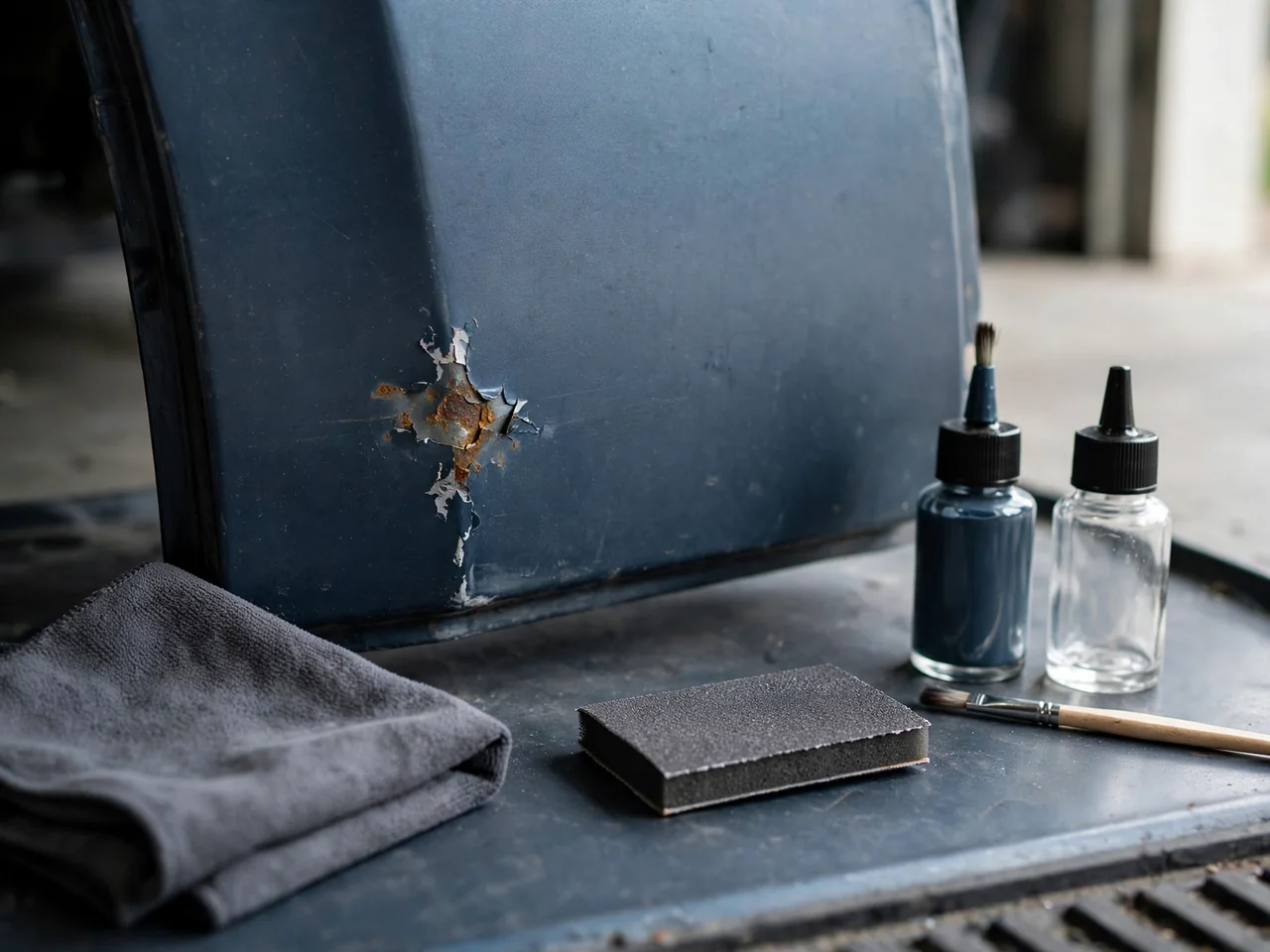
Small rust spots on a car often start as paint chips, rust dots, or light surface corrosion on accessible painted panels. Getting rid of those marks is more than a color match: loose oxide must come off, the metal must be treated and primed, and the finish sealed before moisture returns. This guide explains how you can fix rust spots on your car when the damage is still small, and when a cosmetic repair should stop.
What a Small Rust Spot Repair Involves
Fixing rust spots on a car begins with a close look at the mark, then washing and preparing the panel so you can see the true edge of the damage. After that, accessible corrosion is removed, a compatible treatment is used only if the remaining surface and coating system call for it, and automotive primer plus touch-up paint close the repair. The work stays limited to small, reachable areas of surface rust on painted exterior panels, not hidden cavities or large-scale bodywork.
Painting over a rust spot without removing the oxide leaves moisture and active surface corrosion under a thin film, so the stain can keep spreading and lift the new color. A localized touch-up can protect exposed bare metal and slow further attack when the rust is still shallow, but it will not rebuild lost steel or hide every texture change. Color and sheen may still differ from surrounding weathered paint, especially on a white car where tiny rust spots stand out.
Check Whether the Rust Is Limited to the Surface
After washing and drying, inspect paint chips, orange dots, lifted edges, paint blistering, and staining around seams before deciding how to remove surface rust from a car. Rust dots on a car can be embedded iron contamination from brake dust or industrial fallout rather than a growing pit in the panel, so appearance alone cannot prove the steel underneath is corroding. Look at whether the color sits on the clear coat or whether the coating has already broken through to metal.
Stop a cosmetic repair and seek body-shop assessment if you find holes, heavy flaking, extensive blistering, or corrosion coming out of a seam. A small visible mark cannot establish the condition of hidden metal or the back of a panel. Suspected rust near structural or safety-critical areas needs professional inspection. Getting rid of surface rust on a car is only appropriate when the damage still looks shallow and fully accessible.
Prepare the Panel and Choose Compatible Supplies
Wash and dry the panel, then use a paint-safe cleaner according to its label before you map the repair boundary. Suitable supplies for a small hand repair include masking materials, hand abrasives for controlled hand sanding, clean cloths, compatible automotive primer, and touch-up products matched with the vehicle's paint code. Keep the kit modest: the goal is spot rust removal from a car, not a full respray, so choose products intended for small chips.
Mask adjacent intact paint and trim so primer and color stay inside a small accessible work area. Check each product's instructions for surface preparation, protective equipment, ventilation, temperature, and moisture limits, and do not improvise chemical mixtures. Removing rust spots from a car fails more often from wet metal, cold panels, or incompatible coatings than from missing a specialty product. If the label requires a dry surface within a stated temperature range, wait rather than forcing a repair that will not bond.
Remove Accessible Surface Rust Without Enlarging the Damage
When orange staining looks like embedded particles, a paint-safe iron remover may address iron contamination if you follow its label and reassess the cleaned surface before any abrasion. If a confirmed rusty paint chip remains, use controlled hand preparation to lift loose paint and accessible corrosion with abrasives appropriate to the coating instructions. Getting rid of small rust spots on a car at this stage is about patience, not aggressive cutting into sound metal around the mark.
Feather damaged paint edges gently so later primer and color can blend, then wipe away preparation residue and inspect the exposed area in good light. Stop if you find deep pitting, expanding damage, inaccessible rust, or metal whose condition you cannot judge. Powered grinding, cutting, and welding are outside a small cosmetic repair. Removing surface rust from a car should leave a tight, clean boundary; if the opening keeps growing, the job has left the scope of a home touch-up.
Treat Remaining Corrosion and Prime the Prepared Spot
Rust treatment is not automatic. It depends on what remains on the prepared surface and on the coating system you intend to use. Confirm that a rust converter or other treatment will accept the planned primer and paint, including any cleanup and curing requirements on the label. A converter can stabilize remaining oxide on accessible metal, but it does not restore lost steel or reach corrosion behind a panel, inside a hem, or under sound paint you have not opened.
Once any required treatment has been followed as directed, apply compatible automotive primer to the prepared spot according to the product instructions. Do not assume a universal coat count or waiting time; those details belong to the can you are using. Primer isolates remaining metal from moisture and gives touch-up paint a surface it can grip. How to fix surface rust on a car after cleaning is unfinished until that barrier is in place and the area looks uniformly primed.
Apply Touch-Up Paint and Let the Finish Cure
Use the vehicle's paint code to select touch-up paint, while accepting that weathering, fade, and finish type can still affect the visible match. Apply color with a brush or pen in thin layers, following the product's coverage and recoat instructions rather than flooding the chip. Repairing a rust spot on a car at this stage means building coverage slowly so the repair stays level with surrounding paint instead of leaving a raised blob that will chip again.
Clear coat is required only when the selected paint system specifies it; some touch-up products already include a finish coat. Drying until the surface feels tack-free is not the same as full curing time, so defer washing, polishing, or waxing until the coating instructions permit those steps. Specialized spray refinishing belongs with a professional, not a small DIY rust-spot repair. After color is on, protection still depends on letting the system cure undisturbed so the film can shield the metal.
Monitor the Repair for Returning Rust
Once the repair has cured, check it for exposed edges, lifting paint, renewed orange staining, and bubbling that would show moisture still reaching metal. Keep the panel clean and address fresh paint chips promptly so new rust dots do not start nearby; there is no single maintenance interval that fits every vehicle. Fixing a small rust spot on a car is unfinished if a sharp edge of bare metal remains around the color.
Recurring rust after a tidy touch-up can mean corrosion has already moved beyond the accessible repair area and warrants body-shop assessment. A smooth surface finish does not verify hidden seams or the back of the panel. Removing rust spots on a car at home can halt a shallow chip, but it cannot certify that the same door or fender is sound underneath. If staining returns from an edge or a seam, treat that as evidence to inspect, not as a cue for another coat of paint.