Rusty Car Door Hinges
Rust beginning on a car door hinge is more than a cosmetic blemish; it is a sign that moisture and oxygen have compromised the protective coating on a moving, load-bearing joint. When ignored, the corrosion can spread from the visible bracket into the pivot pin and surrounding sheet metal. The result is often a door that groans, drops slightly, or becomes harder to close cleanly. Understanding why this area fails and how the rust affects surrounding components helps an owner separate simple surface staining from damage that deserves prompt attention.
Essential answer
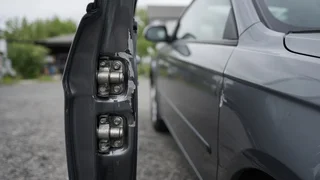
Rust on a car door hinge is surface oxidation that forms when bare steel or iron in the hinge assembly reacts with water, road salt, and air. On most vehicles the hinge is a fabricated steel bracket welded to the body pillar and bolted to the door shell, so the corrosion can appear on the visible strap, around the pivot pin, or under flaking paint near the mounting area. The essential answer is that early staining is usually manageable with cleaning and protective coating, while deep scaling affects how the door moves and should be evaluated before the latch or surrounding panel is stressed.
The concern is not only the hinge itself but also the way a weakened or stiffened joint changes door alignment. A corroded pivot can make the door sag just enough that the latch striker and weather seal begin to work against each other. The hinge pin may bind or wear eccentrically, transferring extra load to the upper or lower bracket. Because the door is a heavy body opening supported by only two or three hinges, even moderate rust can create noticeable friction, popping, or a change in the effort needed to open and close the door.