Replacing a Vehicle Auxiliary Battery: What to Check Before You Swap It
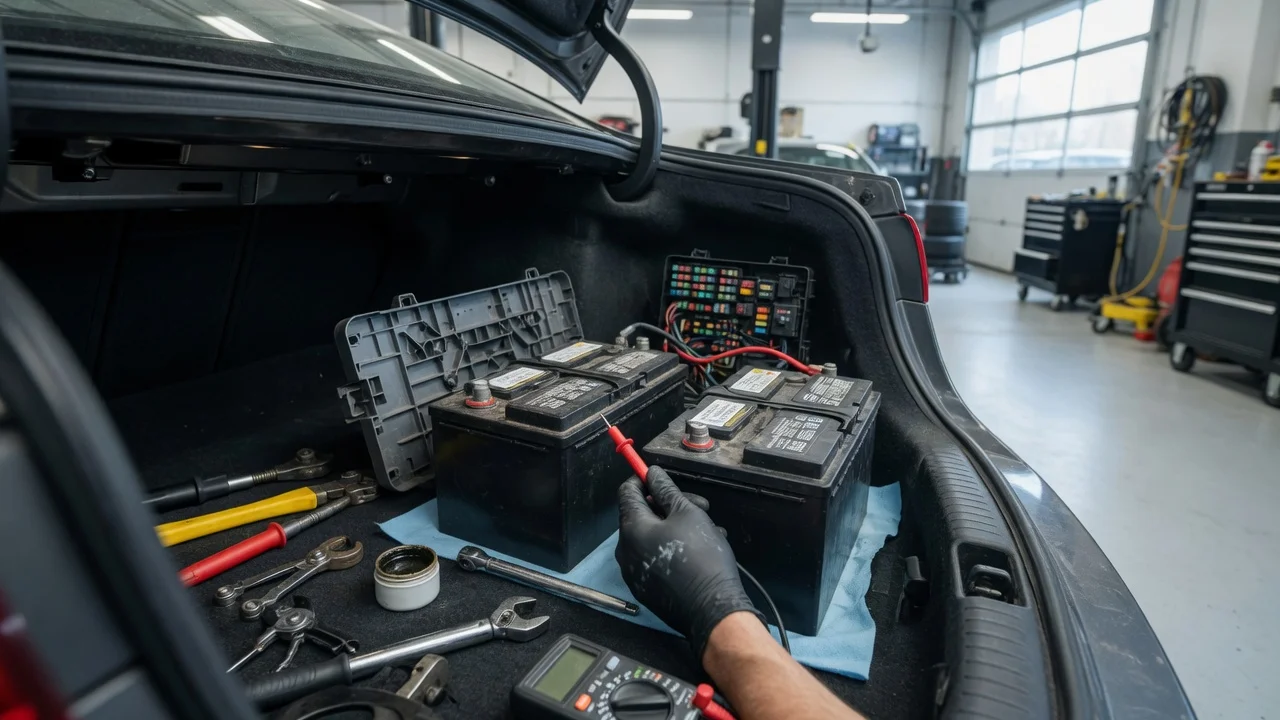
The short answer
An auxiliary battery can usually be replaced as a separate part. It does not normally require replacing the main battery at the same time. Whether the job is a simple swap or a workshop task depends on your exact vehicle. Three factors matter most: where the battery is mounted, what type and rating it is, and whether the vehicle's electronics need to be told that a new battery has been fitted. Model year, market, trim and powertrain can all change these factors. Treat any general advice, including this article, as a starting point. Your owner's manual or the manufacturer's service information should settle the details.
What an auxiliary battery does
An auxiliary battery is a secondary low-voltage battery that works alongside the main starting battery. Depending on the vehicle, it may keep electronics powered while an engine with stop-start restarts, back up safety or control systems, or support accessories. In electric and some hybrid vehicles, the term can also refer to the conventional 12-volt battery that runs the car's low-voltage systems, as distinct from the high-voltage traction battery. Check which meaning applies to your vehicle before buying a part, because the two are entirely different components.
Signs it may need replacing
A failing auxiliary battery is often first reported by the vehicle itself, typically as a dashboard warning that names the auxiliary battery or a related system. Other possible signs include stop-start no longer operating or intermittent electrical faults. These symptoms overlap with other problems, such as charging-system faults or a weak main battery. A battery test or a diagnostic scan is the sensible way to confirm the cause before buying a replacement. No supplied evidence covers the specific warning text or fault codes for particular models, so check what your vehicle actually displays against its documentation.
Matching the replacement to your vehicle
A compatible replacement should match the original on each of the following points. The original battery's label, the parts catalogue for your exact vehicle, or a dealer parts department can confirm them.
Battery technology, for example AGM (absorbent glass mat, a sealed design common in stop-start vehicles) versus conventional flooded lead-acid; Capacity and other electrical ratings printed on the original battery; Physical size and mounting arrangement, so it fits the tray or bracket securely; Terminal type, position and polarity layout; Venting requirements, which matter if the battery sits inside the cabin or boot rather than the engine bay; The manufacturer's part number, which is the most reliable cross-reference
Auxiliary batteries can differ between versions of the same model. A part that fits one model year, market, trim or powertrain may not fit another. Confirm compatibility using your vehicle identification number (VIN) rather than the model name alone.
Whether the new battery needs registering or coding
Some vehicles use a battery management system that adjusts charging according to the battery's age and type. On these vehicles, a new battery may need to be registered with a scan tool so the system recognises it. If this step is skipped, the new battery may be charged incorrectly or warnings may persist. Whether your vehicle requires registration for its auxiliary battery is model-specific and is not established by the information available here. Check the service procedure, or ask a dealer or independent specialist before starting.
Doing it yourself versus using a workshop
Replacing the battery yourself is most practical when the battery is easy to reach, no registration is required, and you can follow the manufacturer's disconnection sequence. A workshop is often the better choice in any of these situations:
The battery is mounted behind trim panels, under seats or in a hard-to-reach position; Registration or coding is required and you do not have a compatible scan tool; The vehicle is a hybrid or electric vehicle and the procedure involves components near high-voltage parts; You are unsure whether the fault lies with the battery or elsewhere in the electrical system
Costs vary widely by vehicle, battery type, region and labour time, and no reliable pricing was supplied. Get quotes for both the part and the fitting before deciding.
Basic safety points
Follow the disconnection and reconnection order given in your vehicle's documentation. Some vehicles specify a particular sequence for the main and auxiliary batteries, and that sequence takes priority over any generic rule. Switch the vehicle off and remove the key or keep the smart key away from the car as instructed. Wear eye protection and avoid bridging terminals with tools. Disconnecting power may reset settings such as radio presets or windows that need re-initialising, so allow time for these afterward. Dispose of the old battery through a recycling point or retailer that accepts lead-acid batteries.
Information to gather before you start
Your VIN, model year, market, trim and powertrain; The label details and part number from the existing auxiliary battery; The exact warning message or fault codes shown; The manufacturer's replacement procedure, including any registration step; Confirmation that the main battery and charging system are healthy