Red Brake Calipers: What They Mean and Whether They Matter
The short answer
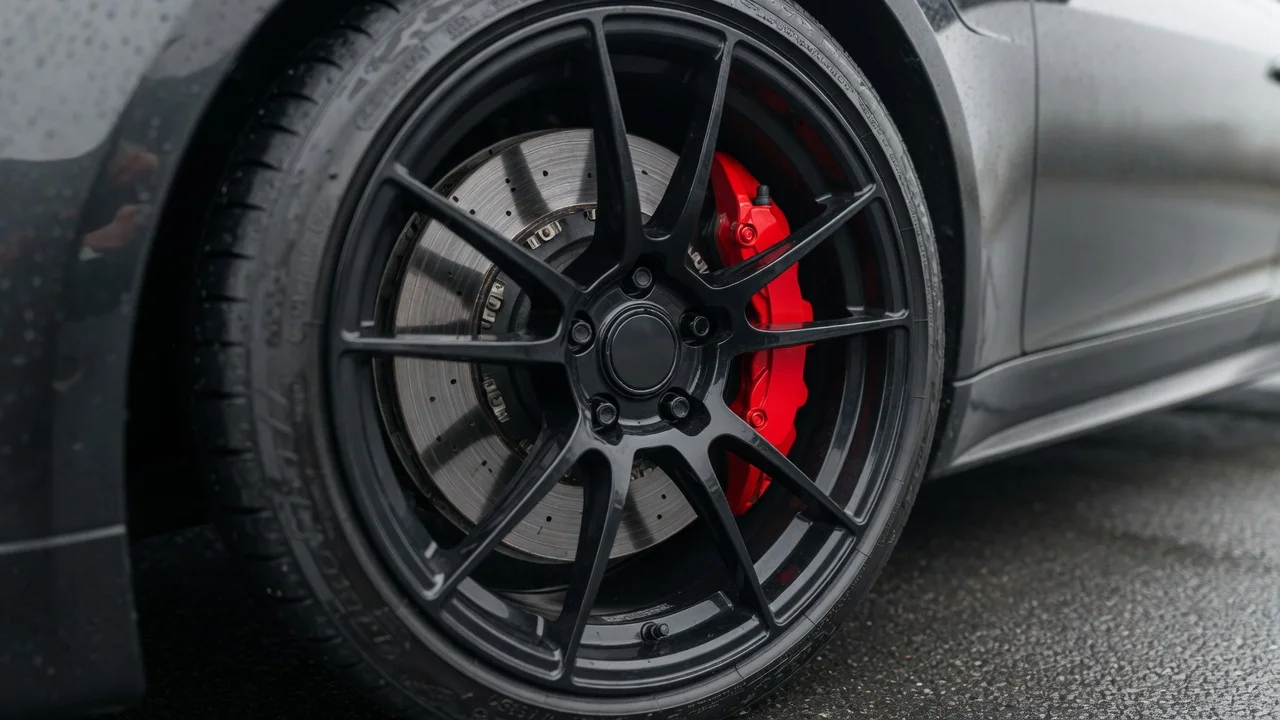
Red on a brake caliper is a colour, not a performance feature. A caliper is the clamp-like part at each wheel that squeezes the brake pads against the disc (rotor) to slow the car. Painting it red, or fitting a red cover over it, changes how it looks and nothing about how it stops.
The exception is when red calipers come from the factory as part of a performance brake package. On some trims, carmakers use a coloured caliper to mark a larger or multi-piston brake system. In that case the better braking comes from the hardware, and the red finish only identifies it.
What changes the answer
Factory red calipers on a performance trim: these may indicate a different brake system from lower trims, so check the specification for that exact model year, market and trim. Red calipers on a used car: these may be original equipment, aftermarket replacements, or standard calipers painted by a previous owner. Their colour alone does not prove an upgrade. Painted or covered standard calipers: the brakes perform the same as before. The change is cosmetic only. Aftermarket calipers that happen to be red: any performance difference comes from their design and from fitting compatible discs, pads and lines, not from the colour.
Checking whether red calipers are a real upgrade
If you are looking at a car with red calipers, confirm what is fitted rather than relying on the colour. Useful checks include the original build specification or window sticker, the listed brake option or package for that trim, and any manufacturer or brake-brand markings cast or printed on the caliper. Piston count and disc size can differ between trims, but the right figures depend on the specific vehicle. This article does not include model-specific data, so verify those details for the car in question.
Ways to get the red look
Option | What it involves | Points to weigh; High-temperature caliper paint | Cleaning, masking and painting the existing calipers | Needs heat-resistant paint and careful preparation; overspray on pads, discs or seals should be avoided; Powder coating | Calipers removed and coated, often by a specialist | Generally a tougher finish, but the brakes must be taken apart and reassembled correctly; Caliper covers | Shells fitted over the existing calipers | Need to match the caliper shape and leave enough wheel clearance; poorly fitted covers can come loose or rub; Factory or aftermarket red calipers | Replacing the brake hardware itself | Must match the vehicle's model year, trim, wheel size and brake components; also the most involved option
Compatibility and safety points
Anything that adds bulk around the caliper, such as covers or larger replacement calipers, has to clear the inside of the wheel. Clearance varies with wheel design and size, so a part that fits one trim may not fit another. Work that involves removing calipers or opening the hydraulic system affects safety and should be done by someone qualified, followed by a check that the brakes work properly. Brake dust also builds up quickly on light, bright colours, so expect red calipers to need regular cleaning to keep looking their best.
Choosing your next step
If you want the look only, paint, powder coating or well-fitted covers will do it without changing how the car brakes. If you want better braking, compare the brake specifications for the exact trim and model year you are considering, or look at a proper brake upgrade, and treat the colour as a matter of taste. If you are buying a car partly because of its red calipers, check the paperwork and the parts themselves to confirm whether they are a factory performance system or just a cosmetic touch.