Red Brake Light on Dash: What It Means and What to Do
The short answer
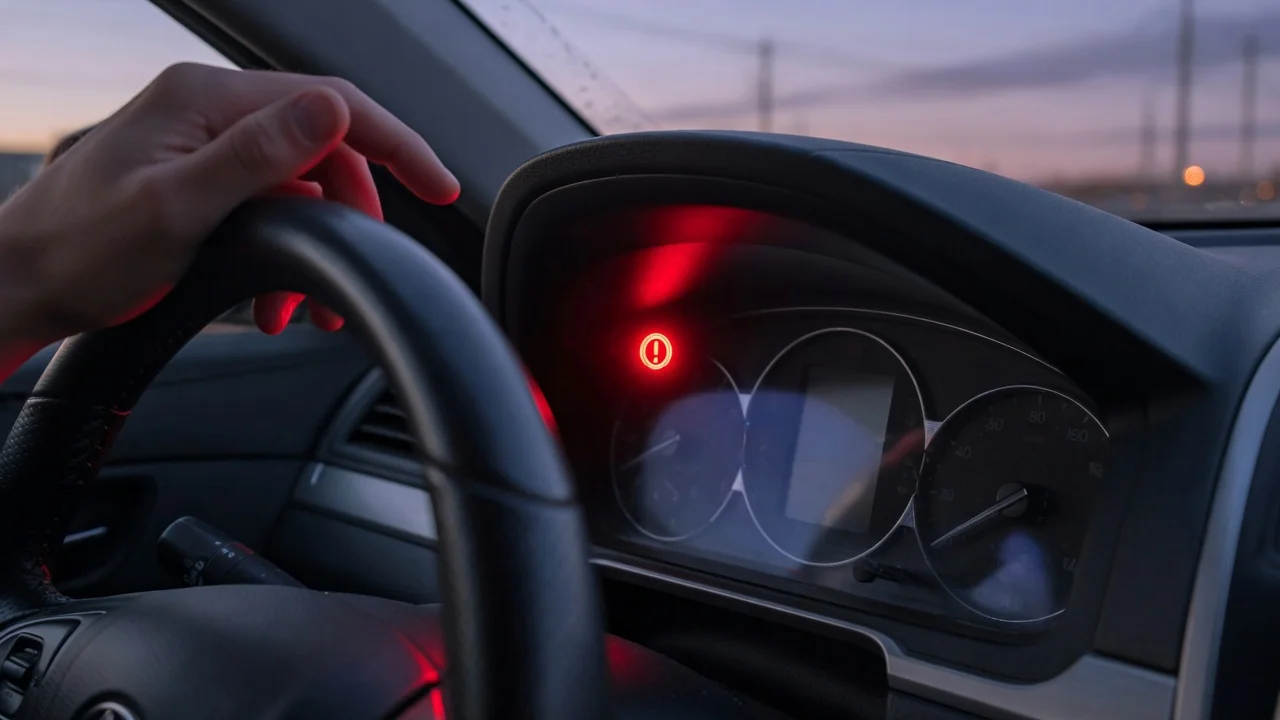
A red brake warning light on the dashboard means the braking system needs attention. On most vehicles it comes on for one of three reasons: the parking brake is engaged or not fully released, the brake fluid level in the master cylinder reservoir is low, or the system has detected a hydraulic or electronic fault. Red warning lights indicate a potentially serious condition, so if the light stays on after you release the parking brake, treat it as a reason to stop and check the car rather than continue driving.
Exact behavior varies by manufacturer, model year and whether the car has a manual lever, a foot pedal or an electric parking brake. The owner's manual for the specific vehicle is the authoritative reference for what its warning light covers.
How to recognize the light
The brake warning light is typically shown as the word BRAKE, or as an exclamation mark inside a circle framed by curved brackets. Vehicles with an electric parking brake often use a separate symbol, commonly a letter P inside a circle, to show that the parking brake is applied. These symbols are distinct from the amber ABS light, which refers to the anti-lock braking system rather than the base hydraulic brakes.
It is normal for the brake light to illuminate briefly when the ignition is switched on as part of a self-check. It should go out once the engine starts and the parking brake is released.
Common causes
Parking brake applied or partly applied: the most frequent and least serious cause. Low brake fluid: can result from normal brake pad wear, which lowers the fluid level gradually, or from a leak in the lines, calipers, wheel cylinders or master cylinder. Hydraulic system fault: some vehicles trigger the light when a pressure difference is detected between the brake circuits. Faulty sensor or switch: a worn parking brake switch or a failed fluid level sensor can cause a false warning. Electronic brake system fault: on many cars, the red brake light shown together with the amber ABS light can indicate a problem with electronic brakeforce distribution, the system that balances braking force between front and rear axles. This combination is variant-dependent, so check the manual.
What to do when it comes on
Check that the parking brake is fully released. If the light goes out, the issue is resolved. If the light stays on while driving, slow down and pull over somewhere safe. Note how the brake pedal feels. A soft, spongy or sinking pedal, or one that travels further than usual, points to a hydraulic problem. With the engine off, locate the brake fluid reservoir under the hood and compare the level with the minimum and maximum marks. Look for signs of a leak, such as fluid around the wheels or on the ground beneath the car. Have the system inspected by a qualified technician before relying on the brakes again.
Is it safe to drive?
If the cause was simply the parking brake, yes. Otherwise, caution is warranted. If the pedal feels abnormal or the fluid level is low, the safest course is not to drive the vehicle and to arrange towing or roadside assistance. Topping up the fluid can mask the underlying problem: if the level dropped because of a leak, it will drop again, and if it dropped because the pads are worn, the pads still need replacing. Use only the brake fluid type specified for the vehicle, which is usually printed on the reservoir cap or listed in the owner's manual.
Limits of this guide
No model-specific data was supplied for this article, so it covers the general behavior of brake warning lights rather than any one vehicle. Warning logic, symbols and the meaning of light combinations differ across brands, generations and markets, particularly on cars with electric parking brakes or integrated electronic braking systems. For a definitive reading, consult the vehicle's owner's manual or have a technician scan for stored fault codes.