PTP Turbo Blankets: Selection and Review Considerations
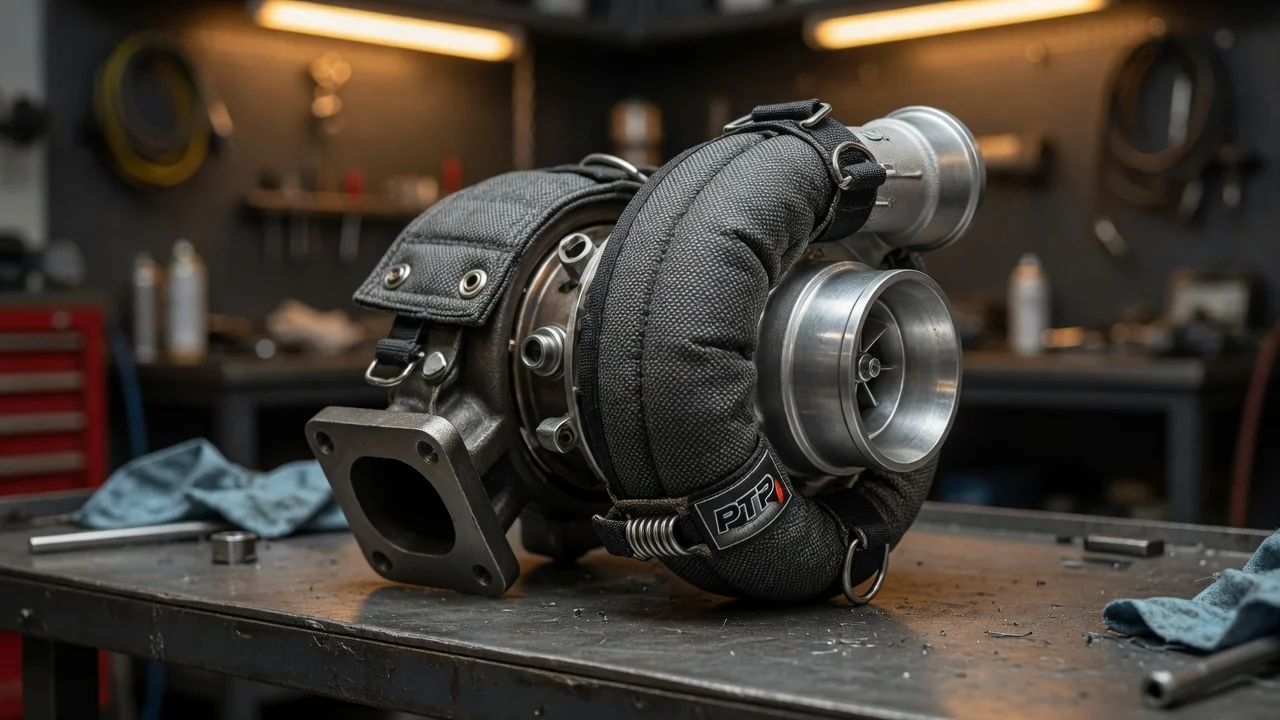
A PTP turbo blanket is an insulating cover that wraps the hot side of a turbocharger. It keeps heat in the turbine housing and away from surrounding parts. Choosing one depends less on the brand name than on matching the blanket to your turbo, your engine bay and what you expect it to do. This guide covers the job the blanket must do, fitment, features, ownership costs and how to tell a real improvement from a marketing promise.
Define the job the product must do
Start with the reason you want a blanket. Common goals include cutting radiant heat that reaches nearby wiring, vacuum and coolant hoses, intake piping and the firewall, and reducing heat soak after hard driving or long idling in traffic. Some owners also want a cleaner look on a show build. Keeping exhaust energy in the turbine to sharpen boost response is often advertised. Treat it as a secondary benefit unless you can measure it on your own vehicle, because the gain is hard to separate from normal variation.
Then list your practical constraints. A daily driver, a towing rig and a track car put very different heat loads and duty cycles on the turbo. Ask whether the turbo is stock or upgraded, and how often you remove it or work near it. Exposure to rain, road spray and salt also matters. Engine configuration changes the picture: a hot-side-up layout, a turbo tucked tight against the firewall, a rear-mounted unit or twin turbos in the valley of a V engine each send heat to different places. They also differ in how hard the blanket is to install and remove.
Check compatibility
Turbo blankets are cut to fit specific turbine housing shapes, so identify the turbo itself rather than relying on the vehicle name. Record the manufacturer and the model or part number from the housing tag or your service history. Also note the turbine inlet flange (for example T25, T3, T4 or V-band), the outlet style, whether the wastegate is internal or external, and the housing A/R if it is listed. Model year and engine variant matter. The same nameplate can use different turbos or housings across years, trims and engine options. A turbo replaced during earlier service may not match the original-equipment listing at all.
Next, check the interfaces around the housing. The blanket needs openings that clear the wastegate actuator arm or port, the oil feed and drain lines, any coolant lines, manifold studs, nearby heat shields and sensor bosses such as an exhaust gas temperature probe. Measure the space around the turbo, because the blanket's thickness can make it press against the hood, strut tower, firewall or a moving wastegate rod. A blanket that binds the actuator or rubs a coolant line creates a new problem. Compare the product description with the manufacturer specifications for your turbo. If the listing is vague, ask the seller to confirm fit against your part numbers before you order.
Features that affect the choice
Look at how the blanket is built: the outer shell material, the insulating core, the stitching and the stated temperature rating. Check whether that rating describes continuous use or brief peaks, because a turbine housing under sustained load runs far hotter than one in commuter traffic. Fastening also matters. Springs allow for thermal expansion and make removal for inspection quicker. Safety wire or straps can hold more securely but take longer to service. Full-coverage designs insulate more surface area, while two-piece or partial designs may be the only option in a tight engine bay.
Separate useful evidence from marketing labels. Phrases such as 'faster spool,' 'race proven' or a fixed number of degrees in lower temperatures mean little without context. Good evidence compares the same vehicle before and after installation, on the same route, in similar ambient conditions, with intake air temperature and boost onset logged by the engine computer or a calibrated gauge. Temperature readings taken at specific nearby components are also useful. A single uncontrolled dyno pull or a report that the car 'feels quicker' is weak evidence.
When you read a ptp turbo blanket review, keep symptom reports separate from verified failures. A note about odor during the first few heat cycles may describe normal curing. A complaint that the blanket frayed within months raises questions about rubbing contact, oil leaks or installation. A credible failure report includes photos and the symptom conditions, and states the model year, engine variant, turbo model, power level and type of use. Give the most weight to reviews from setups that match yours.
Limitations and ownership costs
Installation must be done on a fully cold engine. It can mean removing heat shields, intake tubing or parts of the downpipe to reach the housing, so allow realistic shop time or labor cost. You may also need spare springs or wire, and new gaskets if you disturb exhaust joints. Follow the product instructions for the first heat cycles, since some light smoke or odor is commonly reported with new insulating materials.
Ongoing inspection is the biggest hidden cost. A blanket covers the turbine housing, so cracks, exhaust leaks at the flange and oil seepage can go unnoticed. Remove the blanket periodically, and always after any oil or coolant leak in the area. An oil-soaked blanket next to hot metal is a fire risk and should be replaced. Holding heat in the housing also means the housing runs hotter. Check the turbo manufacturer's guidance and your vehicle or turbo warranty terms on insulating wraps before you install one.
A blanket cannot fix mechanical faults. It will not cure boost leaks, worn shaft bearings, oil smoke, a sticking wastegate or stored diagnostic codes for overboost or underboost. If you have a problem such as lag at a certain rpm or heat soak only after idling, diagnose it first. Use codes, data logs and a physical inspection before you treat a blanket as the solution.
Build a practical shortlist
Before buying, confirm each of these points for every candidate. First, the turbo is identified by part number and checked against your service history. Second, the inlet flange, outlet and wastegate type match the product's fitment description. Third, you have measured clearance to the hood, firewall, lines and actuator. Fourth, the temperature rating suits your duty cycle and the fasteners suit how often you will remove the blanket. Finally, check that hardware is included, instructions are clear, and warranty and return terms are stated. Reviews should come from owners with a matching engine configuration and model year.
Rank the remaining options against the goal you set at the start, not against general reputation. If two blankets fit equally well, choose the one with clearer fitment documentation and easier removal for inspection. After installation, log intake air temperatures and boost behavior under the same conditions you recorded beforehand. Your own before-and-after data will show more about the result than any product listing or review.