Choosing a PTP Lava Turbo Blanket: Fitment, Features and Limits
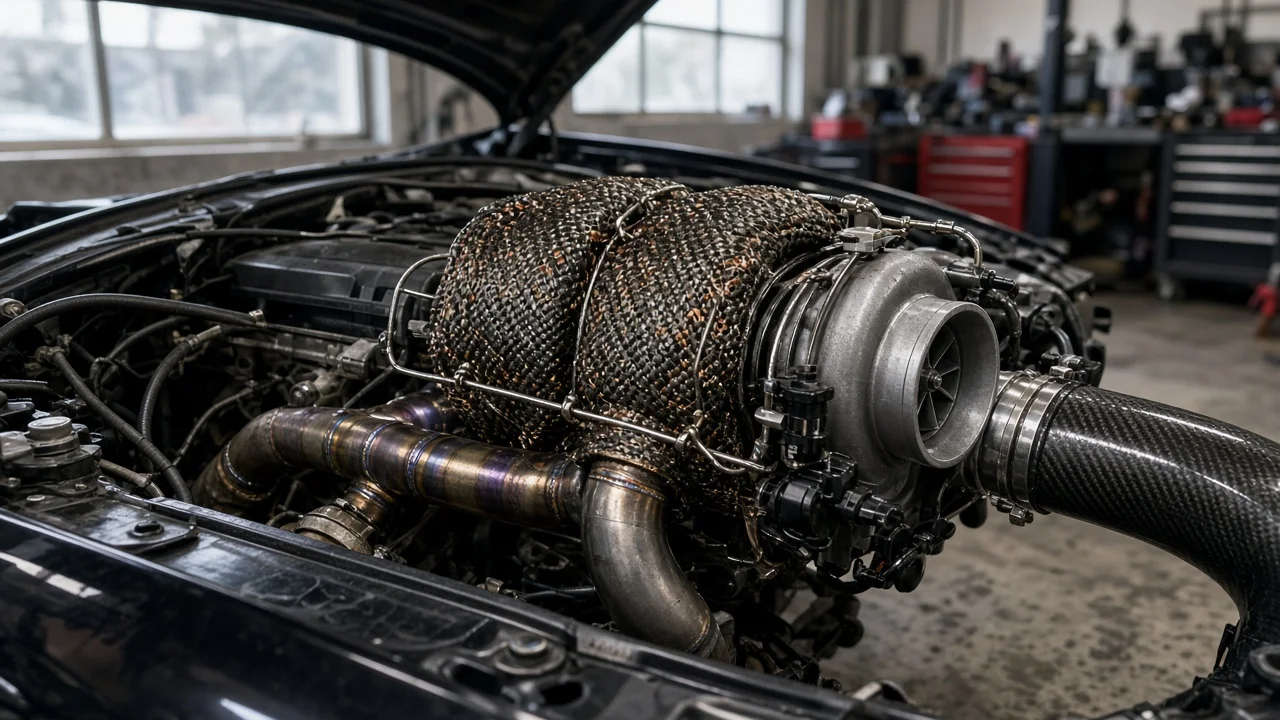
A turbo blanket wraps the turbine housing so more exhaust heat stays in the hot side and less radiates into the engine bay. PTP markets its Lava line around a basalt-derived fiber cover, but the label alone does not make a blanket right for your car. The right choice depends on the exact turbine housing on your engine, the heat problem you are actually trying to solve, the clearance around the turbo and how much inspection and upkeep you are prepared to do.
Define the job the product must do
Start with the problem, not the product. Owners usually buy a blanket to reduce under-hood heat soak, to protect nearby parts such as wiring looms, intake piping, coupler boots and brake or clutch hydraulics, or to keep exhaust energy in the turbine housing. Write down the symptom conditions: does trouble show up after a hot shutdown, in stop-and-go traffic, during repeated hard pulls or only on track days? A blanket addresses radiant heat from the turbine housing, so it makes sense when that housing is the dominant heat source near the affected parts.
Separate symptom reports from verified failures. A forum note that intake temperatures climb in traffic is a symptom; a melted connector or a hardened vacuum line found during inspection is a verified failure. Diagnostic codes for an intake air temperature sensor or a wiring circuit can point toward heat, but they do not prove the turbo is the cause. Review the service history for earlier repairs in the same area, and confirm there is no exhaust leak, failing intercooler or missing factory heat shield before treating a blanket as the fix.
Check compatibility
A turbo blanket is sized to the turbine housing, not to the vehicle. Identify the turbocharger by its part number or the tag on the center section, then confirm the housing frame, the outlet style and whether the wastegate is internal or external. Housings within the same turbo family can differ in A/R and outer shape, and an internally gated housing needs an opening that lets the wastegate arm and actuator move freely. Compare these details with the manufacturer specifications for the exact blanket you are considering rather than relying on a general size name.
Account for model year and engine variant. The same nameplate can use different factory turbos across model years or between engine options, and any upgraded turbo changes the fitment question entirely. Engine configuration matters too: single or twin turbo, top-mounted, low-mounted or rear-mounted units all leave different space for the blanket's thickness and its fasteners. Check clearance to oxygen sensor and exhaust temperature probe bungs, oil feed and drain lines, coolant lines and any factory heat shield that may need to be removed or trimmed for the blanket to sit correctly.
Features that affect the choice
Material is the headline feature of the Lava line, and basalt-based fiber is promoted as a durable, heat-tolerant alternative to cheaper fiberglass covers. Useful evidence is narrower than the marketing language: a stated temperature rating for the specific part, a description of the inner and outer layers, the type of stitching and how the edges are finished. Labels such as race-proven or maximum protection tell you little on their own. If a claim matters to your decision, look for it in the listed specifications rather than in promotional copy.
Attachment and coverage determine how well the blanket works day to day. Spring-and-hook or strap systems differ in how easily they can be removed for inspection and how well they hold tension after repeated heat cycles. Check whether the cutouts line up with your housing's inlet flange, outlet and wastegate, and whether the blanket covers the whole turbine scroll or leaves exposed areas near the parts you are trying to protect. A thicker blanket may insulate better but can create clearance problems in a tight engine bay.
Limitations and ownership costs
Keeping heat inside the turbine housing raises its operating temperature, and some turbocharger makers caution against blankets on certain housings or limit warranty coverage when one is used. Read the turbo manufacturer's guidance and warranty terms before installation. A blanket also hides the housing, so cracks, loose studs and exhaust leaks at the flanges are harder to spot; a proper inspection means removing it. Basalt and similar fibers can irritate skin, so wear gloves when handling the blanket.
Contamination is the main safety concern. A blanket soaked by an oil leak, coolant or fuel can smoke or ignite, so fix the leak first and replace a saturated blanket rather than reinstalling it. Budget for replacement springs, straps or a full blanket over time, and recheck fastener tension at routine service intervals. Know what the product cannot do: it does not lower exhaust gas temperature at its source, cure a weak intercooler, correct a tune or repair an exhaust leak.
Build a practical shortlist
Before comparing listings, confirm the basics on your own engine: the turbo part number, housing frame and outlet style, wastegate arrangement and the measured clearance around the hot side. Note the model year and engine variant so you do not rely on a fitment list meant for a different turbo. Then check each candidate against the same points: matching housing designation, cutouts for your wastegate and sensors, attachment method, stated temperature rating, availability of replacement hardware and compatibility with your turbo's warranty terms.
Drop any option that cannot show a clear fit for your housing, regardless of how it is marketed. Among the blankets that do fit, choose the one whose attachment you can remove and reinstall easily, because regular inspection is part of owning any turbo blanket. If your original complaint was based only on symptom reports, recheck those symptom conditions after installation and compare them with your baseline so you know whether the blanket solved the problem or another fault needs attention.