Funk Motorsport Turbo Blankets: Selection and Review Considerations
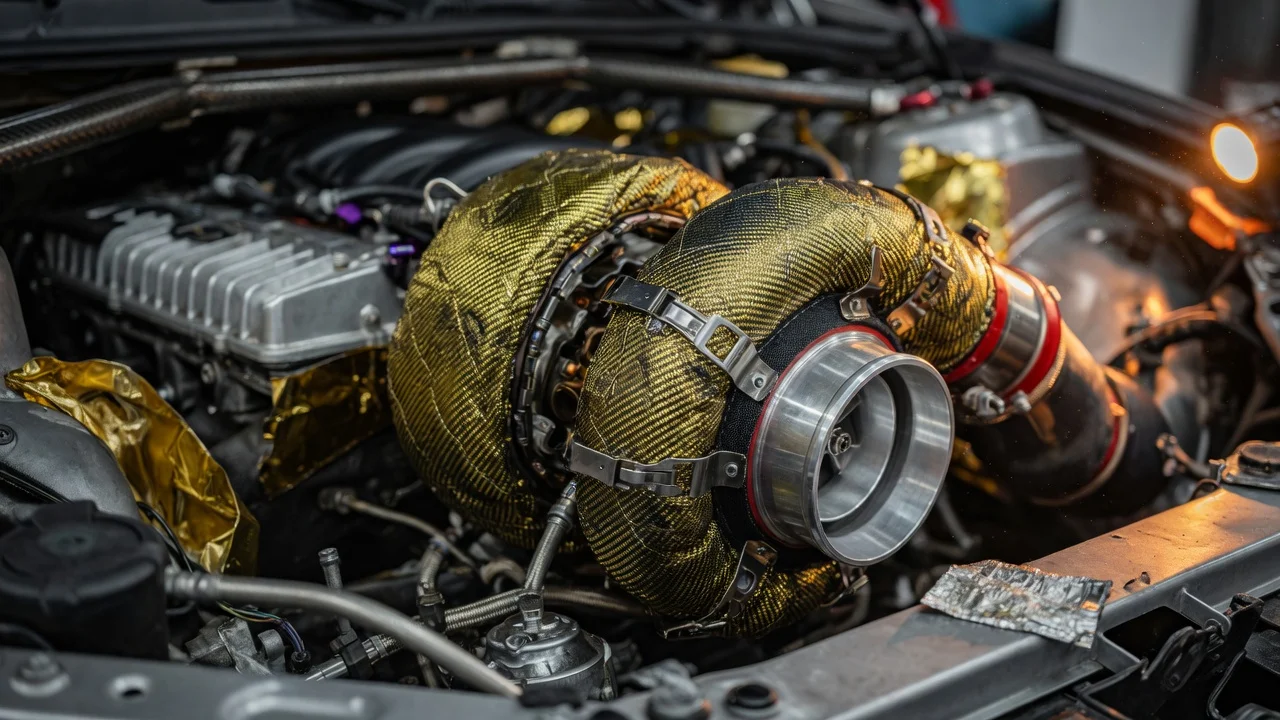
A turbo blanket has a narrow job. It holds heat inside the turbine housing and keeps that heat away from everything else under the hood. Whether a Funk Motorsport turbo blanket suits your car depends less on the brand than on three things: your turbo, your engine bay layout and what you expect the blanket to fix. This guide covers the checks a mechanic would make before ordering one and how to read owner reviews critically.
Define the job the product must do
Start with the problem you are trying to solve. Most owners shop for a turbo blanket because of heat. A hot turbine housing radiates onto wiring looms, plastic intake pipes, brake fluid reservoirs, coolant hoses and the underside of the hood. Some owners want to keep exhaust energy in the turbine for quicker spool, and others simply want a cleaner look on an aftermarket build. Each goal points to a different priority. For heat protection, coverage and the material rating matter most. A spool goal depends on how much of the housing the blanket can actually wrap. Appearance is the least demanding goal.
Then be honest about the vehicle and how you use it. A daily driver with a factory turbo, a weekend track car and a high-boost street build see very different exhaust temperatures and duty cycles. Note the engine configuration and where the turbo sits, either high in the bay or tucked low against the firewall. Check how much clearance there is to nearby parts. If you are chasing a specific symptom, such as melted connector housings or a heat-related fault, confirm it on your own car first. A forum symptom report is not the same as a verified failure on your vehicle. A blanket is protection, not a repair for an exhaust leak or a cooling problem.
Check compatibility
Fitment starts with the turbine housing, not the car model. Aftermarket blankets are generally sized to turbo frame families and housing shapes, so identify exactly which turbo you have. You need the manufacturer, series and frame size, plus the housing A/R if the listing refers to it. Factory turbos make this harder. Many engines change turbo specification between model years or between engine variants of the same model. Some modern designs build the turbine housing into the exhaust manifold, and a universal-style blanket may not fit those at all. Read the part number on the turbo itself or find it in the service history instead of guessing from the vehicle badge.
Next, look at everything around the housing. An internal wastegate needs room for the actuator arm and flap linkage to move freely, and the blanket must not bind it. Other parts that need clearance include oil feed and drain lines, coolant lines on water-cooled center sections, sensor bosses for exhaust temperature probes, and the downpipe and manifold flanges. Compare the blanket's listed fitment against the manufacturer specifications for your turbo. If the product page does not clearly state a frame size or housing type, ask the seller before buying. Twin-turbo and V engine layouts may need two blankets with mirrored or different shapes.
Features that affect the choice
The features worth comparing are the ones you can verify: the stated material and temperature rating, the number of layers, the outer finish, the fastening method, and whether cutouts for the wastegate, sensors and lines come pre-made. Fastening matters more than many buyers expect. Spring and safety-wire closures, stainless straps and bolt-on designs each behave differently after repeated heat cycles. A loose blanket can chafe or shift into contact with moving parts. Clear, documented installation instructions are a real advantage.
Be careful with marketing labels. Claims about racing heritage, large temperature drops or guaranteed spool gains are not evidence unless the listing explains how they were measured, on which turbo and under what symptom conditions. When you read a Funk Motorsport turbo blanket review, separate what the owner actually observed from their impressions of performance. Useful observations include fit on a named turbo, ease of installation and condition after a stated number of months. Reviews that name the turbo model, engine and use are far more useful than star ratings. A complaint about fraying or poor fit also tells you more when it identifies the housing involved.
Limitations and ownership costs
A blanket changes how heat moves, and that has side effects. The turbine housing itself runs hotter because it can no longer shed heat by radiation. Some turbo makers advise against wrapping certain housings or covering the center section, so check your turbo manufacturer's guidance and any warranty terms first. Blankets can also hide problems. A cracked housing, a leaking manifold gasket or a weeping oil line is harder to spot under fabric. Plan to remove the blanket during routine inspection and look for oil or fuel contamination. A soaked blanket is a fire risk and should be replaced, not cleaned.
Ownership costs are mostly labor and eventual replacement. Installation is often easiest with the turbo or downpipe partly removed, and fasteners such as safety wire or springs may not be reusable. Insulating materials break down with heat cycles, so expect the blanket to wear out, sooner on a hard-driven car. A blanket cannot cure an overheating engine, clear diagnostic codes or stop an exhaust leak. It also cannot replace heat shields the factory fitted to protect specific components. If a heat-related fault comes back after fitting one, return to diagnosis rather than adding more insulation.
Build a practical shortlist
Before comparing a Funk turbo blanket with any alternative, gather the same facts for each option. Drop any listing that cannot answer them. A short checklist keeps the comparison focused on your car rather than on promotional copy.
First, confirm that the turbo manufacturer, series, frame size and housing type match the listing. Second, check clearance for the wastegate actuator, oil and coolant lines, sensors and flanges on your engine variant and model year. Third, note the stated material, temperature rating and layer construction. Fourth, find out the fastening method and whether hardware is included and reusable. Fifth, check what your turbo manufacturer says about wrapping and how it affects any warranty. Finally, look for reviews that name the turbo and describe fit and condition over time.
If a product passes every point for your exact turbo, the remaining choice comes down to price, availability and installation preference. If it fails on fitment, no feature makes up for it. When in doubt, have a mechanic look at the engine bay with your turbo in place. A short check of clearances and heat paths usually settles the decision faster than reading more opinions.