Forge Turbo Blankets: Selection and Review Considerations
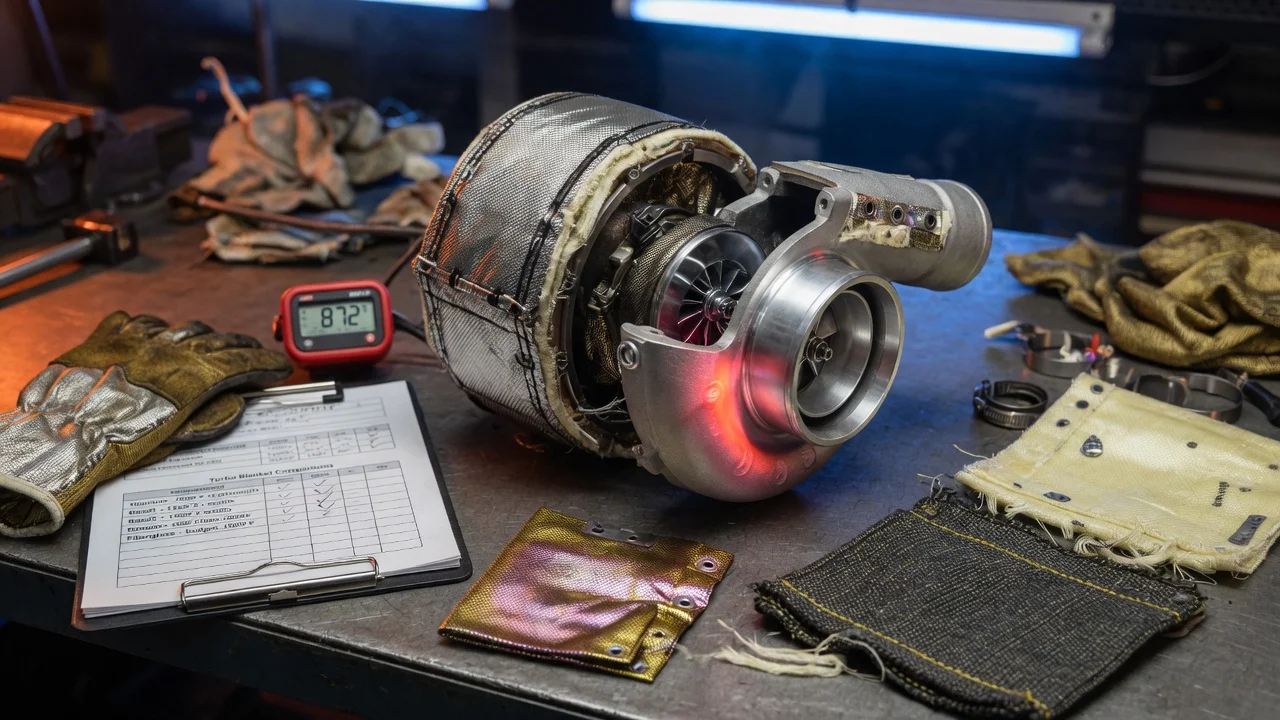
A turbo blanket is a simple part, but choosing one well depends on the exact turbocharger under your hood and the problem you want it to solve. Forge Motorsport sells blankets aimed at particular turbo housings and vehicles, so the useful questions are about fitment, construction and upkeep rather than brand claims. This guide explains how to judge whether a Forge blanket suits your car, what owner reviews can and cannot tell you, and where a blanket stops being the right answer.
Define the job the product must do
A turbo blanket wraps the turbine housing, the hot exhaust side of the turbocharger, and reduces the radiant heat it throws into the engine bay. Owners usually want one for a few practical reasons: protecting wiring, connectors, coolant and boost hoses, and plastic covers that sit close to the turbo; limiting heat soak into the intake tract; and making a modified or track-driven engine bay easier to live with after a turbo upgrade. Some buyers also expect quicker spool or more power. Treat that as a claim to be proven on your own car, not as the reason to buy.
If a specific symptom is driving the purchase, confirm its cause before assuming heat is to blame. Brittle wiring near the turbo, a melted connector or a hardened boost hose is worth a careful inspection: look for an exhaust leak at the manifold or turbine flange, a missing or damaged factory heat shield, and oil weeping onto hot surfaces. Logged intake air temperature under defined symptom conditions, such as idling after a hard drive on a warm day, is far more useful than an impression. Stored diagnostic codes for sensors near the turbo indicate a fault to diagnose, not proof that radiant heat caused it. A symptom report from a forum is a lead; a verified failure is something you have traced on your own vehicle.
Also consider how the car is used and what is planned for it. A daily driver with short trips, a weekend track car and a vehicle due for a turbo replacement have different needs. Check the service history: a recently replaced or aftermarket turbo changes which blanket fits, and an upcoming turbo or manifold job may mean waiting until that work is done.
Check compatibility
Fitment is set by the turbine housing, not by the car's nameplate alone. The same model can carry different turbochargers across model years, facelifts and engine variants, including different power outputs of the same engine family. Confirm the engine configuration, then identify the turbo actually fitted, using the identification tag on the turbo or the service records, and check whether a previous owner swapped it. Compare that against the application stated in the product listing. If the listing names a vehicle rather than a turbo, make sure your year and engine variant are covered, not just the model.
Next, check the interfaces around the housing. An internal wastegate needs room for the actuator rod and flapper; an external wastegate changes the shape of the area to be covered. Aftermarket turbos are often described by inlet flange style, so a blanket made for one housing frame will not suit another. Look for clearance around sensor bosses, oil and coolant lines, and the downpipe connection. Some modern engines integrate the turbine into the exhaust manifold, and a conventional blanket shape may not match that design at all. The blanket also adds thickness, so check space against the firewall, subframe and any factory heat shield. If the factory shield must be removed, note what it was protecting and make sure that part remains covered.
Read the installation instructions alongside the vehicle manufacturer specifications. A blanket is meant to cover the turbine housing, not the bearing housing or the compressor side. On water-cooled turbos, the coolant and oil passages in the center section should stay clear.
Features that affect the choice
Construction is where blankets actually differ: the outer layer, the insulating core, the inner layer facing the housing, the stitching, and how the blanket is held in place. Useful evidence includes a stated temperature rating with an indication of whether it is continuous or peak, a description of the materials, and a clear list of included mounting hardware. Be cautious with labels such as race proven or quoted percentage drops in underhood temperature that give no test conditions. Numbers from different brands cannot be compared unless the method is described.
Most choices involve trade-offs. Thicker insulation retains more heat but needs more clearance. A full wrap covers more surface but is harder to fit around wastegate hardware and sensors. A snug fit stays in place but takes longer to remove for service. Spring-type fasteners are quicker to remove and refit, while tie wire is secure but fiddly and usually not reusable. Color and finish are cosmetic.
When reading a Forge turbo blanket review, weigh it by how much detail it gives. The most useful reviews state the vehicle, model year, engine variant and turbo, how long the blanket has been fitted, and what it looked like when removed. Before-and-after temperature figures mean something only if the reviewer explains how and where they measured, under similar ambient and driving conditions. Claims of faster spool or added power are rarely controlled. A single failure report deserves attention, but check whether an oil leak or an incorrect installation was involved.
Limitations and ownership costs
Installation is done with the engine fully cold. Depending on the layout, it can mean removing factory heat shields, intake piping or even the downpipe, so labor time varies widely between vehicles. Insulation products can give off smoke or odor during the first heat cycles, so follow the manufacturer's break-in guidance. Recheck the fit and hardware after the first few drives, as the blanket can settle.
Ongoing care is simple but important. At each oil change, inspect the blanket for oil or fuel soaking, fraying, broken springs and contact with nearby parts. A soaked blanket is a fire risk: replace it and repair the leak that caused it. The blanket must come off for any turbo or manifold work, and some hardware may need replacing afterward. Over time it is effectively a consumable, and how long it lasts depends on heat cycles, contamination and how often it is removed.
A blanket cannot repair an exhaust or boost leak, a cracked turbine housing or worn turbo bearings, and it does not replace the cool-down practice recommended for your engine. Some enthusiasts worry that retained heat raises housing and fastener temperatures; that question is not settled, so follow the turbo manufacturer's guidance and check whether a blanket affects any warranty that still applies.
Build a practical shortlist
Before buying, run each candidate through a short checklist. Have you confirmed the turbo, housing style and wastegate type on your specific car, including model year and engine variant? Does the listing name that turbo, flange or application? Is there clearance around sensors, lines, the downpipe and any heat shield you plan to keep? Are the materials and temperature rating stated clearly? Is the mounting hardware included, and is it reusable? Do the instructions specify what the blanket should and should not cover? Do any reviews describe a matching vehicle in detail? And what is the total cost, including labor, replacement hardware and eventual replacement?
If a Forge blanket matches your turbo and the problem has been traced to radiant heat from the turbine housing, it is a reasonable, low-complexity fix. If fitment is uncertain or the symptom points to a leak or a failing component, deal with that cause first. A blanket works best as protection added to a healthy engine, not as a repair.