Choosing a Mishimoto Turbo Blanket: Fitment, Features and Limits
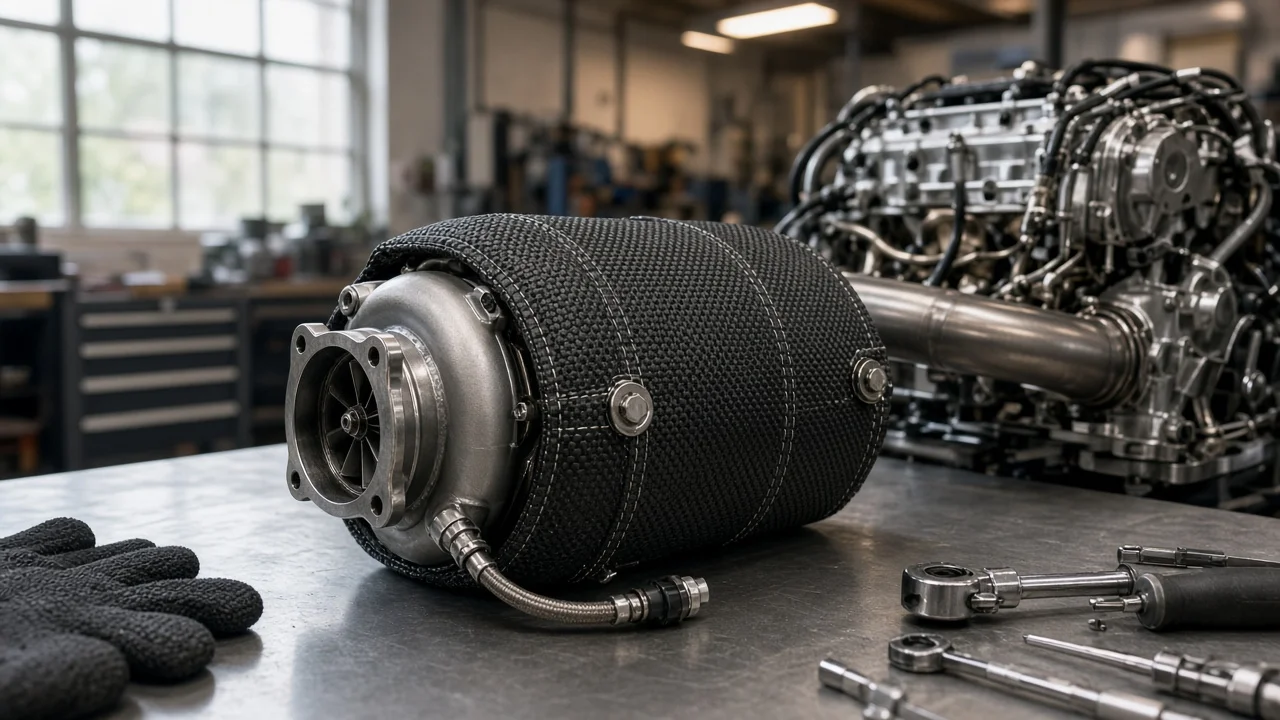
A Mishimoto turbo blanket wraps the turbine housing so more radiant heat stays in the housing and less reaches the engine bay. Whether it is worth fitting depends on what you are trying to protect, which turbocharger is actually installed and how the vehicle is used. This guide covers how to match a blanket to your turbo, which features matter and what a blanket cannot fix.
Define the job the blanket must do
Start with what you are protecting. A turbo blanket covers the hot side of the turbocharger and holds radiant heat in the housing and exhaust stream instead of letting it bake nearby parts. Typical goals include shielding wiring looms, connectors, coolant and vacuum hoses, intake couplers and brake components close to the turbine housing. Another goal is reducing how much heat soaks into the intake tract after a hard run or a stop in traffic. How the vehicle is used matters too. A daily driver idling in traffic, a tow vehicle under sustained load and a track car with repeated heat cycles each stress the engine bay differently. Also note practical constraints: how much room exists around the housing, whether you can reach the turbo without removing other parts, and whether the engine configuration places the turbo low in the bay or close to the firewall.
Separate symptom reports from verified failures before buying. Soft power after a heat-soaked restart, a hot smell or a general sense that the bay runs hot are symptoms, and each can have several causes. A verified heat problem shows up on inspection as a hardened or melted loom, cracked boots, discolored connectors or a hose that keeps failing at the same spot near the turbine housing. Review the service history for repeated replacement of the same part, and record the symptom conditions: ambient temperature, load and whether the engine was just shut down. Diagnostic codes for intake air temperature or circuit faults can support a heat theory. They can also come from a failed sensor or damaged wiring elsewhere, so confirm the cause before assuming a blanket will clear them.
Check compatibility
A turbo blanket is sized to the turbine housing, not to the vehicle badge. Mishimoto generally identifies its blankets by turbine housing family, so the first job is to establish exactly which turbo is installed. Model year and engine variant matter because the same nameplate may use different turbochargers, housings or exhaust routing depending on the year, engine option and market. Used vehicles add uncertainty, since a previous owner may have upgraded the turbo or changed the downpipe. Check the housing tag or casting markings, receipts and service records, and compare them with the manufacturer specifications for your build.
Next, check the interfaces around the housing. Note whether the wastegate is internal, with an actuator rod and flapper arm near the turbine side, or external. Locate the oxygen sensor bung, any exhaust gas temperature probe, the oil feed and drain lines, coolant lines on water-cooled center sections and the downpipe flange. The blanket needs openings or clearance for each of these without rubbing or pinching. Many factory turbos come with bolted heat shields, so decide whether the blanket will replace them or work alongside them. Removing factory shielding can affect clearance, emissions-related components or warranty coverage depending on the vehicle.
Features that affect the choice
Coverage and fit drive results more than marketing language. Look for a blanket shaped for your housing family, with openings that line up with the inlet and outlet flanges and the wastegate area. It should sit snugly without gaps that let heat escape or loose edges that can contact other hot parts. The fastening method affects both installation and later removal, so check what hardware is included, how it attaches and whether you can tension it securely in the space available.
Treat temperature ratings and material descriptions as manufacturer specifications that describe the product under the maker's conditions, not as a measured result in your engine bay. Labels such as race-proven or maximum protection say little on their own. Useful evidence is concrete: a clear fitment description, the listed housing family, the included hardware list, installation instructions you can read before buying, and photos from owners with the same turbo and engine variant showing how the blanket clears lines and sensors. If a listing does not state something you need, measure or ask rather than assume.
Limitations and ownership costs
Fit the blanket on a cold engine. Depending on the vehicle, installation may require removing a factory heat shield, the downpipe or nearby intake plumbing to get the blanket fully around the housing. Insulation fibers can irritate skin, so wear gloves and long sleeves. Budget for possible extras such as new gaskets or fasteners if you disturb exhaust joints, plus your own labor time or shop hours.
A blanket is a wear item. Heat cycling, vibration and contact with fluids degrade the outer layer and fasteners over time. Insulation that has absorbed oil or fuel is a fire risk and should be replaced, after the leak that caused it is fixed. A blanket also hides the housing, which makes cracks, exhaust leaks or a weeping oil line harder to spot, so remove it during periodic inspection. Some builders question how retained heat affects housing and turbo durability. That is a reason to keep oil supply, cooldown habits and maintenance correct rather than relying on the blanket alone.
A blanket cannot fix a boost leak, a weak intercooler, a failing sensor or an oil leak, and it will not clear codes caused by something other than heat. If the original problem was a single exposed hose or loom, rerouting or sleeving it may solve the issue on its own.
Build a practical shortlist
Before comparing options, write down the facts: vehicle, model year, engine variant, turbo part number or housing family, wastegate type and the specific components you need to protect. For each Mishimoto blanket that might fit, confirm that the listed housing family matches yours. Check that its openings suit your flanges, wastegate and sensor positions, that the included hardware works in your space, and whether it is meant to replace or sit alongside the factory shield. Also note how easily it can be removed for inspection and what installation will involve on your vehicle.
If more than one option passes those checks, choose the one with the clearest fitment information for your exact turbo rather than the broadest claims. After installation, check clearances once the engine has cooled and recheck the fasteners after the first few heat cycles. Add the blanket to your regular inspection routine so wear, contamination or leaks are caught early. Then revisit the original symptom conditions to see whether the heat problem actually improved.