Choosing a Titanium Turbo Blanket: Fitment, Features and Limits
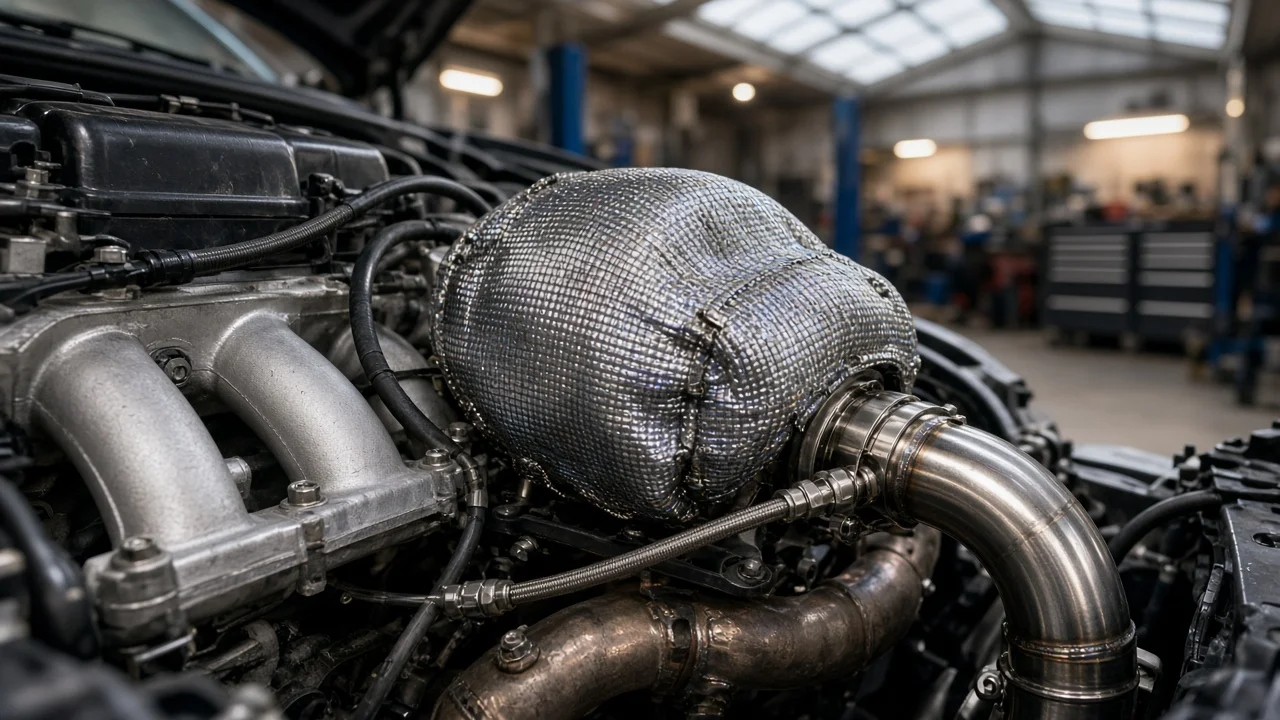
A titanium turbo blanket wraps the turbine housing so more exhaust heat stays inside the turbo and less radiates into the engine bay. Choosing one is mostly about fitment. The right decision also depends on why you want it, what your engine configuration looks like and whether the problem you are trying to solve has been confirmed. This guide walks through each step so you can compare options on facts rather than labels.
Define the job the product must do
Start with the reason. Most owners buy a turbo blanket for three things: less under-hood heat, protection for nearby parts such as wiring, intake piping, brake lines and plastic covers, and less heat soak raising intake temperatures after stops. Some want a tidier look or a cooler bay to work in. Each goal sets different priorities. Protecting one nearby part calls for good coverage on that side. General heat reduction rewards full coverage and a close fit.
Separate symptom reports from verified failures before treating a blanket as the fix. A melted connector, a cracked coolant hose or rising intake air temperature readings are evidence. A forum thread saying a model 'runs hot' is not. Note the symptom conditions, such as whether the problem appears after hard driving, in traffic or after shutdown. Check stored diagnostic codes and logged sensor data, and review the service history for earlier heat damage or repairs. If the heat comes from an exhaust leak, a failing gasket or a missing factory heat shield, a blanket only hides the cause. Also consider how the car is used. A daily driver, a track car and a towing vehicle see different heat cycles and tolerate different amounts of maintenance.
Check compatibility
A turbo blanket is shaped for a turbine housing, not for a car. The same nameplate can use different turbochargers across model years, trim levels and engine variants, and a mid-cycle update can change the housing even when the engine code looks similar. Identify the actual unit from the part number or tag on the turbo, or from documentation for your exact vehicle. Don't rely on a listing that names only the make and model. Aftermarket and upgraded turbos need the same check, because the housing family and size determine the blanket pattern.
Then look at the parts around the housing. Note whether the outlet uses a V-band clamp or a bolted flange, whether the inlet is divided or single-scroll, and whether the wastegate is internal with an actuator arm or external. The blanket must clear the wastegate linkage through its full travel, leave room for oil and coolant lines, and not crush sensors or wiring near the housing. Check whether factory heat shields have to come off, and whether removing them conflicts with manufacturer specifications or emissions equipment requirements in your state. Finally, confirm there is still space between the housing and the firewall, subframe or strut tower once the blanket adds its thickness.
Features that affect the choice
On a turbo blanket, the word titanium usually describes a fiber blend, a coating or a finish rather than a solid metal shell. Many of these products use basalt or a similar mineral fiber with a titanium-colored or titanium-treated outer layer. That is not necessarily a drawback, but the label alone tells you little. Look for a stated maximum continuous temperature rating and the materials of the inner insulation and outer jacket. Also check how the seams are stitched, since the thread and seams often fail before the fabric does.
Fastening is the next trade-off. Springs and hooks are quick to install and easy to remove, but they can loosen with vibration. Wire ties or safety wire hold firmly but make inspection slower. A blanket cut for one specific housing generally covers better than a universal pattern, which may leave gaps around studs and the wastegate. Thicker insulation holds in more heat but needs more clearance. Be cautious with claims of specific temperature drops or horsepower gains unless the seller explains how they were measured and on what engine. Results depend heavily on the car, the turbo and how it is driven.
Limitations and ownership costs
A blanket does not repair anything. It will not stop an oil leak, fix a cracked manifold, correct a tune that runs high exhaust temperatures or make up for a struggling cooling system. Because it covers the housing, it can also hide early signs of trouble such as a leaking gasket, a loose clamp or a cracked stud. Install it only after the turbo and surrounding joints pass inspection, and plan to remove it periodically to check underneath.
Oil contamination is the main safety concern. Insulation soaked with oil or fuel can smolder or ignite on a hot housing, so replace an oil-soaked blanket rather than cleaning and reusing it. Budget for replacement fasteners, new gaskets if you disturb the downpipe or heat shields during fitting, and labor time if the turbo is hard to reach. Some turbocharger makers and vehicle warranties address aftermarket heat insulation, so read the terms that apply to your unit before fitting one to a new or warrantied car. Opinions also differ on whether keeping more heat in the housing affects its long-term durability. Follow the turbo manufacturer's guidance where it exists.
Build a practical shortlist
Narrow the field with a short checklist. Confirm the turbo part number and housing type for your model year and engine variant. Match the outlet style, scroll design and wastegate type to the blanket pattern. Check the stated temperature rating, the inner and outer materials, and the seam construction. Pick a fastening method that suits how often you expect to remove it. Verify clearance to lines, linkages, sensors and nearby body or chassis parts. Read the warranty terms for both the blanket and the turbo.
Then compare the remaining options on documented details rather than rankings or headline claims. Prefer listings that publish the exact housing fitment, dimensions and installation instructions. Keep a record of the problem you set out to solve, including the symptom conditions and any diagnostic codes or sensor logs, so you can judge afterward whether the blanket helped. If the original heat problem returns or new symptoms appear, remove the blanket and inspect the turbo before blaming the product.