Power Brake Booster: What It Does, How the Types Differ, and Signs of Failure
A power brake booster is the component that reduces the effort needed to press the brake pedal. It sits between the pedal and the brake master cylinder. When you press the pedal, the booster adds force to your input so the master cylinder can build hydraulic pressure without you having to push very hard. The booster does not stop the car by itself, and it does not create brake fluid pressure directly. It assists the driver, and the master cylinder, lines, calipers or wheel cylinders, pads and rotors do the actual braking. The short answer to how boosters differ is that they use different sources of assist. Most conventional gasoline cars use engine vacuum. Many diesel trucks and some heavier vehicles use hydraulic pressure from the power steering system. Many hybrids, electric vehicles and newer vehicles with advanced driver assistance use an electrically driven unit. Which type a vehicle has depends on the model, model year, powertrain and sometimes trim, so check the specific vehicle before buying parts or diagnosing a problem.
Where the Booster Fits in the Brake System
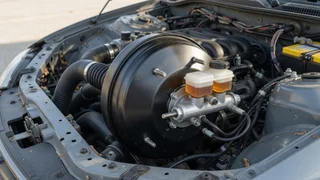
On most vehicles, the booster is mounted on the driver's side of the firewall, the panel that separates the engine bay from the cabin. The brake pedal pushrod enters it from the cabin side. The master cylinder bolts to its front face on the engine-bay side. On a vacuum booster, the large round housing is easy to spot, often with a rubber vacuum hose attached by a one-way check valve.
It helps to separate the booster from the master cylinder, because the two are often confused. The master cylinder converts mechanical force into hydraulic pressure in the brake fluid. The booster only multiplies the mechanical force going into the master cylinder. A booster fault usually affects how hard the pedal feels. A master cylinder fault more often affects how far the pedal travels or whether it holds pressure.
How a Vacuum Brake Booster Works
A vacuum booster is a sealed canister divided by one or more flexible diaphragms. With the brakes released, both sides of the diaphragm are held at vacuum, so the pressure on each side is equal and the diaphragm stays put.
When you press the pedal, a control valve inside the booster closes off the vacuum to the rear chamber and lets in outside air at atmospheric pressure. Now there is atmospheric pressure behind the diaphragm and vacuum in front of it. That pressure difference pushes the diaphragm forward, adding force to the pushrod that operates the master cylinder. When you release the pedal, the valve reconnects both chambers to vacuum and a return spring pulls the diaphragm back.
The amount of assist depends on the diaphragm area and the vacuum available. That is why some boosters use a tandem design with two diaphragms. It provides more assist without a larger diameter housing where firewall space is limited.
The vacuum usually comes from the engine's intake manifold on gasoline engines. A one-way check valve on the booster lets air out toward the engine but stops it from flowing back in. This holds a reserve of vacuum so you still get a few assisted stops if the engine stalls.
Vacuum Pumps on Diesel, Turbocharged and Some Modern Engines
Diesel engines generally do not produce useful manifold vacuum. Some gasoline engines with turbocharging, direct injection or throttle strategies that reduce pumping losses may not produce enough vacuum either. These vehicles often use a separate vacuum pump, driven mechanically by the engine or powered electrically, to supply the booster. The booster itself works the same way. Only the vacuum source is different, and the pump becomes another part that can affect brake assist.
Hydraulic Brake Boosters
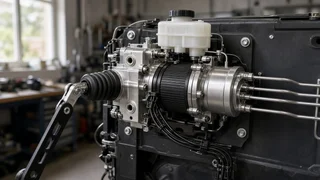
A hydraulic booster, often called a hydro-boost unit, uses pressurized fluid instead of vacuum. On many applications, that pressure comes from the power steering pump. The booster sits in the power steering circuit and uses a spool valve and piston to add force to the master cylinder pushrod when the pedal is pressed.
Hydraulic boosters are common on diesel pickups, heavy-duty trucks and some vans. They are compact compared with a vacuum booster of similar output, and they do not depend on engine vacuum. Most include an accumulator that stores some pressure for a limited number of assisted stops if the pump stops supplying pressure. A practical consequence is that power steering problems, such as low fluid, a worn pump or a leaking hose, can show up as brake pedal problems on these vehicles.
Electric and Electro-Hydraulic Brake Boosters
Electric vehicles have no engine vacuum, and hybrids may shut the engine off often. Many of these vehicles use an electrically operated brake booster. Designs vary. Some use an electric motor and gear mechanism to push on the master cylinder directly, often described as electromechanical boosters. Others use an electric pump and a pressure accumulator to supply hydraulic assist.
Electric boosters can do more than reduce pedal effort. Because a control module can apply the brakes, they work with automatic emergency braking, adaptive cruise control and regenerative braking. In vehicles with regenerative braking, the system blends friction braking with energy recovery from the electric motor while trying to keep pedal feel consistent. Some integrated systems combine the booster, master cylinder and stability control functions into one assembly.
Because they are tied into vehicle electronics, these units usually need scan-tool diagnosis. Some also require specific service procedures after replacement or brake bleeding. Procedures vary by manufacturer and model, so the factory service information for the exact vehicle matters more here than with a traditional vacuum booster.
Comparing the Main Booster Types
Type | Assist source | Typical use | Notable considerations; Vacuum booster | Engine intake vacuum or a separate vacuum pump | Most conventional gasoline cars and light trucks | Simple and widely serviceable; leaks in the hose, check valve or diaphragm reduce assist; Hydraulic (hydro-boost) | Pressurized fluid, often from the power steering pump | Many diesel and heavy-duty trucks, some vans | Compact; shares fluid and pump with steering, so steering faults can affect braking; Electric / electro-hydraulic | Electric motor or electric pump with accumulator | Hybrids, EVs and many newer vehicles with driver assistance features | Supports automatic braking and regenerative blending; diagnosis often needs a scan tool
Common Symptoms of a Failing Brake Booster
A booster that has lost its assist does not usually make the brakes stop working. The hydraulic system is still connected to the pedal. However, the pedal becomes much harder to push and stopping distances can increase significantly if the driver is not prepared for the extra effort. Treat any loss of assist as a problem that needs prompt attention.
Hard or stiff brake pedal that takes much more effort than normal, especially on the first stops after starting; Hissing sound from under the dashboard or near the firewall when pressing or releasing the pedal, which can point to a vacuum leak in the diaphragm or valve; Engine idle changes or stalling when the brakes are applied on vacuum-boosted gasoline engines, because a leak lets extra air into the intake; Pedal that is slow to return, sticks or feels inconsistent from stop to stop; On hydraulic boosters, a hard pedal combined with steering noise, heavy steering or power steering fluid leaks around the booster; On electric boosters, brake system warning lights or messages, along with changes in pedal feel
Some of these symptoms overlap with other faults. A hard pedal can also come from a collapsed or cracked vacuum hose, a failed check valve, a weak vacuum pump or seized calipers. A spongy pedal or one that sinks toward the floor more often points to air in the lines, leaking fluid or a worn master cylinder rather than the booster.
A Basic Check for a Vacuum Booster
A widely used preliminary check for vacuum boosters can be done in the driveway with the vehicle parked and secured. It does not replace a proper diagnosis, but it helps narrow things down.
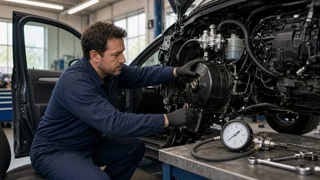
With the engine off, press the brake pedal several times to use up any stored vacuum. The pedal should become firm. Hold moderate pressure on the pedal and start the engine. If the booster is working, the pedal should drop slightly under your foot as vacuum builds and assist begins. To check that the booster holds vacuum, run the engine briefly, shut it off and wait a short time. Then press the pedal. You should get a few assisted applications before it turns firm. If the pedal does not drop on startup, or assist disappears immediately after shutdown, inspect the vacuum hose and check valve before condemning the booster.
The check valve can usually be tested by removing it and confirming that air passes in one direction only. Vacuum hoses should be free of cracks, softening and collapse. On vehicles with a vacuum pump, the pump output also needs to be checked. Hydraulic and electric boosters require different tests, generally involving fluid pressure measurements or electronic diagnostics.
Repair or Replace?
Vacuum boosters are generally replaced as a complete unit rather than rebuilt in a typical repair shop, although remanufactured units are common. Small external parts such as the check valve, grommet and vacuum hose are inexpensive by comparison and are worth checking first.
Replacing a vacuum booster usually means separating the master cylinder from it. On many vehicles, the master cylinder can be unbolted and moved aside carefully without opening the brake lines, which avoids having to bleed the system. If the lines are opened, the brakes must be bled properly. The pushrod length between booster and master cylinder also matters. Some replacement boosters require this clearance to be checked or adjusted, because an incorrect setting can cause brake drag or excess pedal travel.
Hydraulic booster replacement involves the power steering system as well, and that system typically needs to be refilled and bled afterward. Electric booster replacement often involves module programming or calibration, which may limit it to shops with the right equipment. In all cases, brakes are safety-critical. Anyone without the tools, service information or experience should leave this work to a qualified technician.
Choosing a Replacement Part
Boosters are vehicle-specific. Mounting pattern, pushrod design, diaphragm size, single or tandem construction and master cylinder fitment can all change between model years, generations and drivetrain options, and sometimes between vehicles with and without features like stability control. Matching the part by vehicle identification number or the original part number is the most reliable approach.
When comparing new and remanufactured units, look at the warranty terms and whether a core return is expected. Also check whether the replacement includes the check valve or grommet, or whether those must be transferred or bought separately.
Key Takeaways
A power brake booster multiplies pedal force so the master cylinder can build brake pressure with less effort. Vacuum boosters dominate conventional gasoline vehicles; hydraulic boosters are common on diesel and heavy-duty trucks; electric boosters are increasingly common on hybrids, EVs and vehicles with automatic braking. A failed booster usually means a hard pedal rather than complete brake loss, but stopping power can drop sharply without extra effort, so it should be fixed promptly. Check inexpensive parts such as hoses, the check valve and the vacuum pump or power steering supply before replacing the booster. Correct part matching and proper installation, including pushrod clearance and any required bleeding or calibration, are essential for safe brake operation.