Hydroboost Brakes: How the Hydraulic Brake Booster Works and How It Differs from Vacuum Assist
Hydroboost is a type of power brake booster that uses hydraulic pressure from the power steering system, rather than engine vacuum, to multiply the force you apply to the brake pedal. It does the same job as the familiar round vacuum booster found on most gasoline cars: it makes the pedal easier to press while still producing strong braking. The difference is where the assist comes from. Hydroboost is most common on diesel pickups, heavy-duty trucks, commercial vans and other vehicles where engine vacuum is weak, unavailable or not enough for the vehicle's weight. Whether a given vehicle has it depends on the model, model year, engine and trim, so the only reliable way to know is to check the vehicle itself or its service information.
What a hydroboost brake booster is
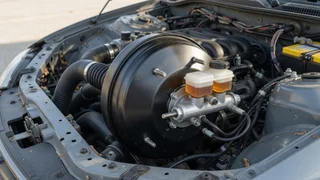
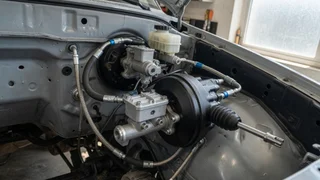
A hydroboost unit is a compact housing mounted between the brake pedal pushrod and the brake master cylinder. It contains a spool valve, a power piston and, in most designs, an accumulator. It is plumbed into the power steering circuit, so the power steering pump supplies both the steering gear and the brake booster. The name Hydro-Boost originated as a Bendix trade name, but hydroboost is now widely used as a generic term for this kind of hydraulic brake assist.
It is important to separate the booster from the brakes themselves. The hydroboost unit only provides assist. The master cylinder, brake lines, calipers or wheel cylinders and brake fluid still form a separate, sealed brake hydraulic system. Power steering fluid and brake fluid never mix. Two different fluids are at work: power steering fluid drives the booster, and brake fluid applies the brakes.
How a hydroboost brake system works
1) The power steering pump circulates fluid continuously while the engine runs. On a hydroboost vehicle, that fluid flows through the booster before or alongside its path to the steering gear. 2) When you press the brake pedal, the pushrod moves the spool valve inside the booster. 3) The spool valve restricts and redirects flow, building pressure behind the power piston in proportion to how hard you press. 4) The power piston pushes on the master cylinder pushrod, adding force on top of your foot effort. 5) The master cylinder converts that combined force into brake fluid pressure, which applies the brakes at each wheel. 6) When you release the pedal, the spool valve returns, pressure drops and fluid flows back to the power steering reservoir.
The accumulator is a small reservoir of stored pressure, charged either by a spring or by pressurized gas depending on the design. If the engine stalls, the drive belt breaks or the pump stops supplying flow, the accumulator provides a limited reserve of assisted stops. After that reserve is used, the brakes still work, but the pedal becomes much harder to press because you are applying the brakes without assist.
Why some vehicles use hydroboost instead of vacuum
A conventional vacuum booster relies on low pressure in the engine intake manifold. Gasoline engines with a throttle plate naturally create that vacuum. Diesel engines generally do not, because they are not throttled the same way. Turbocharged and supercharged engines spend time under boost rather than vacuum, and engines with aggressive camshafts can produce weak or unstable vacuum at idle. Manufacturers can add a separate vacuum pump, but hydroboost is another solution that uses a pump the vehicle already has.
Hydroboost also suits heavy vehicles. A hydraulic booster can generate substantial assist from a relatively small housing, which is useful when a large truck or van needs strong braking and there is limited space under the hood or near the firewall. For the same reasons, aftermarket hydroboost kits are popular in custom builds, engine swaps and off-road vehicles where vacuum is limited or the original booster will not fit.
Hydroboost vs. vacuum vs. electric brake boosters
Feature | Hydroboost | Vacuum booster | Electric or electro-hydraulic booster; Assist source | Power steering pump pressure | Engine intake vacuum or a dedicated vacuum pump | Electric motor or electrically driven pump; Typical use | Diesel trucks, heavy-duty pickups, commercial vans, custom builds | Most conventional gasoline cars and light trucks | Hybrids, EVs and many newer vehicles with electric power steering and driver-assist systems; Physical size | Compact for the assist it delivers | Larger diameter housing, especially for heavy vehicles | Varies by design; Reserve assist when power is lost | Limited stops from the accumulator | Limited stops from stored vacuum | Depends on the system design; Main dependency | Engine running, belt, pump and steering circuit health | Steady vacuum supply and a sealed diaphragm | Electrical power and control electronics; Common failure signs | Hard pedal, chatter, hissing, fluid leaks, poor reserve | Hard pedal, hissing, possible rough idle from a vacuum leak | Warning lights, stored fault codes, changes in pedal feel
Pedal feel is a matter of design and setup. Some drivers describe hydroboost as firm and responsive. Others notice a slightly different feel compared with vacuum assist. This is an editorial generalization, not a measured comparison, and it varies by vehicle and booster tuning.
Many newer vehicles have moved to electric power steering, which removes the engine-driven power steering pump. Without that pump, classic hydroboost cannot work unless a separate electric hydraulic pump supplies it. This is one reason electric and electro-hydraulic brake boosters have become more common. Which approach a specific truck uses can change between generations of the same model, so it should be confirmed for the exact vehicle.
Advantages and drawbacks
Advantages: • Works independently of engine vacuum, which suits diesel, boosted and high-performance engines. • Delivers strong assist from a compact unit, which helps heavy vehicles and tight engine bays. • Uses an existing pump instead of requiring a separate vacuum pump. • Assist does not fade when an engine produces little vacuum, such as under boost or at high load. Drawbacks: • Braking assist depends on the power steering pump, drive belt and hoses. A belt or pump failure affects steering and brake assist at the same time. • More high-pressure hydraulic connections mean more potential leak points. • Contaminated or incorrect power steering fluid can affect both steering and brake assist. • Replacement units and repairs can cost more than a simple vacuum booster on some vehicles. Pricing varies widely, and no specific figures are given here.
Common hydroboost problems and symptoms
• Hard brake pedal with the engine running: often points to low pump output, a slipping belt, low fluid, a restricted hose or an internal booster fault. • Hissing or whooshing when braking: some flow noise can be normal, but new or loud noise can indicate internal wear or air in the power steering fluid. • Pedal chatter or pulsing that is not caused by warped rotors or ABS activity: can come from aerated fluid or a worn spool valve. • Brakes dragging or self-applying: may indicate an internal booster problem or a pushrod adjustment issue. This should be addressed promptly. • Little or no reserve assist with the engine off: suggests a weak or failed accumulator. • Fluid leaks at the booster: wetness around the booster body, pedal pushrod area or line fittings usually means worn seals. • Steering feels heavy or jerky while braking: both systems share one pump, so pump weakness can show up in both.
Many symptoms that seem to involve the booster actually start elsewhere in the power steering system. Fluid level, fluid condition, belt tension and hose integrity are worth checking before condemning the booster itself. In the same way, a soft or sinking pedal usually points to the brake hydraulic system, such as the master cylinder, a leak or air in the brake fluid, rather than to the hydroboost unit.
Basic checks owners can understand
A common reserve check works like this. With the engine off, press the brake pedal several times to use up any stored assist. Then hold firm pressure on the pedal and start the engine. On a healthy system, the pedal typically drops slightly as assist comes in. A separate check is to run the engine, shut it off, and see whether you still get some assisted applications before the pedal turns hard. If there is little or no reserve, the accumulator may be suspect. These are general indicators, not a full diagnosis, and procedures can differ by vehicle.
Air in the power steering fluid is a frequent cause of noise and erratic assist after a hose, pump or booster has been replaced. Bleeding procedures usually involve filling the reservoir with the specified fluid and turning the steering wheel from lock to lock, often with the front wheels raised, along with brake pedal applications. The exact sequence varies by manufacturer and should come from the service information for the specific vehicle. Use the fluid type the vehicle specifies. Some systems call for a dedicated power steering fluid, while others use a particular automatic transmission fluid, and mixing the wrong types can damage seals.
Repair and replacement considerations
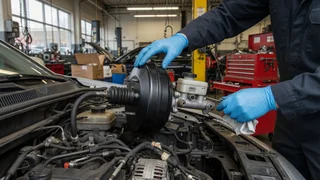
When a hydroboost unit fails internally, the usual repair is replacement with a new or remanufactured unit rather than rebuilding it in the driveway. The accumulator can hold stored pressure even with the engine off, so a booster should not be disassembled without the correct procedure. Because the booster is part of the braking system, the work affects vehicle safety. A shop or experienced technician should handle it unless you have the proper knowledge and service information.
For conversions or swaps, the booster is only one piece of the system. The power steering pump needs adequate flow and pressure for both steering and braking. The master cylinder bore and the booster need to be matched to the brake calipers and the vehicle's weight. The hoses must be rated for the system's high pressure, and pedal geometry and pushrod length need to be correct. Aftermarket kit makers typically publish compatibility guidance for their own products, and that guidance should be followed for any specific installation.
Bottom line
A hydroboost brake system replaces vacuum assist with hydraulic assist from the power steering pump. It suits diesel engines, boosted engines, heavy vehicles and builds where vacuum is limited or space is tight. It delivers strong, compact assist, but it ties braking assist to the health of the power steering pump, belt and fluid. If you own a vehicle with hydroboost, keep the power steering system in good condition and treat a hard pedal, chatter, leaks or weak reserve as reasons for prompt inspection. If you are choosing a booster for a build, match the whole system rather than just the booster unit.