Brake Booster Repair: Repair Options and Service Decisions
What brake booster repair actually covers
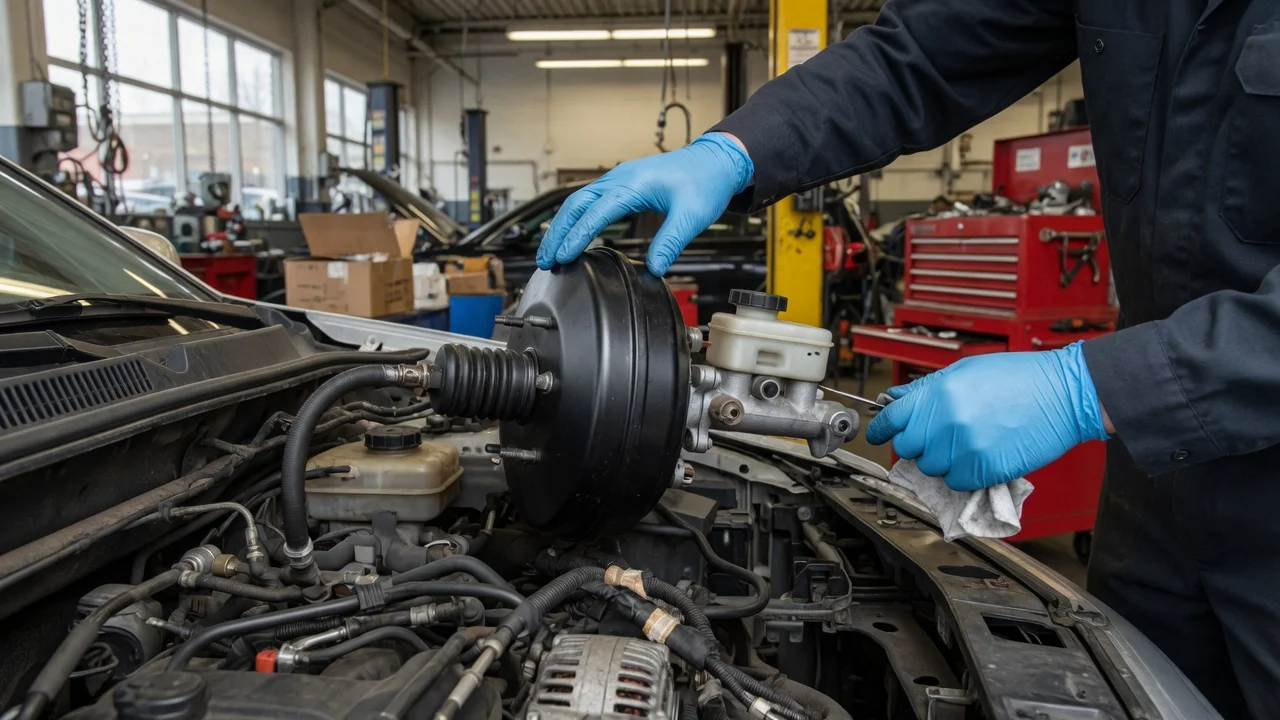
A brake booster multiplies the force you apply at the pedal so the master cylinder can generate enough hydraulic pressure to stop the vehicle. Repair in this context usually means restoring that assist, either by rebuilding the booster or replacing it as a complete assembly, and correcting the vacuum, hydraulic or electrical supply that makes the unit work. The right path depends on booster type, how the unit failed, and whether related parts such as the master cylinder, check valve, hoses or power-steering circuit are also leaking or weak.
The essential decision is rarely “repair versus ignore.” Assist loss lengthens stopping distance and raises pedal effort. A leaking diaphragm, ruptured vacuum hose, failed check valve, internal hydraulic leak or electronic-booster fault is a safety issue. Drive only as far as needed to reach a safe stop and a qualified shop if the pedal is unusually hard, the vehicle takes longer to stop, a hissing sound continues after the engine is off, brake fluid is present in the booster, or a brake or power-steering warning is present. Variant matters: vacuum boosters, hydraulic (hydroboost) units and electronic or electro-hydraulic boosters fail and are serviced differently, and service information is specific to model year, generation, powertrain and market.
How the main booster types are serviced
Vacuum boosters, still common on gasoline engines and on some diesels or hybrids that use an electric vacuum pump, use manifold or pump vacuum acting on a diaphragm. Typical service items are the booster assembly, the one-way check valve, vacuum hose and grommet, and the master cylinder if fluid has entered the booster. Diaphragm repair in the vehicle is uncommon; most shops replace the booster as a unit. Some older or heavy-duty housings can be rebuilt with a diaphragm, seal and check-valve kit when parts and a documented procedure exist.
Hydraulic boosters (often called hydroboost) use pressurized fluid from the power-steering pump instead of vacuum. Assist complaints on these systems can originate in the booster, the pump, the fluid, the belt or the high-pressure hoses. Repair may mean resealing or exchanging the booster, or correcting the steering hydraulic circuit first. Mixing steering and brake hydraulic issues is easy on this layout, so diagnosis has to confirm which circuit actually lost pressure.
Electronic and electro-hydraulic boosters, used on many later-model vehicles with stability control, automatic emergency braking or regenerative braking, combine a motor, sensors and control software with hydraulic hardware. These units are generally replaced as assemblies after scan-tool diagnosis, not rebuilt at an independent shop. Programming, calibration or a manufacturer-specific bleed procedure is often required after replacement. Claims about a given electronic unit should be checked against that vehicle’s service information; repairability is not uniform across brands or model years.
Repair, rebuild or replace
The practical alternatives are: correct only the supply fault (hose, check valve, vacuum pump, power-steering pump or fluid); rebuild the booster with seals and a diaphragm or hydroboost seal kit; replace the booster with a new or remanufactured assembly; and, when fluid has contaminated the booster, replace or overhaul the master cylinder at the same time. No single published price, labor time or durability figure applies across vehicles, markets or dates, so cost comparisons need a quote for the specific configuration rather than a generic average.
Option What it addresses When it is the better fit Main limits; Supply-side repair only Vacuum leak, failed check valve, weak vacuum pump, low or aerated power-steering fluid, belt or hose fault Booster itself holds vacuum or hydraulic pressure, and assist returns after the supply fault is fixed Does not fix a torn diaphragm, internal hydroboost leak or failed electronic actuator; Booster rebuild Worn diaphragm, seals or hydroboost internals when a kit and procedure exist Housing is sound, parts are available, and labor cost is clearly below a quality replacement unit Not available for many late-model and electronic units; quality depends on kit and assembly practice; New or remanufactured booster Failed booster, contaminated interior, or a unit that is not serviceable as a rebuild Fastest path on most passenger cars; reman units are common where cores are returned Must match the correct vacuum, hydroboost or electronic part; some electronic units need programming; Booster plus master cylinder Brake fluid inside the booster, a wet firewall, or a leaking master-cylinder rear seal Fluid contamination will damage a new booster if the master cylinder is left leaking Adds parts and bleed time; skipping it often causes a repeat failure
Rebuild is preferable when the booster is a serviceable vacuum or hydroboost housing, a complete kit is listed for that part number, and a shop experienced with that design will assemble and test it. Replacement is preferable when the shell is corroded or damaged, the vehicle uses an electronic booster, no rebuild kit is published, or the labor to rebuild approaches the cost of a new or remanufactured unit. Supply-only repair is preferable when a vacuum gauge, pump test or power-steering pressure test shows the booster is intact and the assist loss tracks a hose, valve, pump or fluid problem. Combined booster and master-cylinder service is preferable whenever fluid has entered the booster, because residual fluid attacks the diaphragm and can ruin a new unit.
Decision criteria that should drive the choice
Confirmed failure location: booster, vacuum or hydraulic supply, master cylinder, or electronic control, based on tests for that system rather than pedal feel alone. Booster type and serviceability for the exact model year, engine and market, including whether a rebuild kit, reman unit or electronic replacement with programming is listed. Contamination: brake fluid in a vacuum booster, or mixed or aerated fluid in a hydroboost and steering circuit. Related work already required: master-cylinder replacement, ABS bleed, vacuum-pump replacement or power-steering hose and pump service. Parts quality: new original-equipment, new aftermarket, or remanufactured with a core return; mismatch here is a common source of fitment and durability complaints. Shop capability: vacuum-gauge and leak-down testing for vacuum units, power-steering pressure testing for hydroboost, and scan-tool plus calibration support for electronic boosters.
Compatible comparison requires the same vehicle configuration. A vacuum-booster labor estimate is not interchangeable with hydroboost or electronic-booster work. Remanufactured and new units should not be priced as if they were the same part. Test results from a vacuum leak-down, a hydroboost pressure test or a diagnostic trouble code are different kinds of evidence; a stored code is a reason to inspect the named circuit, not proof that the booster itself has failed.
What a competent inspection usually includes
For a vacuum booster, a typical sequence is: confirm pedal effort with the engine off versus running; listen for a hiss at idle and after shutdown; inspect the vacuum hose, grommet and check valve; measure manifold or pump vacuum against the figure in that vehicle’s service information; and check for brake fluid at the rear of the master cylinder and inside the booster. A booster that will not hold vacuum after the hose and check valve are known good is a candidate for rebuild or replacement.
For hydroboost, inspection usually covers fluid level and condition, belt tension and condition, hose leaks, pump noise, steering effort and brake assist together, because one pump feeds both circuits on many layouts. For electronic boosters, the starting point is a scan of brake and related modules, a check for software updates specified by the manufacturer, and inspection of wiring, connectors and the hydraulic portion before any parts are ordered. Exact pass/fail values are model-specific and are not listed here; use the procedure published for that vehicle.
Ownership and safety notes that affect the service call
Brake assist is a safety system. After any booster, master-cylinder or hydroboost hydraulic work, the hydraulic circuit must be bled until firm, and electronic units may need a manufacturer bleed or calibration routine. A firm pedal in the bay does not guarantee correct assist on the road if vacuum supply, pump pressure or electronic control is still out of specification.
Independent shops can handle most vacuum-booster replacements and many hydroboost jobs. Dealer or specialist service is the more reliable route when the vehicle uses an electronic booster that requires factory-level scan tools, or when a campaign, software update or parts supersession applies to that model year. If quotes differ widely, ask each shop which failure they have confirmed, which part number they intend to install, and whether programming or a master cylinder is included, so the quotes describe the same job.
Gaps in public, vehicle-agnostic figures
This guide does not assign a universal parts price, labor hours or expected service life. Those figures vary by booster type, whether the master cylinder is replaced, regional labor rates, and whether the replacement is new or remanufactured. It also does not treat a generic hard-pedal complaint as proof of a failed booster: vacuum leaks, seized calipers, a failing master cylinder, a collapsed hose, a weak vacuum pump and electronic faults can produce similar pedal feel. Vehicle-specific vacuum, pressure and diagnostic limits should come from the service information for that model year, powertrain and market rather than from a generic threshold.