How an Electric Brake Booster Works
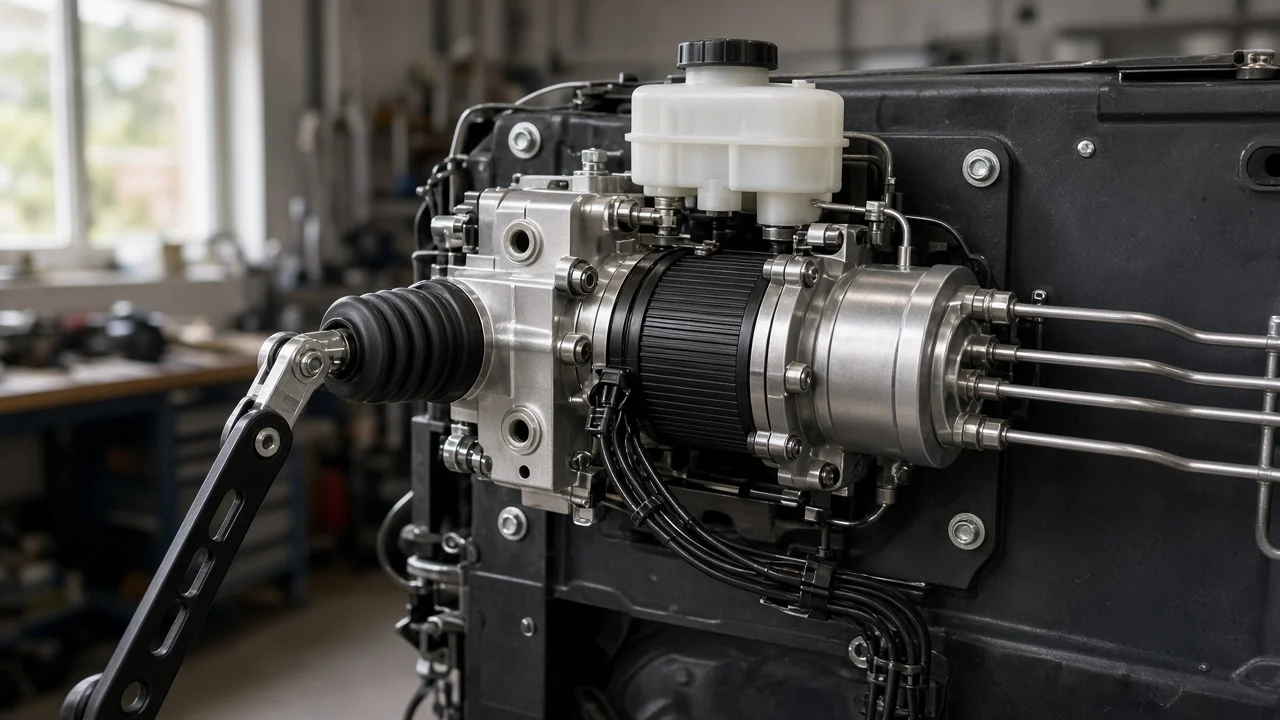
Most drivers never think about brake assist until the pedal suddenly feels hard. Traditional boosters rely on engine vacuum, but hybrids, electric vehicles and many newer gasoline models use an electric brake booster instead. This guide explains, from a brake technician's perspective, what the unit does, how its parts work together, which designs behave differently, and what you can reasonably check yourself before a professional diagnosis is needed.
The Short Answer
An electric brake booster multiplies the force from your foot using an electric motor instead of engine vacuum. A sensor measures how far and how quickly you press the pedal, a control unit calculates how much help you need, and the motor pushes on the master cylinder piston alongside your foot. The master cylinder then pressurizes brake fluid, which travels through the lines to each caliper or wheel cylinder and clamps the brake pads against the brake rotors. The rest of the braking system works as it always has; only the source of assistance changes.
Two qualifications matter. First, the term covers more than one design, from a motorized booster mounted where a vacuum unit used to sit to fully integrated brake-by-wire modules. Second, the booster only provides assist. If it fails, most designs keep a mechanical or hydraulic fallback so you can still stop the car, but the pedal will need far more effort.
Inside the Electric Brake Booster System
Although every manufacturer packages it differently, a typical electric brake booster diagram shows four main elements: a pedal input rod, a pedal travel sensor, an electronic control unit and a motor with a gear mechanism. When you press the pedal, the input rod moves and the sensor reports its position to the control unit. Software compares that input with vehicle speed and other data, then commands the motor.
The motor usually drives a reduction gearset that converts rotation into straight-line movement, often through a ball screw or similar spindle. That movement adds force to the master cylinder piston in proportion to driver demand. Because the motor responds electronically, it can build pressure quickly and hold it precisely, which is why the same hardware can support automatic emergency braking and adaptive cruise control without the driver touching the pedal.
Many systems also include a reaction element so the driver still feels resistance that matches the braking effort. Engineers tune this pedal feel deliberately, so an electronic brake booster can feel slightly different from a vacuum unit while still working correctly.
Why Hybrids and EVs Rely on It
A vacuum booster needs a steady supply of vacuum. Electric drive motors produce none, and some modern gasoline engines with direct injection or turbocharging may not supply enough under all conditions. An electric booster removes that dependence. It also allows regenerative braking to be blended with friction braking: during light stops, the control unit can let the drive motor slow the car and recover energy, then add hydraulic pressure only when more deceleration is needed. The driver feels one consistent pedal while the system decides how to divide the work. This is one reason the pads and rotors on some hybrids and EVs wear slowly, although rust and sticking hardware from infrequent friction use can become the bigger concern.
Designs and Conditions That Change the Picture
Not every system described as electric works the same way. Some vehicles keep a conventional vacuum booster and simply add an electric vacuum pump; that is a vacuum system with an electric supply, not an electric booster. A standalone electromechanical booster replaces the vacuum unit but still works with a separate stability control module. Integrated brake-by-wire units combine boosting, stability control and anti-lock functions in one assembly, and many of them separate the pedal from the hydraulics during normal driving, using a pedal simulator to create feel while a pump or plunger generates pressure.
Operating conditions matter too. These units can draw substantial electrical current during hard stops, so a weak 12-volt battery, a poor ground or a failing charging system can trigger warnings or reduced assist. Software updates, sensor calibration after component replacement and correct vehicle fitment of replacement parts all affect how the system behaves. On integrated designs, routine hydraulic work such as replacing a caliper or flushing brake fluid may require a scan tool to run a specific bleeding routine.
What You Can Check as an Owner
Start with the dashboard. A brake system, booster or stability control warning means the control unit has detected a problem, and the owner's manual usually explains how serious each message is. Note when it appears: at startup, after a jump start, during hard braking or in cold weather. That pattern helps a technician narrow the cause.
Pay attention to pedal feel. A suddenly hard pedal, a pedal that sinks, a delayed response, or a new buzzing or whining sound during braking is worth recording. Some motor noise when you press the pedal is normal on certain designs, so compare it with how your car usually sounds rather than with a vacuum-boosted vehicle.
You can also check basics that affect the whole system: brake fluid level and condition in the reservoir, battery health and terminal connections, and visible wear on brake pads and rotors measured against the manufacturer's wear limits. Worn friction material increases pedal travel and is easy to mistake for a booster fault. Avoid opening bleeder screws or disconnecting the unit on an integrated system unless the service procedure for your vehicle allows it.
Limitations and When to Stop Driving
This explanation describes how electric brake boosters generally work; specific layouts, fallback behavior and service procedures vary by manufacturer, model and year. The factory service information for your vehicle is the authority on component location, diagnostic codes, bleeding steps and replacement parts. Booster faults are normally diagnosed with a scan tool that reads module data, not by sight or sound alone.
If the pedal becomes hard, travels further than normal, or a red brake warning appears, treat it as a safety issue. Stop driving when it is safe to do so, and have the vehicle inspected or towed to a qualified technician rather than relying on the fallback mode. Reduced assist can greatly lengthen stopping distances, especially in an emergency. For less urgent symptoms, such as an intermittent amber warning, book a professional inspection promptly and bring your notes on when the problem occurs.