How to Test a Brake Booster
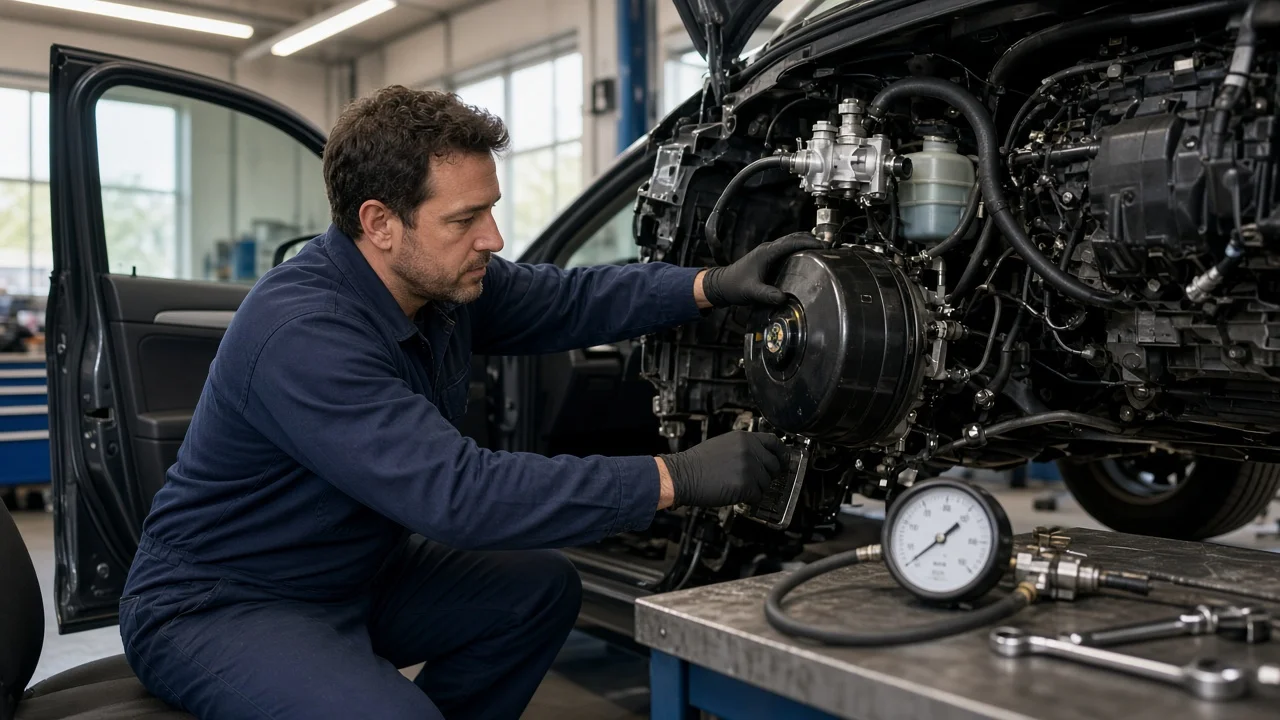
A hard brake pedal is the classic sign of a failing brake booster, but it is not the only explanation. Knowing how to test a brake booster lets you separate a booster fault from vacuum supply problems, hydraulic issues or worn friction parts before you buy anything. The checks below apply mainly to vacuum boosters. Hydraulic and electric assist units need their own procedures from the service information for your vehicle.
Establish the symptoms
Start by pinning down exactly when the pedal feels wrong. Does it go hard only on the first stop after a cold start, after the engine has been shut off, at idle in traffic, or all the time? Describe the feel precisely. A high, hard pedal that needs much more leg force suggests a loss of assist, while a soft, spongy or sinking pedal points elsewhere. Listen for a hiss from under the dash as you press the pedal, and notice whether the engine idle drops, surges or stumbles when you brake. A check engine light with lean-running codes can also be related, because a large vacuum leak at the booster lets unmetered air into the engine.
Recent changes matter as much as the symptoms. Note any brake work such as new brake pads, brake rotors or a fluid flush, as well as engine or intake repairs where a vacuum hose could have been disturbed. Also confirm what kind of assist your vehicle uses. Most gasoline engines feed a vacuum booster from the intake manifold, many diesels use an engine-driven vacuum pump, some trucks use hydraulic assist from the power steering system, and many hybrids and electric vehicles use an electric brake booster. The tests in this guide are for vacuum systems.
Distinguish plausible causes
A failing booster usually shows several signs together: a hard pedal, a hiss when braking, an idle change when the pedal is pressed, and assist that disappears quickly after the engine is switched off. Those point to a torn diaphragm or a leaking internal valve. However, the booster can only work with the vacuum it receives. A cracked, collapsed or loose vacuum hose, a failed one-way check valve, a blocked manifold fitting, low engine vacuum or a weak diesel vacuum pump will produce a hard pedal even when the booster itself is healthy. If the pedal feels fine with the engine running but hard after the car has been parked, suspect the check valve or a slow leak before the booster.
Other faults are often mistaken for a bad booster. A spongy pedal usually means air in the brake fluid or swelling hoses, not lost assist. A pedal that slowly sinks under steady pressure suggests an internal master cylinder leak or an external fluid leak. A hard pedal with normal assist can come from glazed or contaminated friction material, pads worn beyond their wear limits, a seized caliper or slide pins, or replacement parts with incorrect vehicle fitment. Because the booster assists all wheels equally, a pull to one side points to a caliper or hydraulic problem at that corner.
Checks in a useful order
When checking a brake booster, begin with observations that need no tools. Park on level ground with the parking brake set and the transmission in Park or neutral. Check the brake fluid level and condition at the master cylinder reservoir, and look for wetness where the master cylinder bolts to the booster, since brake fluid there can indicate a leaking master cylinder rear seal. Trace the vacuum hose from the booster to the engine, checking for cracks, soft or collapsed sections and loose fittings, and listen near the booster and hose for hissing with the engine idling.
Next, run three pedal tests. First, with the engine off, pump the pedal several times to use up any stored vacuum, then hold light, steady pressure and start the engine. The pedal should move down slightly as vacuum builds. Second, run the engine for a minute or two, switch it off, wait briefly, and apply the pedal several times. The first applications should feel assisted and then grow progressively firmer. Third, with the engine running, hold the pedal down, shut the engine off and keep holding for about 30 seconds. The pedal should not push back up against your foot.
Some checks need tools or specifications. The check valve can be removed from the booster and tested so that air passes only from the booster side toward the engine. A vacuum gauge teed into the supply hose shows whether the engine delivers vacuum within the manufacturer's specification at idle. Diesel vacuum pumps, hydraulic boosters and electric boosters require pressure testing or scan-tool diagnostics best left to a qualified technician. Do not road test a vehicle with a suspected brake fault on public roads.
Interpret the findings
If the pedal drops when the engine starts, keeps its reserve after shutdown and stays put during the hold test, the booster and its vacuum supply are very likely working, and the cause of a hard or poor pedal lies in the hydraulics or friction components. If the pedal does not drop at start-up, assist is missing, but that result alone does not show whether the booster or its supply has failed. A good vacuum reading at the hose combined with a failed start-up test points toward the booster. A low or absent reading points toward the hose, check valve, manifold port or engine condition.
A reserve that disappears on the first pedal press after shutdown, with no hiss from inside the cabin, usually implicates the check valve or a hose leak. A pedal that rises during the hold test, a hiss under the dash that changes with pedal position, or an idle stumble only while braking supports an internal booster leak. Before replacing the booster, confirm that the vacuum supply is good, the check valve seals and the master cylinder is not leaking fluid into the booster, because an unresolved master cylinder leak can damage a replacement unit.
Urgency and next action
Treat any loss of brake assist as a safety problem. Stop driving and arrange professional service if the pedal becomes very hard to press, the vehicle takes noticeably longer to stop, the pedal sinks toward the floor, the brake warning light stays on, or fluid is leaking. Without assist the brakes still work hydraulically, but far more force is needed and stopping distances can increase sharply in an emergency. There is no reliable way to predict how long a weakening booster or leaking hose will last.
When you contact a shop, bring your notes: the year, make, model, engine and assist type, when the problem started, what the pedal feels like, the result of each pedal test, any hissing or idle change, the fluid level and any recent repairs. If a gauge reading was taken, record it alongside the specification. This information helps the technician confirm the fault quickly and order the correct booster, check valve or hose for your vehicle rather than replacing parts on a guess.