Bad Brake Booster Vacuum Hose: Symptoms and Leak Checks
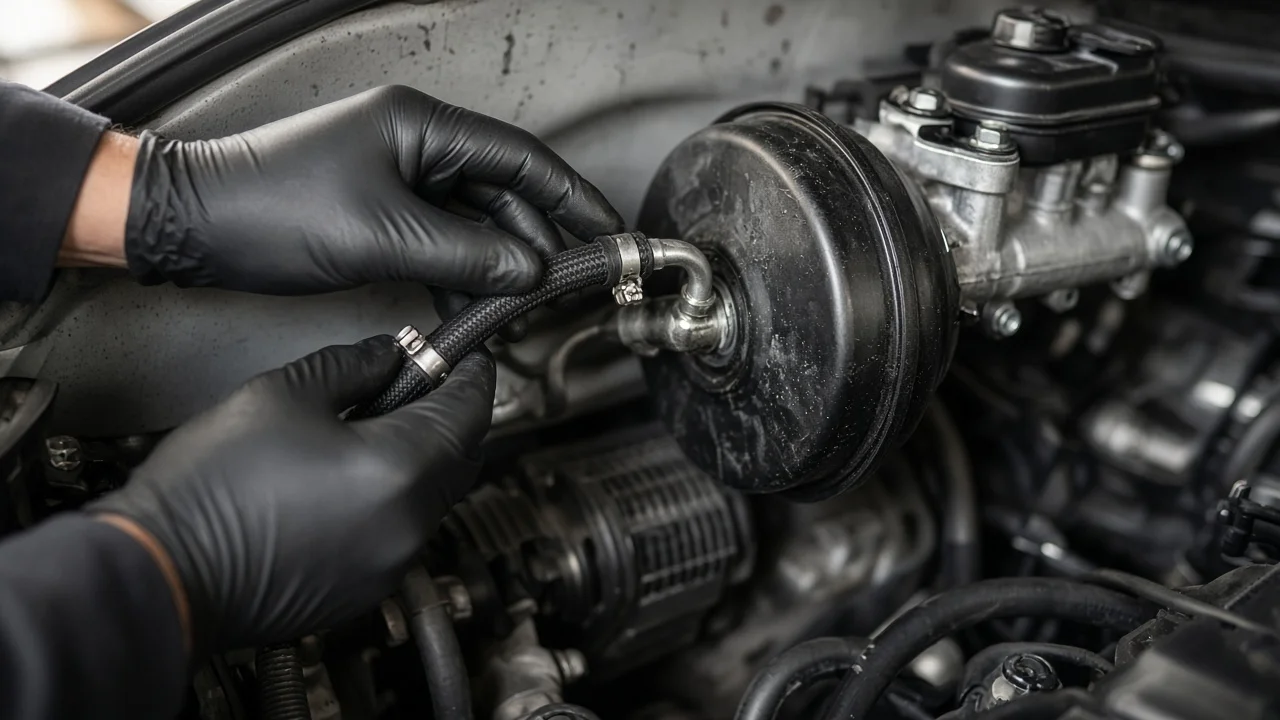
Most gasoline vehicles use engine vacuum to power the brake booster, which multiplies the force your foot puts on the pedal. A rubber or molded plastic hose, usually fitted with a one-way check valve, carries that vacuum from the engine to the booster. When the hose cracks, collapses or comes loose, the brakes still work, but stopping takes much more effort. Here is how a failing hose shows itself, what else can cause the same complaints, and how to check it in a sensible order.
Establish the symptoms
The classic sign of a bad brake booster vacuum hose is a hard, high brake pedal that needs noticeably more force to slow the car. Many owners notice it most on the first few stops after a cold start or when braking at idle. A leaking hose also lets unmetered air into the intake. That can cause a hissing sound under the hood, a rough or unusually high idle, an engine that stumbles or stalls when you press the brake, and a check engine light. The stored codes often point to a lean condition.
Before you diagnose anything, write down when the problem appears. Note whether it happens cold or warm, at idle or while driving, and whether the hiss gets louder or quieter as you press the pedal. Note any recent work as well: intake, air filter housing, valve cover or engine repairs can easily disturb a hose or leave it misrouted. This record makes it much easier to tell a brake booster vacuum hose leak apart from a hydraulic or engine fault.
Distinguish plausible causes
The hose itself is the most direct suspect. Rubber hardens and cracks with heat and age, oil contamination softens it until it collapses under vacuum, and the clamps, end fittings or the rubber grommet at the booster can loosen. A hose fault fits best when a hard pedal comes together with idle changes or lean codes and the hiss is under the hood. It becomes less likely if the hose is firm, seated properly and passes a leak test.
Other parts of the vacuum system can cause the same symptoms. A check valve that sticks closed starves the booster, and one that leaks lets the booster lose its stored vacuum. A torn diaphragm inside the booster usually hisses inside the cabin near the pedal, and the noise changes as the pedal moves. Low engine vacuum from an intake leak elsewhere or a mechanical problem reduces assist even when the hose is sound. Diesel engines and some gasoline engines use a separate vacuum pump, which can fail on its own.
Some symptoms point away from the vacuum circuit altogether. A soft, spongy or sinking pedal suggests a hydraulic problem such as air or a leak in the brake fluid system, or a worn master cylinder. Pulling, grinding or vibration points toward brake pads, brake rotors, a caliper or contaminated friction material. A booster fault changes how much effort the pedal needs. It does not normally make the pedal travel farther.
Checks in a useful order
Start with checks that need no tools. With the engine off and cool and the vehicle in park, trace the hose from the intake manifold or vacuum pump to the booster. Look for cracks, splits at the bends, swelling, oil soaking, and loose clamps or fittings. Gently flex the hose: it should feel firm, not brittle or mushy. With the engine idling, listen along the route for a hiss, keeping your hands and clothing well away from belts, fans and hot surfaces.
Two simple pedal tests check whether the booster is getting and holding vacuum. With the engine off, press the pedal several times until it feels firm, which uses up the stored vacuum. Then hold light pressure on the pedal and start the engine. The pedal should drop slightly as assist returns. For the reserve test, run the engine briefly, switch it off, and apply the brake. A healthy system should give at least one assisted application before the pedal firms up. Use the vehicle service information for the expected result on your model.
Confirming the fault takes tools and specifications. A vacuum gauge connected at the source and at the booster end of the hose shows whether vacuum is lost along the line. You can test the check valve for one-way flow, though on many vehicles it is built into the hose. A smoke test shows exactly where air enters. A scan tool reads codes and fuel trims. Compare every reading against the manufacturer specifications. If you lack the equipment or the data, these tests belong with a qualified technician.
Interpret the findings
If the pedal does not drop when the engine starts, vacuum is not reaching the booster. Likely reasons are a disconnected, blocked or collapsed hose, a stuck check valve, a weak vacuum source or a failed booster. If the pedal drops but the reserve test fails, vacuum is leaking from the hose, the check valve or the booster. A hiss at the pedal that changes with pedal movement points to the booster. A hiss at the hose that changes engine idle points to the hose or its connections.
Each of these results narrows the cause but does not settle it. A hose fault is confirmed by visible damage, by smoke escaping from it, or by normal vacuum at the source that drops at the booster end. Do not replace a booster on the strength of a hiss alone. When you replace the hose, match the part to the exact vehicle and engine, because routing, length and the built-in check valve vary. Afterward, repeat the pedal tests and recheck idle and codes to confirm the repair.
Urgency and next action
Losing brake assist increases the force and distance needed to stop, so treat it as a safety fault, not a nuisance. Stop driving and arrange a tow if the pedal is so hard that you cannot stop normally, if the pedal sinks or travels farther than usual, if a brake warning light comes on, if fluid is leaking, or if the engine stalls when you brake. There is no safe remaining mileage to rely on once assist is unreliable.
For repair, give the shop the year, make, model, engine and VIN, when the symptom occurs, and the results of your pedal tests. Mention any stored codes and recent work near the intake or engine. While the vehicle is in, have the hydraulic system, brake fluid condition, and pad and rotor wear limits checked as well, so the shop is not working on the hose while another fault goes unnoticed.