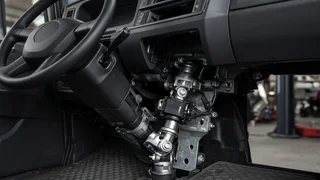
Peterbilt Steering Angle Sensor Location
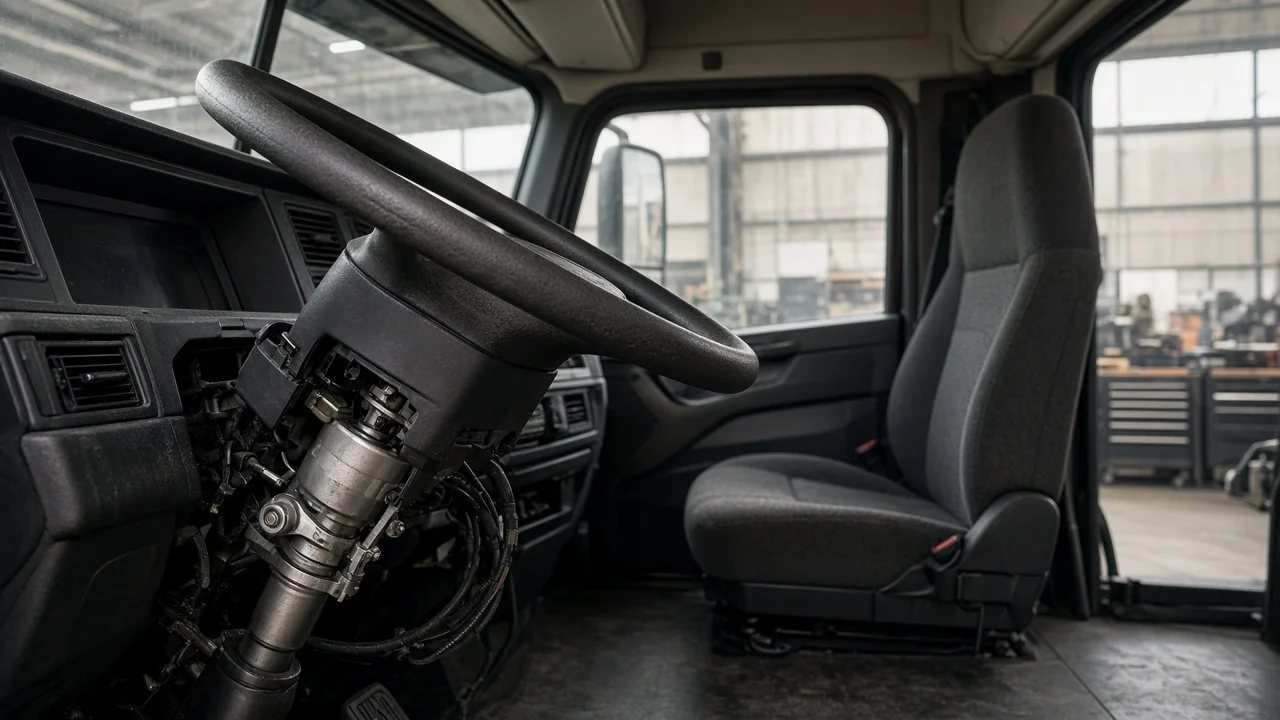
Finding the steering angle sensor on a Peterbilt means tracing a signal path that supports stability control, lane-keeping assistance, and adaptive lighting. The sensor reports wheel position so the chassis controller can compare driver intent with actual vehicle response. On many trucks the component is not mounted directly on the steering wheel but lives along the steering column, inside the column shroud, or near the lower shaft before the gearbox. Because cab configurations and factory options vary, the precise mounting point depends on how the vehicle was assembled and which electronic architecture is present.
Essential answer
The steering angle sensor on a Peterbilt is typically integrated into the steering column assembly. In many heavy-duty layouts, it is housed behind the steering wheel inside the column trim or attached to the column shaft between the wheel and the dash bulkhead. The sensor may be a standalone module with a clock spring, or it may be combined with the turn signal switch body and column electronics. Its job is to convert rotational movement of the steering shaft into a position signal used by several chassis systems.
Location is not universal across every model or year. Some trucks position the sensor at the base of the column near the floor plate, while others place it closer to the steering wheel. A vehicle equipped with electronic stability control generally needs a live steering angle value, so the sensor will be wired into the vehicle network. If the truck has airbag or lane-departure options, the part may share a bracket or wiring connector with other column-mounted switches, which affects exactly where you will find it.
Identification and location
Look for a small square or cylindrical module clipped or screwed to the column shaft. It usually has a short wiring pigtail and a multi-pin connector running from the switch body into the cab harness. Because the sensor may be hidden beneath the plastic column covers, the first visible clue is often the wire path near the tilt mechanism or through the lower dash opening. The part reads shaft rotation, so it must sit concentric with the steering column rather than on a remote lever.
Easily confused items include the steering wheel clock spring, the turn signal switch, and the column-mounted wiper control. The angle sensor may be integrated with the clock spring assembly, but a separate clock spring primarily carries airbag and horn circuits. If you are tracing a diagnostic trouble code, confirm that the code refers to steering angle position and not to a related wheel speed or yaw sensor. Manufacturer-dependent codes should be checked against the vehicle configuration before assuming a specific part is faulty.