Peterbilt Steering Angle Sensor Reset
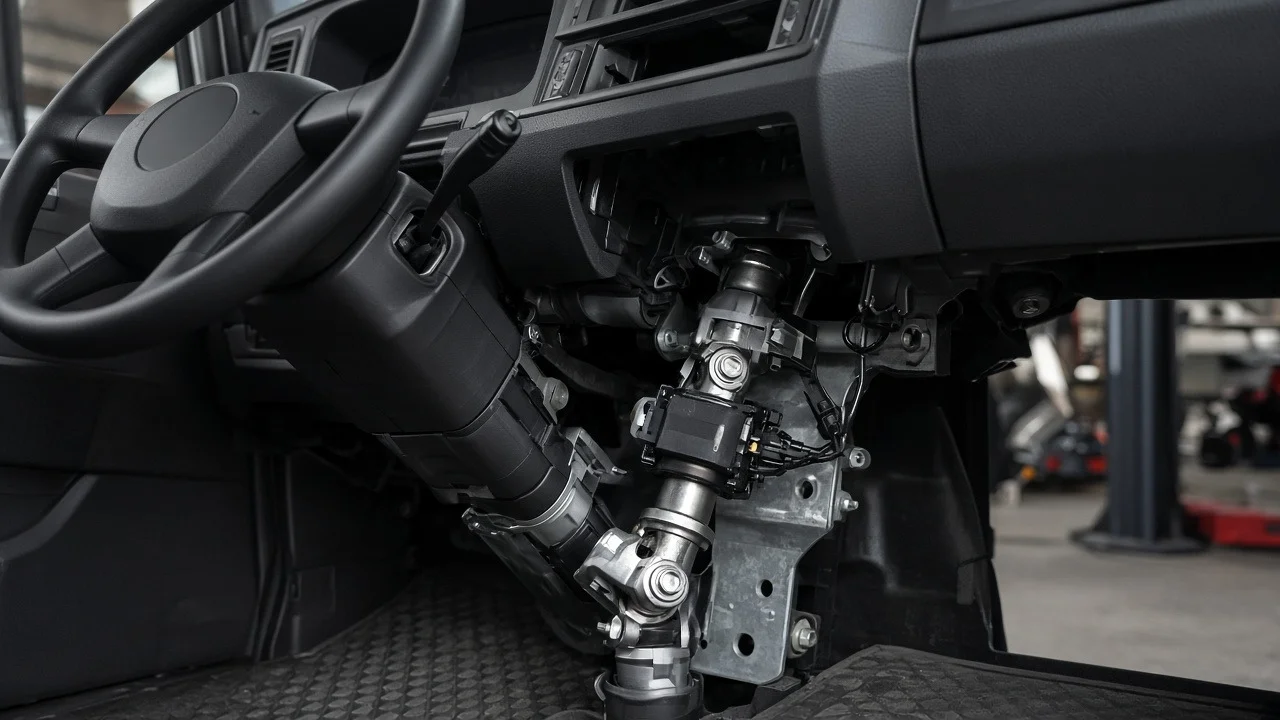
A steering angle sensor reset on a Peterbilt restores the electronic foundation for stability control and driver assistance functions after service or steering work. The procedure addresses a chassis data mismatch rather than a mechanical repair, and its exact steps vary by model year, cab configuration, and diagnostic software. Understanding when the reset is needed, how the system learns center position, and why related chassis factors matter helps prevent unnecessary parts replacement and repeated warning lamps.
Essential answer
A Peterbilt steering angle sensor reset typically clears the stored steering center reference and allows the chassis controller to relearn the straight-ahead position. The reset is often needed after wheel alignment, steering gear replacement, column work, or suspension adjustments because those changes move the relationship between the steering wheel and the road wheels. Without a fresh calibration, stability control and lane departure warnings may compare current steering input against an incorrect neutral point and flag a fault or disable a function.
The scope is informational: a stored fault code is evidence that a system did not receive an expected value or lost calibration, not proof that the sensor itself is damaged. Manufacturer-dependent codes and reset commands should be confirmed against the specific vehicle configuration before parts are condemned. Checking wheel alignment, joint play, ride height, and mounting points is usually appropriate first-step diagnosis because a worn drag link end, loose steering shaft coupling, or incorrect axle position can create the same warning condition as an uncalibrated sensor.