Diagnose Peterbilt engine derate
The short answer
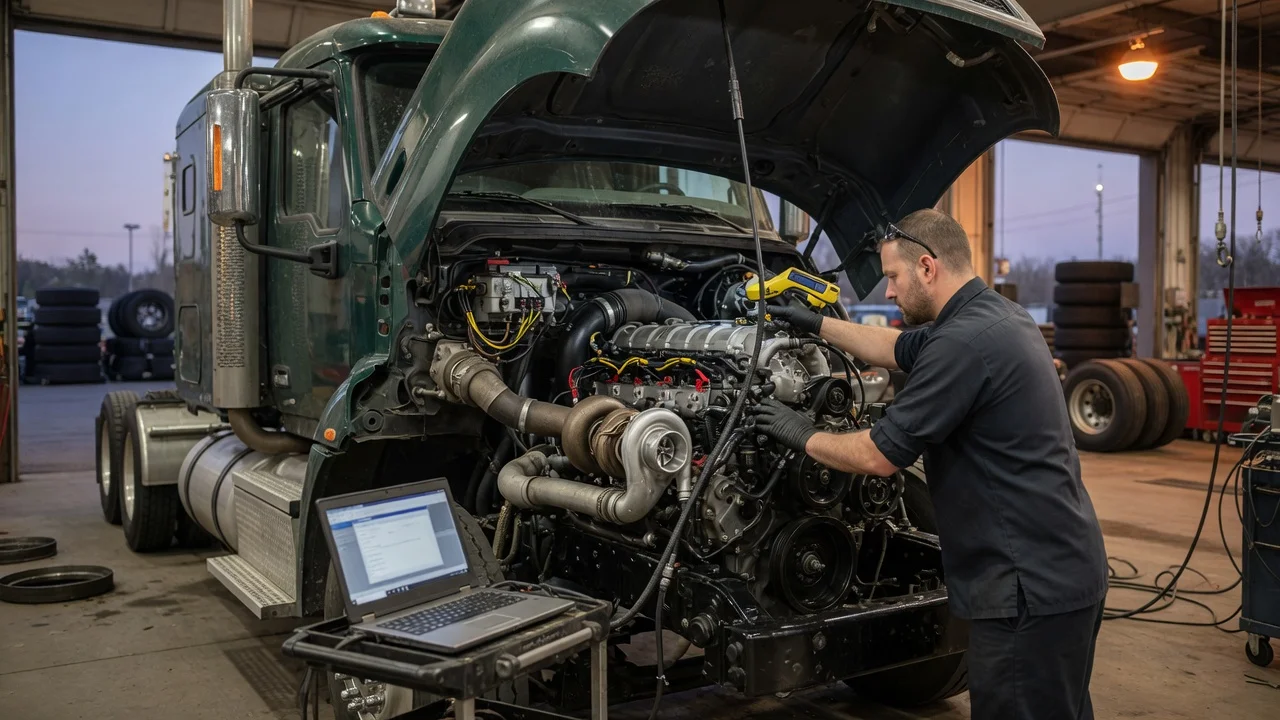
An engine derate on a Peterbilt is a protective or regulatory power reduction commanded by the engine control module (ECM). The ECM limits torque, road speed or both when it detects a condition that could damage the engine or aftertreatment system, or when emissions equipment is not working as required. The derate is a symptom, not a diagnosis. The cause is usually recorded as one or more active fault codes, and finding it means reading those codes and checking the systems they point to.
How a derate behaves depends on the truck's engine and model year. Peterbilt trucks have been built with PACCAR MX engines and with Cummins engines, and the control logic, fault code descriptions and service software differ between them. Emissions-related derate strategies also changed as emissions rules changed, so a newer truck with diesel exhaust fluid (DEF) and selective catalytic reduction (SCR) may respond quite differently from an older one. Confirm your engine make, model and model year before applying any specific guidance.
Gap in this guide
No model-specific documentation was supplied for this article. It does not give speed limits, torque percentages, timers or temperature thresholds for any particular engine or year, because those values vary and should come from the engine manufacturer's service information or a dealer. Treat the checks below as a general diagnostic order, not a substitute for the procedure for your engine.
First step: read the fault codes
Most derates log at least one active diagnostic trouble code. Heavy-duty trucks generally report faults in the SAE J1939 format: a Suspect Parameter Number (SPN), which identifies the component or signal, and a Failure Mode Identifier (FMI), which describes the type of fault, such as a value out of range or an open circuit. You may be able to view codes on the dash display. A heavy-duty scan tool or the engine maker's service software gives more detail, including whether a code is active or inactive, how often it has occurred and any freeze-frame data.
A code is evidence to investigate, not proof that a part has failed. A sensor code can come from the sensor, its wiring or connector, a poor ground, or a real system condition the sensor is correctly reporting. Write down every active and recent code before clearing anything, because clearing can erase information a technician will need, and a derate tied to an unresolved fault will usually return.
Likely causes and what to check
The causes below are grouped by system. Use your fault codes to decide where to start instead of working through the whole list.
DEF and SCR system
On trucks with SCR, emissions rules require the engine to enforce DEF-related faults. These inducement derates usually escalate in stages, often with a dash warning first, so act on DEF warnings early. Common triggers are a low DEF level, DEF quality or concentration out of range, a DEF pump or dosing fault, a heater fault in cold weather, and NOx sensor readings showing SCR efficiency below expectation.
Check the DEF level against the gauge and look in the tank if you can. If DEF was recently added, consider whether it was contaminated, diluted, old or stored in heat. A DEF quality or concentration code after a refill points toward the fluid itself. A refractometer can check concentration. Look for white crystal deposits around the doser, lines and fittings, which can indicate leaks or dosing problems. Inspect DEF line and sensor connectors for damage, corrosion or looseness. In freezing conditions, note whether the fault appeared during a cold start. Heater circuit codes point to the tank, line or pump heaters. An SCR efficiency or NOx sensor code alone does not show which part is at fault. It can come from DEF quality, dosing, a sensor, an exhaust leak or the catalyst, and normally needs proper testing.
Diesel particulate filter (DPF)
The DPF traps soot and periodically burns it off in a process called regeneration. If soot load climbs too high, often because regenerations keep getting interrupted, the ECM may request a parked regeneration and derate the engine until it is done.
Check the dash for a DPF or regeneration lamp or a parked regen request. If a parked regeneration is requested, follow the procedure for your truck in a safe location away from anything flammable. The exhaust gets very hot. Think about duty cycle. Long idle periods and short, low-load trips make it harder for passive and active regeneration to finish. Differential pressure sensor codes can make the system read soot load incorrectly. Check the sensor hoses for cracks, kinks or disconnection before blaming the filter. If regeneration will not start or keeps failing, there may be an underlying fault, such as an inhibit condition or a separate active code, that has to be fixed first. Repeated failed regenerations call for professional diagnosis.
EGR and turbocharger
Exhaust gas recirculation (EGR) faults, such as a sticking EGR valve, a restricted or leaking EGR cooler, or an incorrect flow reading, can trigger derates and also raise soot production. Turbocharger faults, including actuator problems on variable-geometry turbos and boost pressure out of range, can do the same. Check for boost leaks at charge air piping and clamps, damaged hoses, and wiring problems at the actuator. Signs of coolant loss without an external leak, or white exhaust smoke, can point to an internal EGR cooler leak and should be diagnosed professionally.
Engine protection: coolant, oil and temperature
Many derates are mechanical protection rather than emissions enforcement. High coolant temperature, low coolant level, low oil pressure, high intake air temperature and high oil temperature can all cause the ECM to cut power. Depending on configuration, some of these can lead to an engine shutdown.
With the engine off and cooled, check coolant level. Never open a hot cooling system. Check oil level on the dipstick. Compare dash gauge readings with the warning to see whether the condition looks real or could be a sensor or wiring problem. Inspect the radiator and charge air cooler for blockage from debris, and check fan operation if you can do so safely. Look for visible leaks of coolant, oil or fuel.
Fuel supply and air intake
Restricted fuel filters, low fuel pressure, water in fuel and a restricted air filter can all reduce power, and some trucks log a related fault or derate. Check the water-in-fuel indicator and drain the separator if your truck has one, review fuel filter service history, and check any air filter restriction indicator. Note that poor performance from fuel or air restriction may feel like a derate even if the ECM has not commanded one, which is another reason to read codes first.
Electrical, wiring and communication faults
Low or unstable battery voltage, poor grounds, chafed harnesses and corroded connectors can create sensor faults that look like component failures. Multiple unrelated codes appearing together, or codes that come and go with vibration or weather, often suggest a wiring, connector, ground or data network problem rather than several failed parts. Check battery condition and terminal connections, and inspect harnesses near hot or moving parts.
Programmed limits that are not faults
Not every power or speed limit is a derate caused by a fault. Fleet or owner settings in the ECM, such as road speed limits, cruise limits or idle settings, can restrict performance on purpose. If there are no active codes and the limit is consistent, ask whoever manages the truck's programming before assuming a fault.
Reading the results
What you find | What it suggests | Next step; DEF quality or concentration code after a recent refill | Contaminated or off-spec DEF is likely | Test the fluid. A shop may need to drain and flush the system and clear inducement. DEF level or heater code, system otherwise normal | Low fluid or cold-weather heating fault | Refill with fresh DEF or diagnose the heater circuit. DPF soot load high, parked regen requested | Regeneration has not completed | Run a parked regen safely. Get diagnosis if it fails or returns quickly. Differential pressure sensor code | Sensor, hose or wiring problem is possible, not necessarily a full filter | Inspect the hoses and connector, then test the sensor. High coolant temperature or low oil pressure warning | Possible real mechanical risk | Stop safely, shut down and check. Do not keep driving under load. Many unrelated or intermittent codes | Wiring, ground, voltage or network issue is likely | Check batteries and grounds, then have harnesses diagnosed. No active codes, consistent speed limit | ECM programming may be the cause | Review the configured limits.
When to stop driving or get professional help
Stop in a safe place and shut the engine down if you see a red stop-engine lamp, low oil pressure, high coolant temperature, overheating, loss of coolant, heavy smoke, a burning smell, or visible fuel or oil leaks. Continuing to drive in these conditions can cause severe engine damage, and a sudden loss of power in traffic is a safety risk in its own right.
A dealer or qualified heavy-duty technician with the right service software should diagnose a derate if codes return after repair, a parked regeneration will not complete, SCR efficiency or NOx sensor codes persist, you suspect an internal coolant leak, or several modules report faults. Emissions-related inducements can also require service-tool procedures to reset after repair. Removing or bypassing emissions equipment to avoid derates is illegal in many markets and can create more faults, so it is not a valid fix.
Information to collect before calling a shop
Truck model, model year, VIN, and engine make and model. All active and inactive fault codes, with SPN and FMI if shown. What the derate felt like and any dash messages or lamps. Conditions when it started: load, weather, grade, idling, or a recent refuel or DEF fill. Recent repairs or maintenance, especially aftertreatment, sensor or filter work.