Diagnose Peterbilt Engine Derate: Causes, Checks and Next Steps
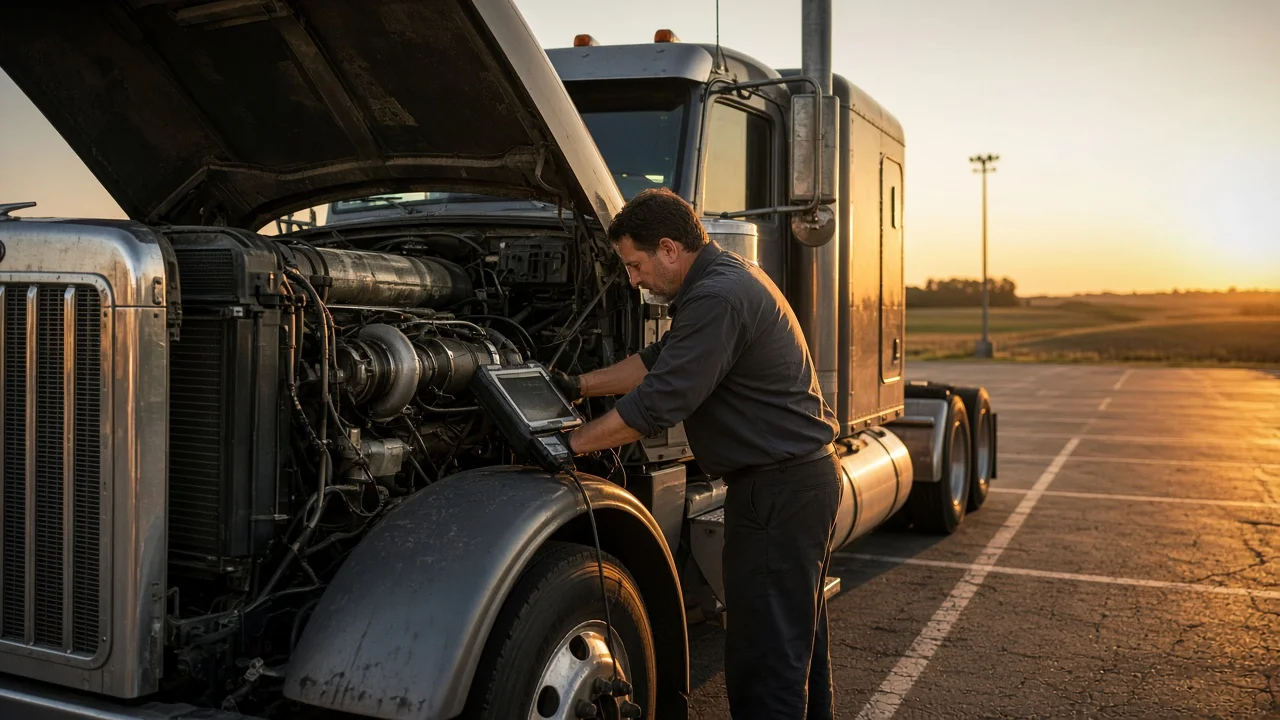
A Peterbilt engine derate means the engine control module (ECM) has deliberately cut power, torque or road speed. It is a response, not a failure in itself: the ECM has detected a condition it considers harmful to the engine, the emissions system or compliance, and it limits output until the condition is corrected. To diagnose it, find out which condition triggered the derate, usually through the active diagnostic codes, then confirm the cause with inspection before replacing parts. The answer depends on the truck's engine configuration. Peterbilt has fitted PACCAR MX-series engines and Cummins engines across different models and years, and the derate logic, fault code descriptions and service tools differ between them. Emissions equipment also varies by model year, so a cause common on one truck may not apply to another. Treat the guidance below as a general framework and confirm details against the manufacturer specifications for your exact engine and model year.
What an Engine Derate Is and Why It Happens
Most derates fall into three broad groups, and identifying the group first narrows the search considerably.
Engine protection: the ECM reduces power because of conditions such as high coolant temperature, low coolant level, low oil pressure, high intake air temperature or excessive exhaust temperature. The aim is to prevent mechanical damage. Emissions system faults and inducement: on trucks with a diesel particulate filter (DPF) and selective catalytic reduction (SCR) using diesel exhaust fluid (DEF), the ECM limits power or speed when it detects problems such as low DEF level, poor DEF quality, a high soot load, a failed regeneration or a faulty NOx sensor. US emissions rules require these systems to escalate restrictions if the problem is not addressed, so the derate often becomes more severe over time. Programmed or configuration limits: some reduced-power complaints are not faults at all. Road speed governors, cruise limits, idle shutdown settings and other parameters set by the fleet or dealer can make a truck feel restricted. A recent parameter change or ECM reprogram in the service history is worth checking.
First Steps When the Truck Derates
Note which dash lamps are on. An amber engine warning lamp generally signals a fault that needs attention soon; a red stop engine lamp signals a condition that can cause damage if you keep driving. DPF, high exhaust temperature, malfunction indicator (MIL) and DEF warnings point toward the aftertreatment system. Check the gauges: coolant temperature, oil pressure, DEF level and any soot or regeneration indicators on the driver information display. Record the symptom conditions: when the derate started, whether it came on suddenly or gradually, load and grade at the time, ambient temperature, whether a regeneration was in progress, and whether the truck was recently fueled or filled with DEF. Read the active and inactive fault codes, either through the dash display where the truck supports it or with a scan tool. If a red stop lamp is lit, or the coolant temperature or oil pressure reading is abnormal, pull over safely and shut down rather than continuing to drive.
Reading the Diagnostic Codes
Heavy-duty trucks report faults using the J1939 standard, which identifies a fault by a Suspect Parameter Number (SPN), describing the component or value involved, and a Failure Mode Identifier (FMI), describing how it failed, such as out of range high, out of range low, or erratic data. Manufacturers may also display their own fault code numbers alongside these.
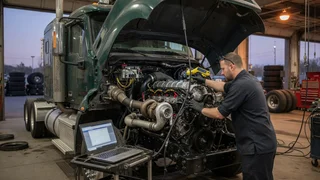
A generic code reader can show basic codes, but full diagnosis typically requires the manufacturer's service software, such as PACCAR's tool for MX engines or Cummins' tool for Cummins engines. These can display live sensor data, run guided troubleshooting, show the derate reason and perform service routines like a parked or forced regeneration.
Treat a code as evidence to investigate, not proof of a failed part. A NOx sensor code, for example, can result from the sensor itself, its wiring, an exhaust leak, poor DEF or a degraded SCR catalyst. When several codes are present, look for the earliest or root code; one fault, such as a failed sensor or a low-voltage condition, can trigger a chain of secondary codes.
Common Causes and What to Check
Likely cause | Typical clues | What to check | What the result suggests; Low DEF level or poor DEF quality | DEF warning lamp, DEF gauge low, quality or concentration code | DEF level, fluid appearance, age and storage, contamination | Refilling with fresh, correct DEF may clear a level fault; a quality code that returns with good fluid points to the quality sensor or dosing system; DEF dosing or SCR fault | NOx efficiency codes, dosing codes, derate that worsens over time | Doser for crystal buildup, DEF lines, pump, heaters, wiring | Visible crystals or blocked lines indicate a dosing issue; a clean system with low efficiency suggests sensor or catalyst problems; High DPF soot load or failed regeneration | DPF lamp, regen requests, high soot reading, frequent idle or short-trip use | Soot load and regen history in service software, exhaust leaks, differential pressure sensor and its lines | A successful parked regen that holds suggests duty cycle was the cause; rapid soot return suggests an upstream engine problem; Aftertreatment sensor fault | NOx, temperature or pressure sensor codes with erratic or out-of-range FMI | Connectors, wiring chafe, corrosion, live readings compared with expected behavior | Implausible live data with sound wiring points to the sensor; intermittent faults often trace to connections; Overheating or low coolant | High coolant temperature, low coolant level code, red stop lamp | Coolant level when cold, leaks, radiator and charge air cooler fins, fan engagement, belt | Low level with visible leaks points to the cooling system; normal level with high temperature suggests fan, thermostat or airflow issues; Low oil pressure | Oil pressure warning, red stop lamp | Oil level, sensor reading versus a mechanical gauge | Correct level with low mechanical pressure is a serious engine condition; normal mechanical pressure suggests a sensor or wiring fault; Air intake or boost problem | Low power without emissions codes, boost or intake temperature codes, black smoke | Air filter restriction, intake and charge air hoses and clamps, charge air cooler leaks | A split hose or leaking cooler explains low boost; good plumbing with low boost points toward the turbocharger or its controls; EGR system fault | EGR flow, valve position or cooler codes, possible coolant loss | EGR valve operation in service software, cooler leaks | Valve faults are often electrical or sticking; unexplained coolant loss with EGR codes warrants professional inspection; Fuel supply restriction | Power loss under load, low fuel pressure code, water-in-fuel lamp | Fuel filters, water separator, fuel quality, supply lines | Restricted or contaminated filters are a common, inexpensive cause; Electrical or voltage issue | Many unrelated codes at once, intermittent derate | Battery condition, charging voltage, ground connections, main harness connectors | Low or unstable voltage can cause false sensor readings across several systems
Using Service History to Narrow the Cause
Recent service history often explains a derate faster than the codes alone. Look for recent DEF fills from an unfamiliar source, fuel filter changes, DPF cleaning or replacement, sensor replacements, ECM software updates, parameter changes, or repairs that involved disconnecting harnesses or charge air plumbing. A derate that began shortly after any of these deserves a check of that work first.
Duty cycle matters too. Trucks that idle for long periods or run short, light-load routes may not get hot enough to complete passive regeneration, which makes soot-related derates more likely. Repeated derates of the same type suggest an underlying condition rather than bad luck, and fixing only the latest code may not stop them from returning.
When to Stop Driving or Get Professional Diagnosis
Stop and shut down safely if a red stop engine lamp is lit, coolant temperature is climbing toward the red zone, oil pressure is low, or you notice smoke, burning smells or coolant loss. Do not keep driving through repeated overheating or low oil pressure warnings; continued operation risks severe engine damage. Seek professional diagnosis when the derate returns after codes are cleared, when codes point to internal components such as the EGR cooler, turbocharger or SCR catalyst, or when a required regeneration will not complete. An emissions derate that is escalating can eventually restrict speed severely, so arrange service before it reaches that stage rather than trying to drive it out. Do not attempt to bypass, delete or tamper with emissions controls. It is illegal for on-road trucks in the US and does not repair the underlying fault.
Confirming the Repair
After a repair, clearing codes alone does not prove the problem is solved. Many emissions faults need a monitor to run, a regeneration to complete or a drive cycle under specific conditions before the ECM confirms the system is working and fully releases the derate. Some inducement restrictions also clear only after the system verifies the repair. Re-check for returning codes, review live data on a test drive under the conditions that originally caused the derate, and record the fix in the service history so any recurrence can be traced quickly.