Outside Shoulder Tire Wear
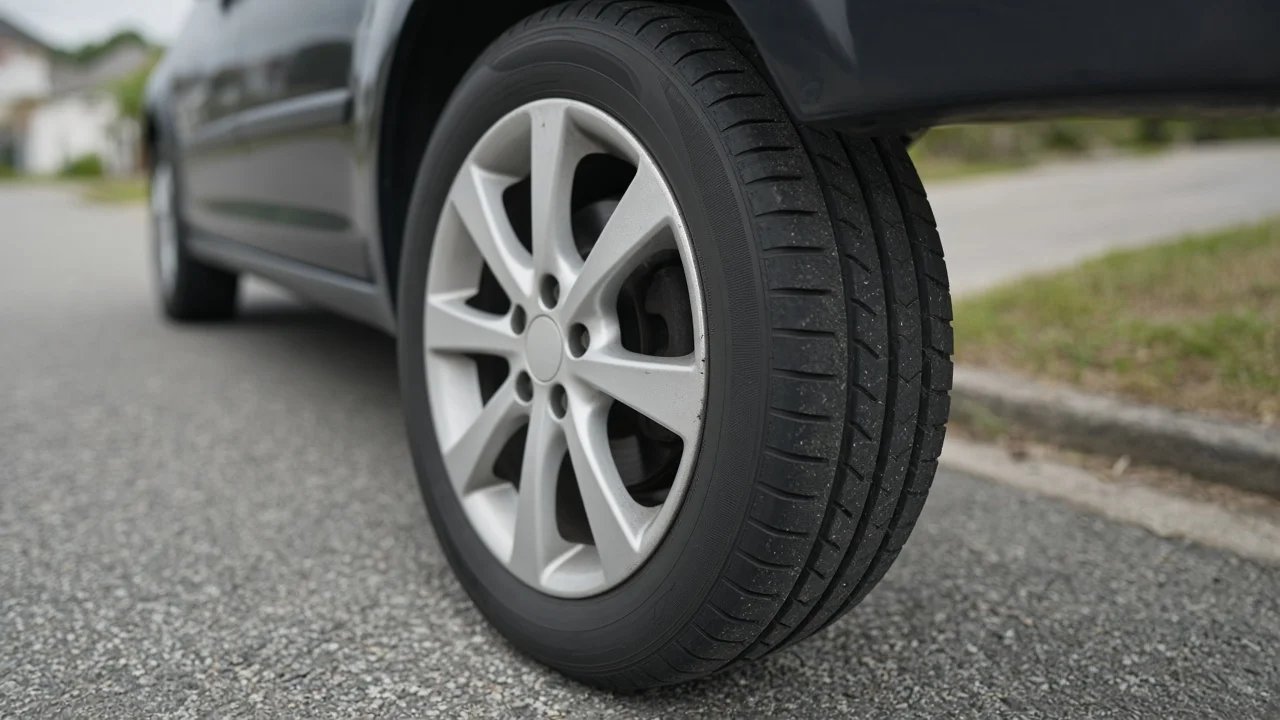
Outside shoulder tire wear describes accelerated tread loss concentrated on the outer edge of the tire where the shoulder block meets the sidewall. Drivers often notice the condition when the inner grooves still show usable tread depth, but the outer ribs appear rounded or smoothed. This pattern changes the tire's contact patch, reduces wet-weather grip, and can produce road noise or subtle steering feedback. Interpreting the wear correctly matters because the underlying cause may involve inflation pressure, front-end alignment, ride height, hard cornering, or a combination of those factors rather than a simple tire defect.
Essential answer
Outside shoulder wear means the tread is scrubbing away faster near the tire's outer edge than across the center or inner shoulder. This uneven pattern often appears when the tire's contact patch is distorted, placing extra load on the shoulder block during cornering or straight-ahead driving. A tire that is underinflated tends to roll onto its outer edge, while excessive positive camber can also concentrate force on the outside shoulder. The tire size, load index, and inflation pressure listed on the vehicle placard establish the baseline for even tread wear, so a departure from those specifications is a useful first clue.
The condition differs from normal wear because it is localized rather than progressive across the full tread width. Drivers may spot the shoulder edge wearing smooth while the tread depth in the center remains within expected limits. Speed rating and drivetrain compatibility do not directly cause the pattern, but a heavily loaded vehicle or aggressive cornering can amplify it. Reading the wear as evidence of a mechanical or maintenance issue is more useful than assuming a defective tire, since the same tire may wear evenly once the contributing condition is corrected.