Inside Shoulder Tire Wear Causes
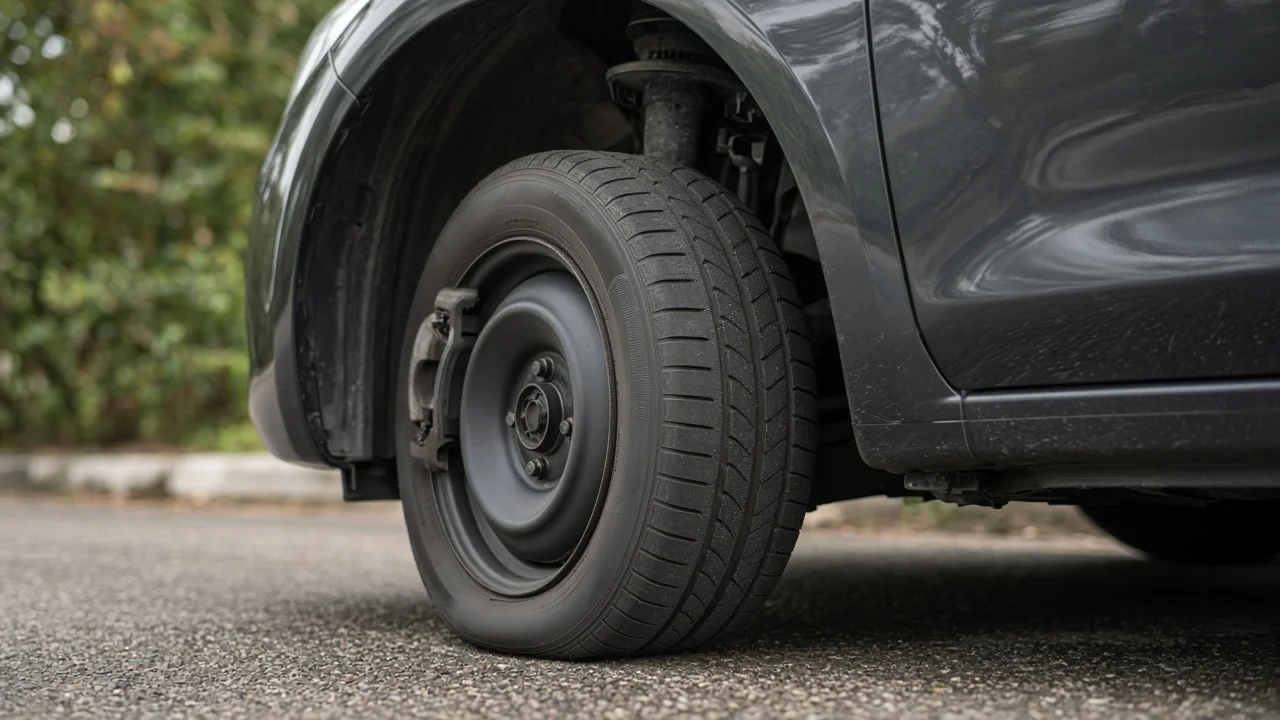
Inside shoulder tire wear often looks like the tread is disappearing faster along the inboard edge than anywhere else on the contact patch. You may notice feathering, cupping, or a smooth, angled wipe across the inner ribs while the outer blocks still have usable tread depth. Because this pattern develops slowly, it can hide a developing alignment, inflation, or suspension issue. Learning to read that wear signature helps you separate a simple camber setting from a worn bushing, a weak strut, or an underinflated tire that is folding its shoulder into the pavement.
Essential answer
The essential answer is that inside shoulder tire wear means the inboard tread ribs are being scrubbed or overloaded more than the center and outer shoulder. The most common mechanical causes are excessive negative camber, toe misalignment, or suspension components that allow the wheel to lean or shift under load. On many vehicles, a modest amount of negative camber is engineered into the rear or front geometry for cornering stability, but when the angle becomes excessive or the toe is incorrect, the inner edge effectively carries too much of the vehicle's weight and road friction.
A second important cause is underinflation, because low inflation pressure changes the shape of the tire's contact patch. Instead of the tread sitting flat, the center can cup upward while the shoulders carry more load, and on some vehicles the inner shoulder shows the damage first. Worn control arm bushings, ball joints, strut mounts, or tie rod ends can also create dynamic toe or camber changes that are not visible when the vehicle is stationary. A fault code or single symptom is not proof that one specific part has failed, so the wear pattern should be read together with ride height, steering feel, and a careful inspection of the suspension.