OBD in a Vehicle: What It Is, How It Works and How OBD-II Differs
The Short Answer
OBD stands for onboard diagnostics. It is the self-monitoring system built into a vehicle's computers that watches engine, emissions and related components, turns on a warning light when it detects a fault, and stores trouble codes that a scan tool can read through a standard diagnostic port. In the US, the version most drivers deal with is OBD-II, which has been required on cars and light trucks starting with the 1996 model year. Vehicles built before then may have an earlier, manufacturer-specific system often called OBD-I, which does not share the same connector, codes or communication rules.
One qualification matters: OBD-II is primarily an emissions-focused standard for light-duty vehicles. It does not give universal access to every system in the car, and medium- and heavy-duty trucks generally use different diagnostic standards. What you can read through the port also depends on the make, model year and the capability of the scan tool you use.
What Onboard Diagnostics Actually Do
Modern vehicles are run by electronic control modules that read sensors and adjust fuel delivery, ignition timing, transmission behavior and other functions many times per second. The diagnostic side of that software continuously checks whether readings fall within expected ranges and whether components respond as they should. When something stays out of range long enough to meet the system's criteria, the module records a fault.
Detects malfunctions that can raise emissions, such as engine misfires, faulty oxygen sensors or a leaking fuel vapor system; Turns on the malfunction indicator lamp, commonly called the check engine light; Stores diagnostic trouble codes (DTCs) that identify the area of the fault; Saves freeze frame data, a snapshot of conditions such as engine speed and temperature at the moment a fault was set; Reports readiness monitor status, showing whether self-tests have completed since codes were last cleared; Provides live sensor data to a connected scan tool
OBD-I vs. OBD-II
The main difference is standardization. Early onboard diagnostic systems varied by manufacturer, so reading them often required brand-specific tools, connectors and code lists. OBD-II defined a common connector, a common code structure and a set of standardized data, so a generic scan tool can communicate with any compliant vehicle for core emissions-related information.
Aspect | OBD-I (pre-1996, varies by maker) | OBD-II (US cars and light trucks, 1996 model year onward); Connector | Manufacturer-specific shapes and locations | Standardized 16-pin connector near the driver's position; Trouble codes | Proprietary formats, sometimes read by counting light flashes | Standardized five-character codes with shared generic definitions; Scan tools | Often brand-specific | Generic tools read core emissions data on any compliant vehicle; Monitoring scope | Limited, mainly basic sensor and circuit faults | Broader monitoring, including misfire, catalyst efficiency and evaporative emissions; Data access | Minimal live data | Standardized live data, freeze frame and readiness status
Within OBD-II itself, the underlying communication method has changed over time. Earlier OBD-II vehicles used several different electrical protocols, while vehicles from the 2008 model year onward in the US use CAN (controller area network) for diagnostics. Most current consumer scan tools handle all of these automatically, but very inexpensive or older tools may not support every protocol.
Where the OBD Port Is Located
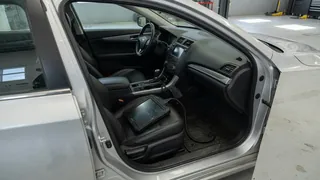
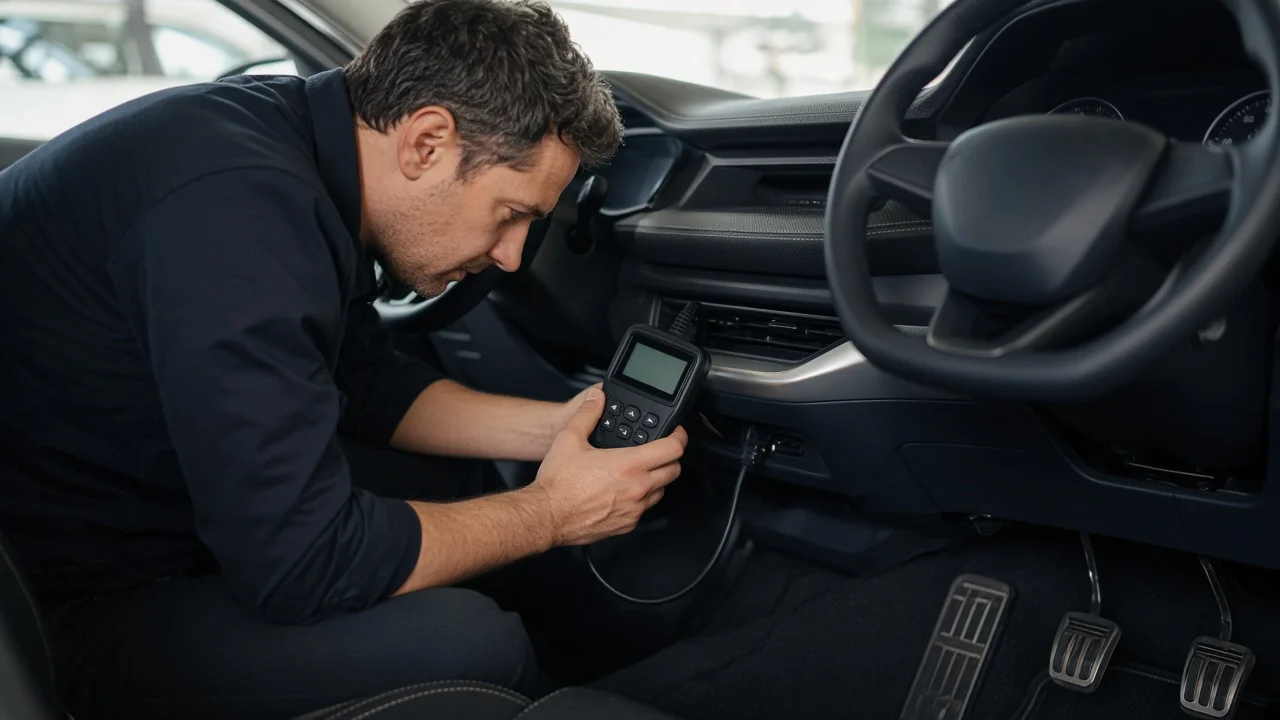
On OBD-II vehicles, the diagnostic connector is a trapezoid-shaped 16-pin socket that is meant to be reachable from the driver's seat. It is usually under the dashboard on the driver's side, near the steering column or above the pedals. Some vehicles place it behind a small cover, in the center console area or near the fuse panel. If you cannot find it, the owner's manual for your specific model is the most reliable reference.
How to Read a Trouble Code
OBD-II trouble codes follow a fixed pattern: one letter followed by four digits. The letter indicates the system area, and the first digit indicates whether the code is a generic definition shared across manufacturers or a manufacturer-specific one.
P 0 3 0 1; | | ||; | | | Specific fault (here: cylinder 1 misfire); | |___ 0 = generic code, 1 = manufacturer-specific (other digits vary); |_____ System: P = powertrain, B = body, C = chassis, U = network
A code points to where the system detected a problem, not necessarily to the failed part. For example, an oxygen sensor code can result from a bad sensor, a wiring issue, an exhaust leak or an engine condition that makes the sensor read abnormally. Codes are a starting point for diagnosis rather than a final answer.
Steady vs. Flashing Check Engine Light
A steady check engine light means the system has stored a fault that should be checked soon, but it does not always indicate an urgent problem; a loose fuel cap can trigger one on many vehicles. A flashing light generally signals a severe misfire that can overheat and damage the catalytic converter. In that case, reducing load and having the vehicle inspected promptly is the sensible response. Exact behavior can differ by manufacturer, so check the owner's manual for your model.
Readiness Monitors and Emissions Inspections
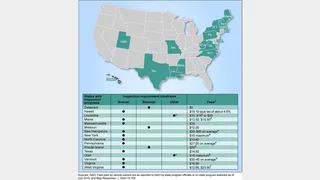
Many US states and localities with emissions testing check OBD-II vehicles by plugging into the diagnostic port rather than measuring tailpipe gases. The inspection looks for an active check engine light, stored emissions-related codes and the status of readiness monitors.
Readiness monitors are the self-tests the vehicle runs on systems such as the catalytic converter, oxygen sensors and evaporative emissions system. Clearing codes or disconnecting the battery resets them to an incomplete state, and they only complete after a mix of normal driving conditions. That is why clearing a code just before an inspection usually leads to a failed or rejected test rather than a pass. Rules on how many incomplete monitors are allowed vary by state and model year.
Types of OBD Scan Tools
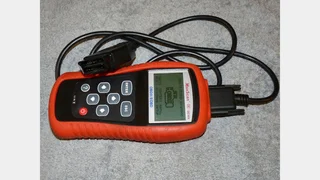
Basic code readers: read and clear generic trouble codes and often show readiness status; Bluetooth or Wi-Fi adapters: small plug-in units that pair with a phone app; features depend heavily on the app; Enhanced scan tools: add manufacturer-specific codes and access to modules such as ABS, airbags and transmission on supported vehicles; Professional diagnostic tools: offer bidirectional tests, programming and deeper system access, typically used by repair shops
For most owners who want to understand why a warning light is on, a basic reader or a reputable adapter covers generic powertrain codes. Reading body, chassis or network modules usually requires a tool with enhanced, make-specific coverage, and compatibility should be confirmed for your vehicle before buying.
What OBD Does Not Do
The generic OBD-II standard is centered on emissions-related powertrain faults. It does not guarantee access to every module, it will not detect purely mechanical wear that does not affect sensor readings, and it cannot confirm a repair on its own. A vehicle can have a real problem with no stored code, and a stored code does not identify the exact failed component. Electric vehicles and hybrids still have diagnostic ports, but much of their battery and drive-system data is manufacturer-specific.
Plug-In Devices: Insurance Trackers, Telematics and Security
Because the port provides power and access to vehicle data, it is also used by insurance usage-based programs, fleet trackers and aftermarket gadgets. Leaving a device connected permanently has trade-offs. Some devices draw a small amount of power when the vehicle is off, which can matter for cars parked for long periods. Wireless adapters can also create a route into vehicle networks if they are poorly secured, so it is reasonable to use devices from established providers, keep their apps updated and unplug units you no longer use.
Practical Next Steps
Confirm your vehicle's model year: US cars and light trucks from 1996 onward should have an OBD-II port; If the check engine light is on, read the code before clearing it and note any freeze frame data; Treat a flashing light as urgent and a steady light as a prompt for timely inspection; Avoid clearing codes shortly before an emissions test, since monitors need driving time to reset; Choose a scan tool based on what you need: generic codes for warning lights, enhanced coverage for ABS, airbag or body systems