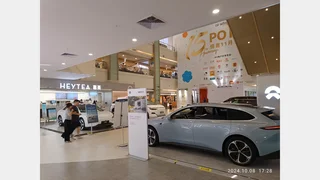
NIO Car Prices: What US Buyers Need to Know Before Comparing Costs

The short answer
If you are in the United States and searching for a NIO car price, there is no official US sticker price. NIO does not sell its vehicles through a US retail or dealer network, so there is no US manufacturer's suggested retail price (MSRP), no US trim list, and no US warranty to price against. The prices you will find are for markets where NIO does sell, mainly China and a group of European countries, and they are quoted in local currency with local taxes, incentives and ownership options built in.
Two conditions change how you should read any NIO price you see. First, whether the figure includes the battery: NIO offers a Battery as a Service plan in which you buy the car without the battery and pay a recurring fee for it, which makes the upfront price look much lower. Second, the region: a price from China or Europe does not translate into what the same car would cost to bring into, register and own in the US. If either point is unclear in a listing or article, the number is not useful for a purchase decision.
Why there is no US price for NIO
Regional availability is the main reason. NIO has focused on China and selected overseas markets and has not launched a consumer sales program in the US. Beyond the company's own market choices, several US conditions make a launch, or a private purchase, difficult:
Federal certification: a new car sold for US road use must be certified to US safety standards and US emissions and labeling rules. A car built for China or Europe is not automatically compliant, even if it is electric. Tariffs: the US applies substantial tariffs to electric vehicles made in China, which would add heavily to the landed cost of a Chinese-built EV. Connected-vehicle restrictions: the US has adopted rules limiting connected-vehicle software and hardware tied to China, phased in over coming model years. These rules affect whether such vehicles can be sold or imported at all, not just their price. No support network: there is no NIO service, parts or battery swap infrastructure in the US, which affects ownership cost even if a car could be brought in.
Policy in this area changes, so treat the points above as the general picture and check current rules before acting on anything.
How NIO prices are structured in markets where it sells
Even outside the US, a single headline price rarely tells the whole story. NIO pricing is built from several layers, and two cars of the same model can differ widely in final cost.
Factor | What it means | How it affects the price; Battery included or rented | Buy the full car, or buy it without the battery under Battery as a Service | Renting the battery lowers the upfront price but adds a monthly fee for as long as you use it; Battery capacity | NIO offers more than one pack size on many models | Larger packs cost more to buy or carry a higher rental fee, and give more range; Model and body configuration | Sedan, wagon, SUV or coupe-style SUV | Larger and more premium bodies sit at higher price points; Equipment level and options | Interior packages, wheels, seating layouts, assistance features | Options can add significantly to the base figure; Platform generation | NIO updates its hardware platform across the lineup over time | Newer-generation versions of a model may be priced and equipped differently from earlier ones; Market | China versus individual European countries | Taxes, subsidies, VAT and local pricing strategy all differ
Battery as a Service, explained
Battery as a Service (often shortened to BaaS) separates the battery from the car. You buy the vehicle body, motors and interior, and subscribe to a battery for a monthly fee. Because the battery is one of the most expensive parts of an EV, removing it from the purchase can lower the upfront price considerably.
The trade-off is a cost that never ends while you keep the car. To compare fairly, add the expected battery fees over the time you plan to own the vehicle to the reduced purchase price, then compare that total with the price of buying the car with the battery included. BaaS also ties into NIO's battery swap stations, where a depleted pack is exchanged for a charged one, and it can make it possible to move to a different pack size later. Those benefits only matter where swap stations exist, which is not the case in the US.
The NIO lineup by market segment
NIO positions its main brand in the premium electric segment and runs separate sub-brands for lower price points. Model names, availability and versions vary by country, and the lineup changes as models are refreshed or added, so use the overview below to understand where each vehicle sits rather than as a current catalog.
Model | Body configuration | Market segment; ET5 | Sedan | Midsize premium; ET5 Touring | Wagon | Midsize premium; ET7 | Sedan | Large premium; ET9 | Sedan | Flagship executive; ES6 (EL6 in some European markets) | SUV | Midsize premium; EC6 | Coupe-style SUV | Midsize premium; ES7 (EL7 in some European markets) | SUV | Midsize-to-large premium; EC7 | Coupe-style SUV | Midsize-to-large premium; ES8 (EL8 in some European markets) | SUV | Large premium; Onvo sub-brand | Family-oriented SUVs | Mainstream, below the NIO brand; Firefly sub-brand | Small hatchback | Compact, entry level
All of these are battery-electric. Powertrain options generally come down to motor layout and battery capacity rather than a choice between electric and combustion. When comparing prices across models, line up the same battery capacity and the same purchase method, or the comparison will be misleading.
Why a converted foreign price is not a US cost
It is tempting to take a China or Europe price and run it through a currency converter. That figure is a poor estimate of what a NIO would cost in the US, for several reasons:
Local prices often include local taxes, such as European VAT, and may reflect local subsidies that do not apply to a US buyer. A BaaS price excludes the battery entirely, so converting it understates the real cost of the car. Shipping, port fees, tariffs and customs brokerage would be added on top. Bringing a non-US-certified vehicle into compliance, where that is even permitted, can be expensive or impossible. Insurance, registration and repair costs in the US would be uncertain for a car with no local parts or service support.
Can you import a NIO into the US?
For practical purposes, a private buyer should assume no. Importing a recent vehicle that was not built to US standards is generally not allowed for road use, apart from narrow exceptions such as vehicles old enough to qualify under the long-standing age-based exemption, or limited cases like display or research use. NIO's lineup is far too new for the age exemption. On top of certification, tariffs and connected-vehicle rules add further barriers. Anyone offering to sell a new NIO for US registration should be treated with caution, and the legality should be confirmed with the relevant federal agencies before any money changes hands.
Ownership trade-offs to weigh even outside the US
If you live in, or are moving to, a market where NIO does sell, price is only part of the decision. A few ownership factors deserve as much attention as the sticker:
Service and swap coverage: check how close the nearest service point and battery swap station are to where you live and drive. The swap advantage disappears if stations are out of reach. Total battery cost: under BaaS, model the monthly fee over your planned ownership period, and check the terms for changing pack size or ending the subscription. Resale: a car sold without a battery, or under a subscription, may be harder to resell or value; ask how a transfer of the battery plan works. Software and features: some features may depend on subscriptions or software updates; confirm what is included in the price and what is not. Warranty: confirm the warranty terms for the car and the battery separately, as they may differ depending on whether you bought or rented the battery.
What to do next
If you are a US shopper, the most useful next step is usually to compare electric vehicles that are actually sold and supported in the US in the same segment as the NIO model that caught your interest, such as a midsize premium electric sedan or a large three-row electric SUV. That gives you real prices, local warranties and service access.
If you are in a market where NIO operates, get a written quote that states the model, battery capacity, equipment level and whether the battery is bought or rented. Ask for the full battery fee schedule if you choose BaaS, and compare total cost over your intended ownership period rather than the headline price alone.