NIO Cars: An Overview of China's Premium Electric Car Brand
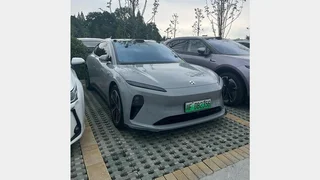
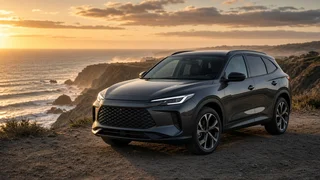
NIO is a Chinese automaker that builds only battery-electric vehicles and positions them in the premium market segment, competing with brands such as Tesla, BMW, Mercedes-Benz and Audi rather than with budget EV makers. When people search for a China NIO car, they usually want to know what the brand is, what it sells, how it differs from other electric car makers, and whether they can buy one. For US readers, the most important qualification comes first: NIO does not officially sell its cars in the United States. Its vehicles are marketed mainly in China, with a smaller presence in parts of Europe.
What NIO Is
NIO was founded in 2014 by entrepreneur William Li (Li Bin) and is headquartered in Shanghai. It is part of the wave of Chinese EV start-ups that emerged in the 2010s, alongside companies such as XPeng and Li Auto. NIO's shares trade in the US as American depositary shares, which is one reason the brand is familiar to American investors even though its cars are not sold here.
From the start, NIO has presented itself as more than a car manufacturer. Its business model combines vehicles with an ownership ecosystem: battery swap stations, an optional battery subscription, branded customer lounges, a companion app and a community-focused approach to service. Understanding that ecosystem is key to understanding how NIO differs from most other carmakers.
How NIO Differs From Other EV Makers
Battery swapping is NIO's best-known distinction. Instead of plugging in and waiting for the battery to charge, a driver can pull into an automated swap station where the depleted pack is removed and replaced with a charged one in a matter of minutes. Most NIO vehicles are designed around this standardized, removable battery architecture. NIO cars can also charge conventionally at home or on public chargers, so swapping is an option rather than a requirement.
Battery as a Service (BaaS) builds on swapping. Under this arrangement, a buyer purchases the car without the battery and pays a recurring subscription for battery use instead. This lowers the upfront purchase price and lets owners move between battery capacities over time. It also shifts long-term battery health concerns away from the owner, since the pack can be exchanged. Terms, pricing and availability of BaaS vary by market and have changed over time, so they should be checked locally.
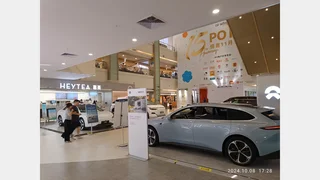
NIO Houses are showroom-and-clubhouse spaces in major cities where owners can work, meet and attend events. Together with the NIO app and an in-car digital assistant called NOMI, they reflect the brand's emphasis on owner experience and community rather than purely on the vehicle.
Driver assistance and software are another focus. NIO has developed its own advanced driver-assistance systems, with recent models carrying extensive sensor suites, including lidar on many vehicles, and receiving features through over-the-air software updates. As with any driver-assistance system, capability depends on the model year, hardware generation and market, and these systems require driver supervision.
The NIO Model Lineup
NIO uses a letter-based naming scheme that signals body configuration. Models beginning with ES are SUVs, EC models are coupe-style SUVs with a sloping roofline, and ET models are sedans or, in one case, a wagon. The number generally indicates the vehicle's size and position within the range, with higher numbers sitting higher in the lineup. In some European markets, certain SUVs have been sold under EL names instead of ES.
Model family | Body configuration | General position; ES8 | Large SUV, typically with three-row seating | Flagship SUV; ES7 (EL7 in some markets) | Midsize SUV | Upper-midsize SUV; ES6 (EL6 in some markets) | Midsize SUV | Core SUV model; EC7 | Coupe-style SUV | Sportier upper-midsize SUV; EC6 | Coupe-style SUV | Sportier midsize SUV; ET9 | Large executive sedan | Range-topping flagship; ET7 | Large sedan | Premium sedan; ET5 | Midsize sedan | Entry point to NIO sedans; ET5 Touring | Midsize wagon | Practical version of the ET5
NIO has updated several models across generations, so equipment level, battery options, driver-assistance hardware and styling can differ significantly between an early and a later model year of the same nameplate. Anyone comparing NIO vehicles should confirm which generation is being discussed.
Beyond its production lineup, NIO built the EP9, a limited-run electric hypercar developed to showcase performance and engineering, and the company has a history in Formula E. These projects raised the brand's profile but are not representative of its everyday vehicles.
Sub-Brands: Onvo and Firefly
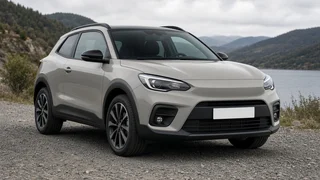
To reach buyers below its premium core, NIO has launched additional brands. Onvo targets the mainstream family market with more affordable SUVs, beginning with the L60. Firefly focuses on small, premium compact cars. Both are positioned to use the company's battery-swap infrastructure in some form, though compatibility details and regional rollout differ from the main NIO brand.
Powertrain Options
Every NIO vehicle is fully electric; the brand does not offer hybrids or plug-in hybrids. Most models use dual electric motors, one on each axle, providing all-wheel drive and strong acceleration, which fits the brand's premium positioning. Battery packs have been offered in several capacities, and because of the swappable design, the same car may be paired with different packs over its life. Exact outputs, ranges and battery sizes depend on the model, generation and market, and Chinese range ratings use a different test cycle from US EPA figures, so numbers are not directly comparable.
Regional Availability
China is NIO's home and by far its largest market, and it is where the battery-swap network is most extensive. NIO has also expanded into a number of European countries, starting with Norway and later adding markets such as Germany, the Netherlands, Denmark and Sweden, with varying sales models and swap-station coverage. It has also announced or pursued expansion into other regions. The company's international footprint has shifted over time, so current availability should be confirmed for any specific country.
Can You Buy a NIO Car in the US?
Not through official channels. NIO has operated research and development activity in the United States, but it does not sell or service cars here. Several factors make a US launch unlikely in the near term: steep US tariffs on Chinese-made electric vehicles, federal restrictions affecting connected-vehicle software and hardware from China, and the absence of a US dealer, service and battery-swap network. A NIO built for China or Europe would also not be certified to US safety and emissions standards, which makes private importing for road use impractical in most cases.
For US shoppers, NIO is therefore best understood as an influential brand to follow rather than a car to cross-shop. Its ideas, particularly battery swapping and battery subscriptions, are useful context when evaluating how the EV industry is evolving and how Chinese automakers are competing globally.
Who NIO Appeals To
Buyers in China or supported European markets who want a premium EV with fast battery swapping as an alternative to waiting at chargers. Drivers who prefer a lower purchase price and are comfortable with an ongoing battery subscription. Owners who value technology features, over-the-air updates and a brand-led community experience. US readers and investors who want to understand a major Chinese EV maker, even though the cars are not available locally.
The Bottom Line
NIO is a Chinese premium electric car brand known for its swappable batteries, Battery as a Service subscription and owner-focused ecosystem. Its lineup spans SUVs, coupe-style SUVs, sedans and a wagon, supplemented by the more affordable Onvo and Firefly brands. The cars are sold mainly in China and selected European countries, and they are not officially offered in the United States, so for American readers NIO is primarily a brand to understand rather than one to buy.