Motorcycle Lowering Links: What They Do and What to Check Before You Buy
The short answer
Lowering links can be a practical, relatively low-cost way to bring a motorcycle's seat closer to the ground, but only if your bike uses a rear suspension linkage and the links are made for your exact model and model year. They lower the rear by changing the suspension geometry, so they also change ride quality, ground clearance and steering. If you only need a small reduction, ride two-up often, or depend on cornering clearance, those trade-offs can matter as much as the height you gain.
What lowering links are
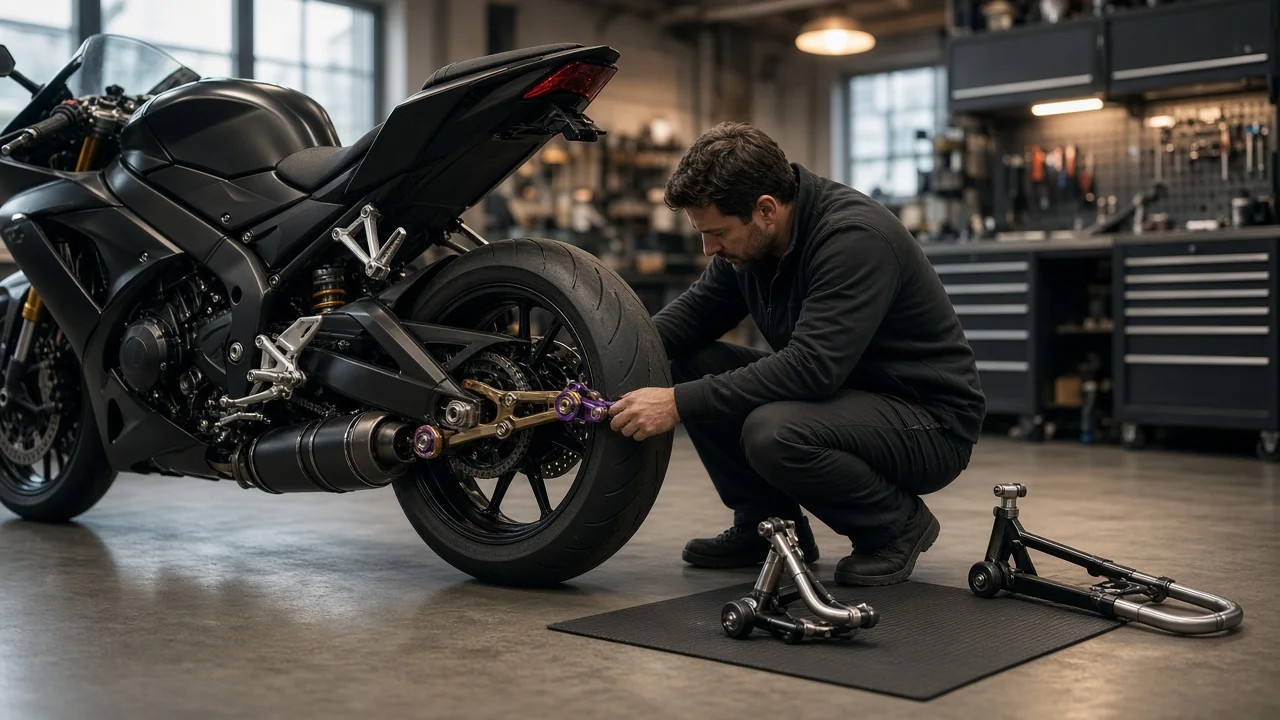
Many modern motorcycles do not bolt the rear shock directly between the frame and swingarm. Instead, a set of pivoting parts sits between them, usually called the linkage. This linkage makes the rear suspension progressive: it gets firmer the further it compresses. One part of that linkage is a pair of rods or plates, often called dog bones or tie rods. Lowering links replace those parts with versions of a different length, which lets the swingarm sit at a different angle and the rear of the bike sit lower.
Because the change works through the linkage, it is not the same as fitting a shorter shock. A lowering link alters the leverage the swingarm has on the shock, so how the suspension responds through its travel changes along with the ride height.
First check: does your motorcycle use a linkage?
Lowering links only apply to bikes with a linkage-type rear suspension. Motorcycles with twin rear shocks, or with a single shock mounted directly to the swingarm without a linkage, cannot use them. For those bikes, lowering usually involves a different shock, adjusted shocks, or seat changes instead. Check your owner's manual, a parts diagram for your model, or look under the rear of the bike near the swingarm pivot before shopping.
Fitment depends on exact model and year
Linkage designs can differ between generations of the same model name, and sometimes between trims or market versions sold in the same year. A link listed for a model family may not fit every year in that family. Confirm compatibility against your specific model year, trim and market (US-market bikes can differ from versions sold elsewhere). If a seller's listing is vague about years or variants, treat that as a reason to ask before buying rather than assume.
No verified product, pricing or measurement data was available for this article, so the specific drop any link provides on a given bike cannot be stated here. Rely on the manufacturer's stated figure for your exact model and, where possible, measure seat height before and after installation.
Why link length and seat-height change are not the same number
Because the linkage multiplies movement, a change in link length does not translate one-for-one into a change at the seat or rear axle. Reputable sellers usually describe the approximate drop the part produces on a particular model. Be cautious with listings that only give a link length or a generic lowering figure with no model reference.
Fixed versus adjustable links
Fixed links give one set height. Adjustable links let you choose among several settings, which can help if you are unsure how much lowering you need or want to return closer to stock later. The trade-off is more setup decisions and more to check: both sides on a pair must be set identically, and adjusters need to be secured properly. Either way, look for clear fitment details, the stated range of lowering, the material used, and whether the part reuses your existing bearings, bushings and hardware or supplies new ones.
How lowering links change the way the bike behaves
Ground clearance: the bike sits lower, so footpegs, exhaust and the underside of the bike may touch the road sooner in corners or over speed bumps and driveway ramps. Suspension feel: changing the linkage ratio changes how the rear suspension resists compression, which can make the rear feel softer and make it easier to bottom out over large bumps or with extra load. Steering: lowering only the rear tilts the bike back, which generally makes steering slower and heavier at turn-in while adding some straight-line stability. Rear tire clearance: at full compression, the rear tire must not contact the rear fender, hugger, undertray or other parts. This should be checked after installation.
Balancing the front end
Many owners lower the front to keep the bike's attitude closer to stock, commonly by raising the fork tubes in the triple clamps so the front sits lower. How much is safe depends on the bike: at full fork compression, the front tire and fender must clear the radiator, frame and lower triple clamp, and the fork tubes must not interfere with handlebars. Your service manual or a qualified technician should guide this, as the safe limit varies by model and is not something to estimate.
Side stand and center stand
A lowered bike sits more upright on its stock side stand, which can make it less stable when parked and more likely to tip, especially on uneven or sloping ground. Plan for a shorter or adjustable side stand, or a professional modification, as part of the project. Center stands may also be harder to use or no longer lift the wheel properly after lowering.
Carrying a passenger on a lowered bike
A passenger and luggage compress the rear suspension further, which reduces ground clearance and remaining suspension travel even on a stock bike. With lowering links, that margin is smaller to start with, so the risk of bottoming out or scraping parts increases. If you ride two-up regularly, check how the rear behaves at full load, consider adjusting rear spring preload within the manufacturer's range, and consider whether a smaller lowering amount would be a better compromise. Lowering can make it easier for the rider to reach the ground at stops, but it does not change passenger seat height or comfort in a predictable way, so passenger fit should be judged separately.
Installation considerations
Fitting lowering links usually means supporting the bike securely with the rear wheel unloaded, removing and replacing linkage hardware, and tightening fasteners to the manufacturer's torque specifications. Pivots and bearings should be inspected and lubricated as specified in the service manual. If you are not comfortable working on suspension components, have a qualified technician do it. After fitting, check rear tire clearance at full compression, confirm both links are identical and secure, check side stand stability, and recheck suspension sag.
Warranty, insurance and resale
Modifying suspension geometry may affect warranty coverage on related parts, and some insurers ask to be told about modifications. Check with your dealer and insurer before installing. Keep the original links so the bike can be returned to stock if needed, for example when selling.
Alternatives worth comparing
A lower or reshaped seat, which reduces reach without changing suspension geometry. A factory-offered lowering option or lower-height accessory, if one exists for your model. A shorter or adjustable aftermarket shock designed for lower ride height. Adjusting rear spring preload within the manufacturer's range, which affects how far the bike sits into its travel. Riding boots with thicker soles, and practising foot placement at stops, for riders who need only a small gain.
Quick buying checklist
Confirm the bike has a rear suspension linkage. Match the part to your exact make, model, model year, trim and market. Check the stated lowering amount for your specific model, not a generic figure. Decide between fixed and adjustable links based on how sure you are of the height you need. Check what hardware, bearings or bushings are included or need replacing. Plan for front-end adjustment within safe clearance limits. Plan for a side stand change and check center stand use. Consider passenger and luggage loads if you ride two-up. Check warranty and insurance implications before installing. Keep the original parts.