Model T Ford ignition system
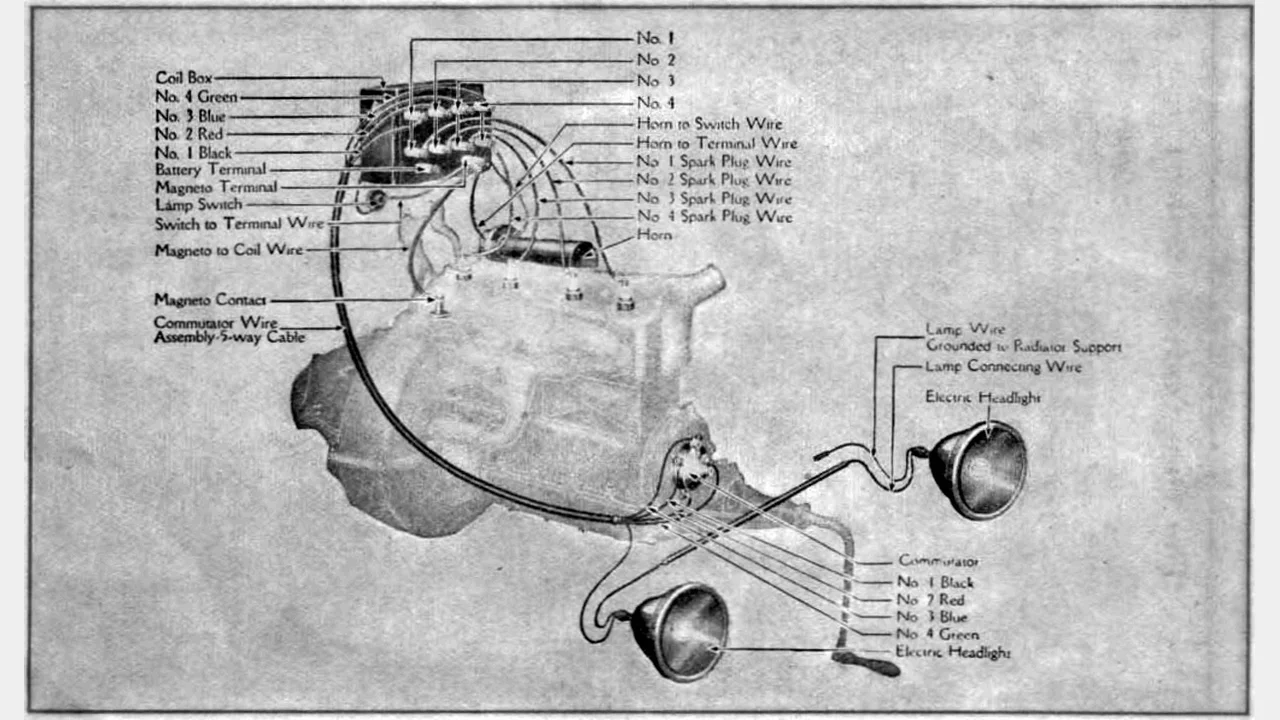
The Model T Ford ignition system is one of the most misunderstood parts of early motoring, largely because it does not behave like a modern twelve-volt setup. Owners and researchers often ask what makes it tick, how it starts, and why cranking speed or battery state of charge affects the way the coils buzz. This overview explains the essential answer: a low-tension magneto and trembler coil arrangement that fires each cylinder on a timed alternating current rather than a conventional distributor-triggered high-tension spark. Understanding that distinction clears up most confusion about the Model T ignition system.
Essential answer
The Model T Ford ignition system is fundamentally a low-tension alternating-current arrangement built around four vibrating, or trembler, coils and a flywheel magneto. In stock form, the driver selects either battery or magneto through the ignition switch. Current passes through one of the four coils, where a set of contact points opens and closes rapidly. That interruption produces a high-voltage pulse in the coil’s secondary winding, which is routed to the correct spark plug by the timer, a rotating low-voltage distributor mounted at the front of the engine.
On magneto, the flywheel’s permanent magnets generate AC as the engine turns, so cranking speed directly influences coil performance and spark energy. On battery, a direct-current source feeds the coils through the switch, making starting easier but changing the heat and buzz characteristics of each unit. Diagnostic checks therefore begin with battery state of charge, switch position, timer contact condition, and whether the coils buzz consistently. Unlike a modern coil-on-plug or distributor system, the Model T’s spark is not generated by a single central coil triggered by points in a cam-driven housing; each cylinder has its own trembler coil that operates continuously while the timer closes that cylinder’s circuit.