Ignition system check and faults
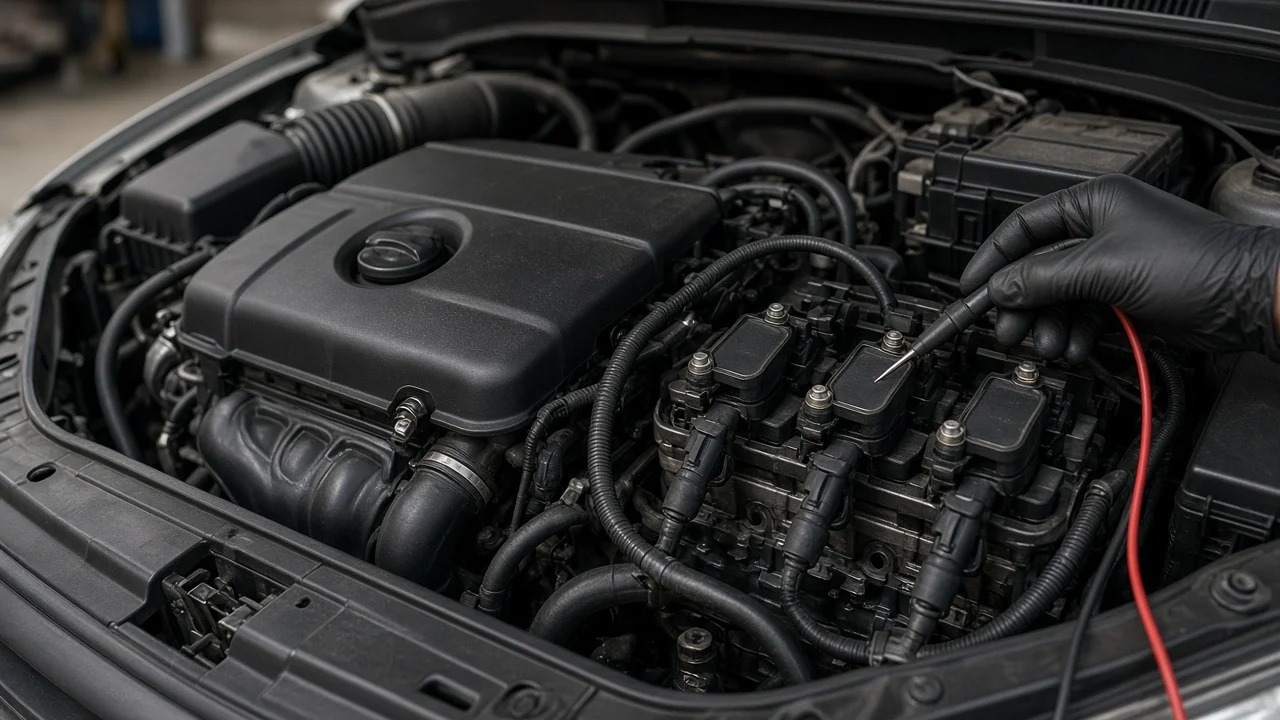
A no-start or rough-running engine often points to an ignition system check, yet the symptom can overlap with fuel delivery, battery state of charge, and starter circuit behavior. The ignition system’s job is to create a hot, well-timed spark at each plug while the engine cranks. When that spark is weak, absent, or occurring at the wrong moment, combustion suffers and the vehicle may stall or refuse to start. An ignition system fault is not automatically a failed coil or module. Battery voltage, cranking speed, switch inputs, wiring, and sensor signals all shape the result, so the first step is to separate a genuine spark problem from a no-crank or fuel-related condition before replacing parts.
Direct answer
An ignition system check examines whether the primary side can build a magnetic field and whether the secondary side can release enough voltage to jump the plug gap at the correct time. Begin by confirming the engine cranks at normal speed and that the battery has adequate state of charge, because slow rotation reduces coil saturation and mimics a weak spark. Then check for spark at a plug, not only for trouble codes. The result is usually described as strong and steady, weak or intermittent, or completely absent, and each finding points toward a different area of the circuit.
A missing spark during cranking can come from a failed crank sensor signal, an open coil circuit, a bad ignition switch, fuse or relay, or a wiring fault. A weak spark may indicate high secondary resistance, a worn plug, carbon tracking, or low supply voltage at the coil. Because some systems are distributor-based, others use coil packs, and many use coil-on-plug designs, an ignition system fault requires a vehicle-specific wiring diagram and test criteria. The direct answer is therefore conditional: the check identifies which part of the ignition chain has lost its signal, supply, or output, but the code or observed spark alone does not name the failed component.
Interpreting symptoms and test results
A crankshaft position sensor or camshaft position sensor fault often looks like a dead ignition system, because the module needs those signals to time each spark. If the engine cranks steadily but no spark appears at any cylinder, check whether injector pulse is also missing. The absence of both spark and fuel can point to a shared input such as a crank sensor or ignition switch circuit, while spark loss with normal fuel delivery is more consistent with a coil, module, or secondary-side problem. Intermittent stalling after heat soak, for example, may point to a coil or module that fails once warm, although a wiring connector with rising resistance can behave the same way.
Do not treat a stored misfire or coil-circuit trouble code as proof that a coil needs replacement. Codes report electrical behavior, not physical condition. A P0300-series code may occur because of a fouled plug, an intake leak, low compression, or a failing injector, while a coil-circuit code can be caused by connector damage or a chafed harness. Testing the primary resistance, checking for battery voltage at the coil connector, and observing whether spark moves with the suspected coil are discriminating steps. Each result narrows the fault: an open primary reading supports a failed winding, while good resistance with no spark suggests the module, trigger signal, or ground side has failed. Manufacturer-dependent codes and coil designs require confirmation with the specific vehicle’s service information before condemning any part.