Mobile Pre-Purchase Vehicle Inspections in Edmonton: What to Check Before You Book
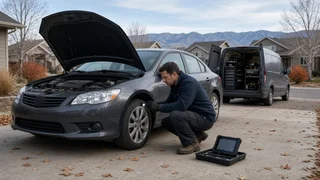
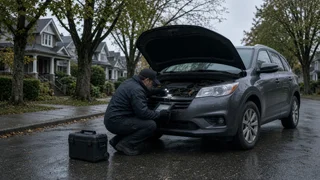
If you are buying a used vehicle in Edmonton, a mobile pre-purchase inspection is usually worth arranging, particularly for private sales or vehicles you cannot easily take to a shop. A mobile inspector comes to wherever the vehicle is parked, such as the seller's driveway or a dealer lot, and gives you an independent report on its condition before you pay. Two conditions change that answer. First, a mobile inspection is a buying aid, not a provincial certificate. If the vehicle needs an official inspection for registration, such as an out-of-province or salvage inspection, you will usually still need a licensed facility. Second, a roadside inspection without a hoist sees less of the underside than a shop inspection does. That matters in a market where road salt and winter driving take a toll on frames, brake lines and suspension parts.
What a mobile pre-purchase inspection typically covers
Each provider sets its own inspection criteria, so the scope differs from one service to another. A thorough mobile inspection generally includes the following:
• Vehicle identification: confirming the VIN (vehicle identification number) on the dash, door jamb and paperwork match, and noting any signs of tampering. • Exterior and body: panel gaps, paint mismatch, filler, overspray and rust, especially on rocker panels, wheel arches and door bottoms. • Engine bay: fluid levels and condition, visible leaks, belts, hoses, battery condition and corrosion. • Diagnostic scan: reading stored and pending fault codes through the OBD-II port and checking whether readiness monitors are complete. Recently cleared codes can hide a problem. • Tires, brakes and suspension: tread depth and wear pattern, visible brake pad and rotor condition, and worn bushings or leaking shocks where they can be seen. • Interior and electrical: warning lights, HVAC and heater output, windows, locks, infotainment, and signs of water intrusion. • Road test, if the seller permits it: engine and transmission behaviour, braking, steering, noises and vibration. • A written or digital report, usually with photos, that separates safety issues from wear items and cosmetic findings.
What a mobile inspection may not cover
The main limitation is access. Without a hoist, the inspector may only see the underside from a creeper or with a camera. Frame rust, exhaust condition, fuel and brake lines, and oil leaks above the subframe can all be harder to assess. Snow, slush or a gravel lot can make this worse. Tests such as compression checks, cooling-system pressure tests or removing wheels to measure brakes are often outside a standard mobile package. Ask what is included before you book.
If the report flags something that needs a closer look, such as a suspected leak, a transmission concern or heavy underbody corrosion, a follow-up inspection at a shop is a reasonable next step before you commit.
Pre-purchase inspection versus provincial inspections in Alberta
Buyers often confuse a pre-purchase inspection with a safety inspection required for registration. They serve different purposes.
• Pre-purchase inspection: optional, for the buyer's benefit, with criteria set by the provider. It produces a condition report, not a government test certificate. • Out-of-province inspection: generally required before a vehicle last registered outside Alberta can be registered in the province. It is performed by a licensed facility and technician against provincial standards. If the vehicle fails, repairs and a retest are needed before the inspection certificate is issued. • Salvage and rebuilt inspections: vehicles with a salvage history must pass a specific inspection process before they can return to the road. The vehicle's status should be clear in its history and registry records. • Commercial vehicle inspections: certain commercial vehicles fall under a separate inspection program.
If you are buying a vehicle that needs one of these official inspections, ask the mobile provider directly whether they can perform it and issue the certificate. Many mobile services cannot. Confirm the current requirements with an Alberta registry agent before buying, because the obligation to pass the inspection can affect what you are really paying.
On emissions: Alberta does not run a routine emissions test program for registering personal passenger vehicles, unlike some other jurisdictions. A pre-purchase scan can still be useful here. Emissions-related fault codes and incomplete readiness monitors can point to catalytic converter, oxygen sensor or evaporative system problems that would be costly to fix.
Edmonton-specific things to ask the inspector to focus on
• Cold start: ask the seller not to warm the vehicle before the inspection. A cold start can reveal hard starting, rough idle, lifter or timing chain noise, and smoke that disappears once the engine is warm. • Corrosion from road salt: underbody, brake and fuel lines, subframe mounts, exhaust hangers and the lower edges of body panels. • Block heater and battery: whether a block heater is fitted and works, the condition of the cord, and battery health. Both matter for winter reliability. • Heating and defrost: heater output, blower speeds and rear defrost. • Winter wear: curb damage to wheels and suspension, steering alignment, and the condition of winter tires if they are included in the sale. • Gravel and stone damage: windshield chips and cracks, front-end paint damage and headlight lenses.
How to choose a mobile inspection service
• Qualifications: ask whether the inspector is a certified technician, such as a journeyperson automotive service technician, and what experience they have with your type of vehicle. That covers diesel, hybrid, EV, European or heavy-duty trucks. • Written scope: get a checklist or sample report so you know what is and is not inspected. • Tools: confirm they bring a diagnostic scanner suited to the make, and ask how they assess the underside without a lift. • Road test policy: ask whether a road test is included and how they handle a seller who refuses one. • Report format and timing: photos, a severity rating for each finding, and delivery soon enough to make a decision before the seller moves on. • Independence: the inspector should have no connection to the seller or dealer and no interest in selling you repairs. • Service area and scheduling: confirm they cover the seller's location, including areas outside the city, and can work around daylight and weather.
Comparing quotes
Prices for mobile inspections vary by provider, vehicle type and scope, and change over time. When comparing quotes, check that each one is current and stated in Canadian dollars. Confirm whether GST is included, whether there are travel or distance fees for locations outside Edmonton, and whether surcharges apply for trucks, luxury, diesel, hybrid or electric vehicles. A lower price can mean a narrower checklist, no road test or no diagnostic scan, so compare what each quote includes rather than the headline figure. Ask about cancellation terms too, since private sellers sometimes sell the vehicle before your appointment.
Factor | Mobile inspection | Shop inspection; Location | At the vehicle | Vehicle must be driven to the shop; Seller cooperation needed | Access to the vehicle and keys | Seller must allow the vehicle to be taken away; Underbody visibility | Limited without a hoist | Full view on a lift; Weather | Snow, cold and darkness can limit the inspection | Indoor, less affected; Deeper tests | Often outside the standard package | Easier to add on the spot; Official provincial certificate | Often not available | Possible at a licensed facility
Preparing for the appointment
• Get the VIN from the seller first and run a vehicle history and lien check, so you don't pay for an inspection on a vehicle you would reject on paperwork. • Agree a time with the seller and ask them to keep the engine cold. • Confirm the vehicle will be on reasonably level, accessible ground, ideally in daylight. • Ask the seller to have service records, the registration and any recent repair invoices on hand. • Tell the inspector about any concerns, such as a noise you heard on a test drive or a known issue with that model and powertrain.
Using the report to decide
Sort the findings into three groups: safety-critical problems, near-term maintenance and cosmetic issues. Get repair estimates for the first two groups and weigh them against the asking price. Use documented findings to negotiate, ask the seller to fix specific items before the sale, or walk away if the costs or risks outweigh the value. If the vehicle needs a provincial inspection to be registered, factor in the chance of a failed inspection, the repairs needed to pass a retest, and the time the vehicle may sit off the road. A clean report lowers your risk but cannot guarantee future reliability, so set aside a maintenance budget for any used purchase.