Mercury Comet: Generations, Body Styles and How the Comet Car Differs
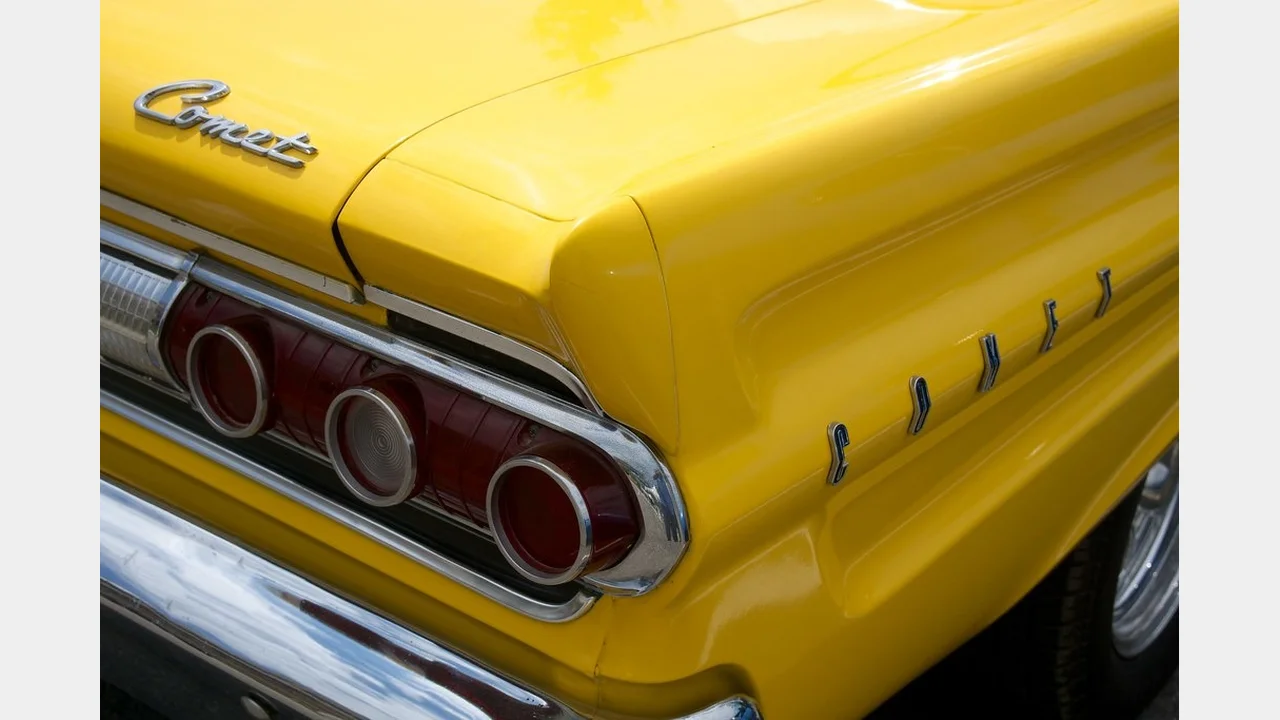
When people search for the Comet car in the US, they usually mean the Mercury Comet. Ford's Lincoln-Mercury division sold it across two production runs, from the 1960 model year into the late 1960s and again from 1971 to 1977. The name covered very different cars over that time. Early Comets were compacts derived from the Ford Falcon. Mid-1960s Comets grew into intermediates related to the Ford Fairlane. The 1970s revival returned to compact size on the Ford Maverick platform. Any statement about a Comet, whether about size, engines or parts, depends on which model year and generation is meant.
What the Mercury Comet Is
The Comet was Mercury's entry into the smaller-car segment that American manufacturers expanded around 1960. It began as a compact project linked to Ford's Edsel brand. After Edsel was discontinued, the car went to Mercury dealers. For its first couple of model years it was marketed simply as the Comet, and Mercury branding was added later. Throughout its life the Comet shared its underlying engineering with a Ford counterpart. Mercury set it apart with its own styling, trim and equipment, positioning it as a somewhat more upscale alternative to the related Ford.
Generations at a Glance
Period | Size class | Related Ford platform | General character; Early 1960s (from 1960) | Compact | Ford Falcon | Longer-wheelbase, more ornate take on the Falcon, with distinctive rear styling in the earliest years; Mid-1960s (to 1965) | Compact | Ford Falcon | Expanded lineup with sportier variants and the arrival of V8 power; 1966 to 1969 | Intermediate | Ford Fairlane | Larger car, Cyclone performance models, and from 1968 the Comet name narrowed to an entry model as Montego took over the range; 1971 to 1977 | Compact | Ford Maverick | Revived economy-oriented compact, later replaced by the Mercury Zephyr
Transition years are worth checking against a specific car. Trim names and lineup structure shifted from season to season, especially in the late 1960s.
Body Styles and Trim Levels
Body style availability depended on the generation. Early compact Comets came mainly as two-door and four-door sedans, with station wagons offered in the early years. As the line developed in the early 1960s, Mercury added hardtop coupes and convertibles, often tied to sportier trim levels. The intermediate-era Comet range covered sedans, hardtops, convertibles and wagons across several trims. The 1970s Maverick-based Comet was a more focused lineup of two-door and four-door sedans.
Trim naming changed frequently. Enthusiasts most often recognize the Cyclone name, which began as a sporty Comet variant in the mid-1960s and became Mercury's performance line in the intermediate era. Upscale designations such as Caliente and Capri also appeared during the 1960s. In the 1970s, a GT appearance package was offered on the compact Comet. Badges are easy to swap, so a car's original trim should be confirmed from its identification data rather than its emblems.
Powertrain Configurations
Every Comet generation used a front-engine, rear-wheel-drive layout. Inline six-cylinder engines formed the base of the range in all eras. V8 engines arrived during the early-1960s compact years. The intermediate generation made larger V8s available, with the top Cyclone models offering big-block power. The 1970s compact Comet paired inline sixes with an optional small-block V8. Manual and automatic transmissions were offered depending on year and engine. Engine availability and output varied by model year, so use the specific car's records for exact figures.
How the Comet Differs From Its Ford Relatives
Styling: Mercury gave each generation its own front and rear treatment, and early Comets were visibly more decorated than the Falcon. Dimensions: Early Comets used a longer wheelbase than the contemporary Falcon, giving them a somewhat larger presence. Positioning: Comets were generally trimmed and priced a step above the matching Ford, in keeping with Mercury's place in the lineup. Mechanical sharing: Engines, transmissions and many chassis components were shared with the related Ford, which affects parts availability today.
Practical Points for Buyers and Owners
Most Comets on the road today are collector or hobby cars. Their appeal and practicality vary widely by generation. The mechanical overlap with the Falcon, Fairlane and Maverick usually helps with sourcing drivetrain and chassis parts. Mercury-specific trim, lenses and body panels can be harder to find. As with most unibody cars from this period, the structure's condition matters more than cosmetics, so inspect floors, rails and lower body areas for corrosion and past repairs.
If a car is offered as a Cyclone, GT or other desirable variant, compare the vehicle identification number and data plate with the claimed model year, body style, engine and trim before relying on the description. Market specification can also matter. A Comet sold outside the US may have differed in equipment or assembly, and its documentation should be read with that in mind.
Summary
The Mercury Comet was Mercury's Ford-based smaller car, sold from 1960 to 1977 with a gap at the start of the 1970s. It moved from Falcon-based compact to Fairlane-based intermediate and back to a Maverick-based compact, so identifying the generation is the first step to understanding any particular Comet. Within each generation, body style, trim level and powertrain determine how a specific car looks, drives and compares with its Ford sibling.