How to Measure Engine Oil Level Correctly
The short answer
To measure engine oil level, park the vehicle on level ground and switch the engine off. Wait the settling time your manufacturer specifies, then pull the dipstick and wipe it clean. Reinsert it fully, withdraw it again, and read where the oil film ends against the minimum and maximum marks. The level is acceptable when it sits between those marks. If it is at or below the minimum, top up with the oil grade the manufacturer specifies.
That procedure covers most vehicles with a conventional dipstick. It does not apply to every car. Some models have no dipstick and report oil level electronically. Manufacturers also differ on whether the engine should be warm or cold for the check. The owner's manual for your specific model year, engine and market is the authority on both points.
Dipstick method, step by step
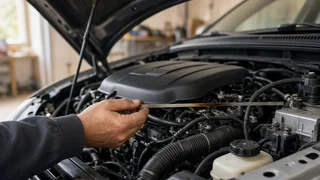
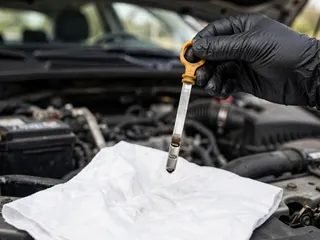
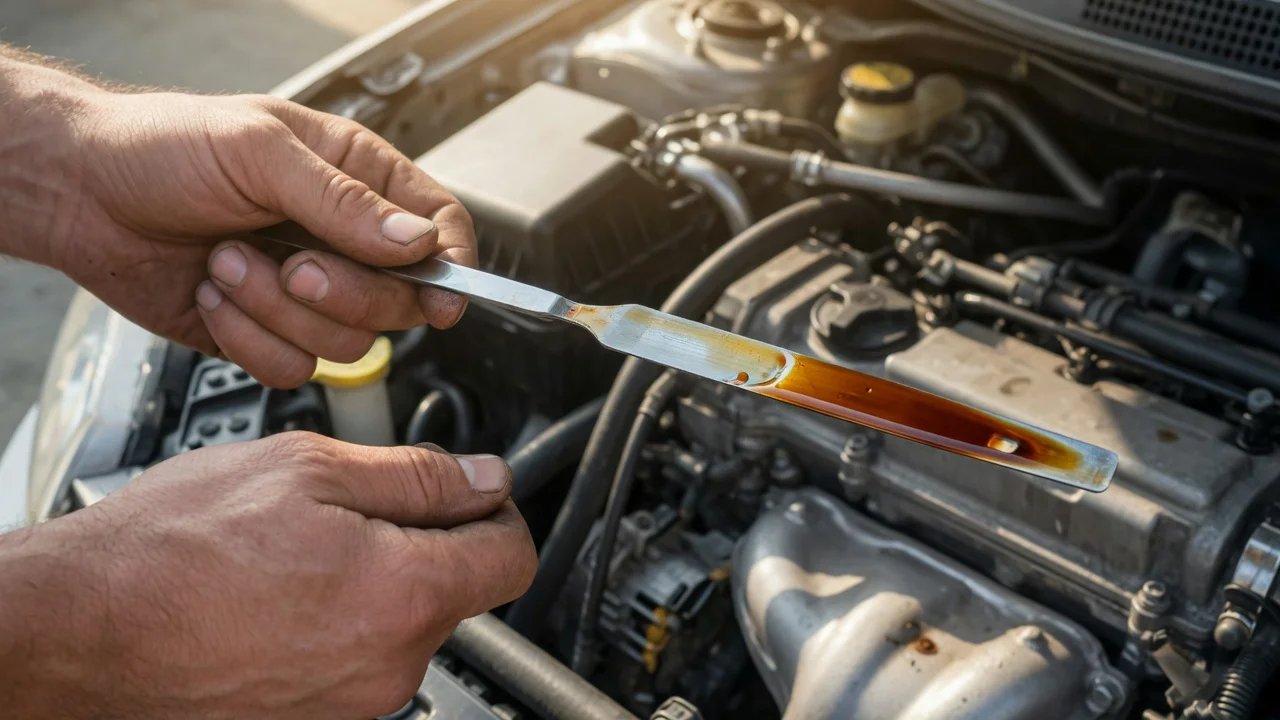
Park on a flat, level surface. A slope tilts the oil in the sump and gives a false reading. Turn the engine off and wait for oil to drain back into the sump. The waiting time and the preferred engine temperature vary by manufacturer, so follow the manual. Open the hood and find the dipstick. Its handle is usually brightly coloured or marked with an oil-can symbol. Pull the dipstick out and wipe it clean with a lint-free cloth or paper towel. Push it back in until it seats fully, then pull it out again. Hold it level or tip down and read where the oil film stops relative to the minimum and maximum marks. If the level is low, add a small amount of the specified oil through the filler cap. Wait briefly and recheck. Repeat until the level is within range, without going past the maximum mark. Reseat the dipstick firmly and refit the filler cap.
Reading the marks
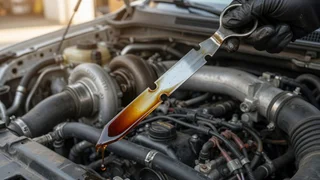
Dipsticks mark the safe range with two holes, two notches, the letters L and H or MIN and MAX, or a cross-hatched band. Anywhere between the lower and upper limits is within specification. The amount of oil represented by the gap between the marks differs between engines. Check the owner's manual for that figure rather than guessing how much to add.
If the oil streaks unevenly up the dipstick, wipe it and take a second reading. This often happens when oil clings to the dipstick tube.
Overfilling is also a fault. Oil above the maximum mark should be corrected, so add oil gradually.
Vehicles without a dipstick
Some vehicles measure oil level with an electronic sensor and show the result in the instrument cluster or infotainment menu instead of on a dipstick. The conditions for a valid reading are set by the manufacturer. They may include engine temperature, a level surface and a period with the engine running or switched off. Whether a given car uses this system depends on the model, generation and engine, so confirm it in the owner's manual.
Information gaps to resolve for your vehicle
No model-specific specifications were available for this guide. Before relying on a reading, confirm these details for your exact vehicle: • whether the check should be done warm or cold; • how long to wait after shutting the engine off; • the oil volume between the dipstick marks; • the required oil grade and specification; • if there is no dipstick, how the electronic oil level display is accessed