Royal Enfield Engine Oil Level: How to Read It Correctly
The short answer
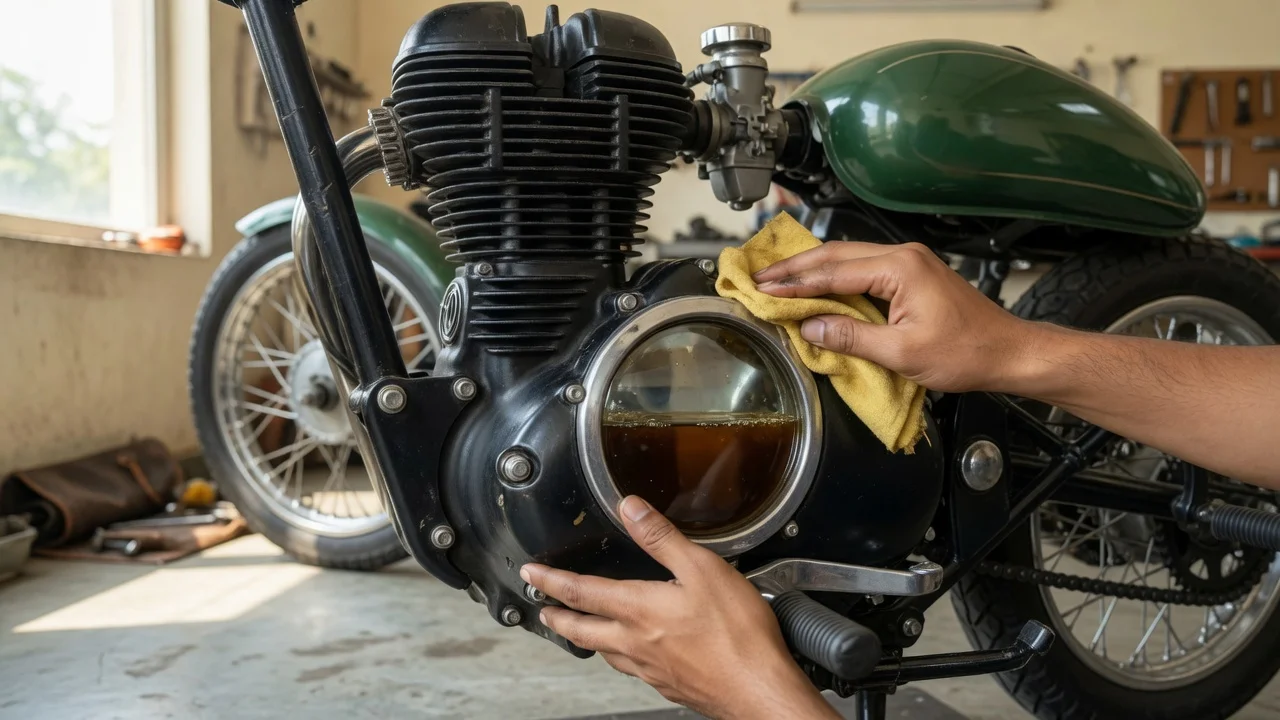
On a Royal Enfield, the engine oil level should sit between the minimum and maximum marks on the level indicator. Depending on the model, that indicator is either a sight window on the engine casing or a dipstick. Take the reading with the motorcycle upright on level ground, not leaning on its side stand, after the engine has been run and then left to settle for a few minutes. A level near the upper mark, without exceeding it, is the usual target. If it is below the minimum mark, top up with the grade the manufacturer specifies for your model.
What changes the answer: your specific model
Royal Enfield builds several engine families, including the older single-cylinder engines, the newer 350 cc single-cylinder platform, the 411 cc and 450 cc adventure engines, and the 650 cc twins. They differ in oil capacity, recommended oil grade, the type of level indicator, and the exact checking procedure, such as how long to idle or wait before reading. This guide does not have verified, model-by-model figures for capacity or grade, so those details are not stated here. Treat the owner's manual or an authorised service centre as the authority for your motorcycle's model year and market.
How to check the level
1) Ride or idle the engine briefly so the oil circulates, then switch it off. 2) Wait a few minutes so oil drains back to the sump. The manual gives the exact interval for your model. 3) Hold the motorcycle vertical on flat ground, or use a paddock or centre stand if one is fitted. A side-stand reading will be misleading. 4) Sight window: look at where the oil sits between the upper and lower marks. 5) Dipstick: remove it and wipe it clean. Then reinsert it the way the manual describes, either screwed in or just resting on the threads, and read the level on the stick. 6) If the level is low, add a small amount of the specified oil, wait, and recheck. Repeat until the level is within range.
Why both too little and too much matter
Running below the minimum mark reduces lubrication and cooling, which increases wear and the risk of engine damage. Overfilling past the maximum mark is also undesirable. Excess oil can raise crankcase pressure and may push oil into the breather system. If the level is well above the upper mark, draining the excess is generally the safer course than riding on.
Information gaps to resolve before acting
No verified specifications were available for this article. It therefore does not give oil capacity, viscosity grade, specification standard, change intervals or normal consumption rates for any Royal Enfield model. If you are topping up or changing oil, confirm those figures for your exact model and model year in the owner's manual. If your engine needs frequent top-ups, have it inspected at an authorised service centre rather than relying on a general guide.