Diesel Engine Oil Dipstick: How to Read It and What Diesel Owners Should Know
The short answer
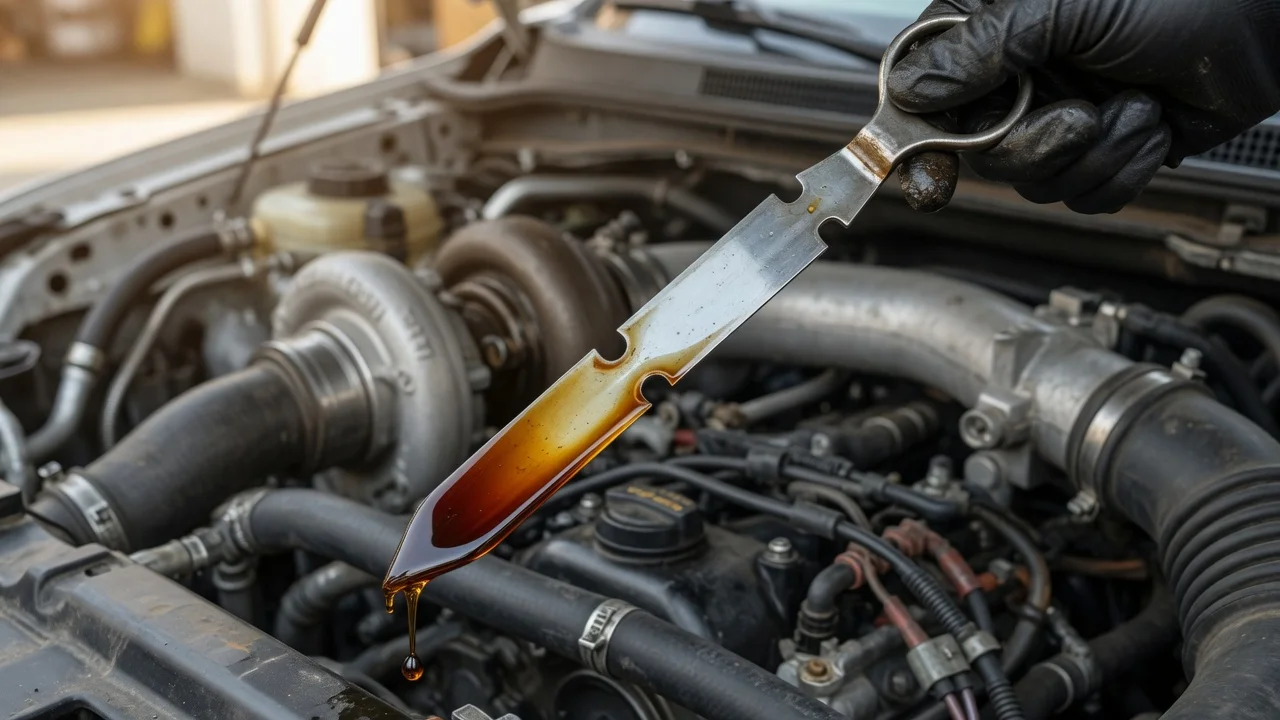
A diesel engine's oil dipstick does the same basic job as one on a petrol engine. It is a calibrated rod that sits in a tube reaching into the oil sump, and it shows whether the oil level is between the minimum and maximum marks. Three points matter more on a diesel. The oil turns black quickly, so its colour on the stick says little about its condition. The level can rise over time, which may mean fuel is diluting the oil. And some newer diesel vehicles have no dipstick at all and report the oil level electronically.
The markings, the oil volume between the marks and the recommended checking procedure all depend on the engine and model year. The owner's manual for the specific vehicle is the authoritative reference. This guide covers principles common to diesel engines rather than figures for any particular model.
What the markings mean
Most dipsticks have two reference points: a lower minimum mark and an upper maximum mark. Depending on the manufacturer, these may be dots, notches, holes, the letters L and H or MIN and MAX, or a cross-hatched band between two lines. Oil anywhere between the two marks is generally acceptable. The amount of oil needed to move from minimum to maximum varies by engine and is not stated here because no model-specific data was supplied.
Some diesel engines, particularly those with a diesel particulate filter, have an additional mark above the maximum line. Where it is present, it shows a level at which the oil should be changed because it is likely being diluted by fuel. Whether a given engine has this mark depends on the manufacturer and engine family.
How to check the level correctly
Park on level ground so the reading is not skewed by the vehicle's angle. Switch the engine off and wait for the oil to drain back into the sump. Manufacturers specify different waiting times, and some specify checking with the engine warm. Pull the dipstick out, wipe it clean with a lint-free cloth, and push it fully back into the tube. Pull it out again and read where the oil film ends on the marked section, holding the tip downward so oil does not run up the stick. If the level is near or below the minimum, top up with the oil specification listed for the engine. Add a little at a time and recheck, since overfilling is also harmful. Reinsert the dipstick fully so it seals the tube.
Why diesel oil looks black on the dipstick
Diesel combustion produces soot, and part of it ends up in the engine oil. Diesel-rated oils contain dispersant additives that keep these particles suspended, so they can drain out at the next oil change instead of settling as sludge. As a result, diesel oil often looks dark or black soon after a change. This is normal and does not by itself mean the oil is worn out. Change intervals should follow the manufacturer's schedule or the vehicle's service indicator, not the oil's colour.
Some signs on the dipstick do deserve attention. A milky or creamy appearance can point to coolant contamination. A gritty texture or metallic particles suggest wear or debris. A strong smell of diesel fuel, or oil that seems unusually thin, can indicate fuel dilution. These are signs to investigate, not diagnoses. Confirming the cause needs professional inspection or an oil analysis.
When the oil level goes up instead of down
Many owners expect oil levels to fall between services, so a rising level on a diesel can come as a surprise. One common cause on engines with a particulate filter is fuel dilution during filter regeneration. To burn off trapped soot, some engines inject extra fuel late in the combustion cycle. Part of that fuel can get past the piston rings into the sump, especially if regenerations are often interrupted by short journeys. The diluted oil protects the engine less well, and an overfilled sump can cause further problems. A level that keeps rising between checks is a reason to have the vehicle looked at and the oil changed. How prone a particular engine is to this varies by design and driving pattern, and no comparative data was supplied for specific models.
Diesels without a dipstick
Some recent diesel cars and vans have no conventional dipstick. They use an electronic oil-level sensor, with the reading shown on the instrument cluster or infotainment screen. The check procedure for these vehicles, including any required engine temperature or waiting time, is set by the manufacturer and is described in the owner's manual. Whether a given model has a physical dipstick depends on its model year, engine and market, so it is worth confirming for the exact vehicle.
Replacing a lost or damaged dipstick
Dipsticks are not universal. The length of the stick and the position of its markings are calibrated to a particular engine, dipstick tube and sump. A dipstick from a different engine can fit the tube and still give a misleading reading. A replacement should be matched to the specific engine, normally by part number or vehicle identification details, rather than chosen by appearance or length alone. This guide does not give part numbers or fitment data because none were supplied.