How to Check Your Engine Oil: Reading the Dipstick and Whether to Check Hot or Cold
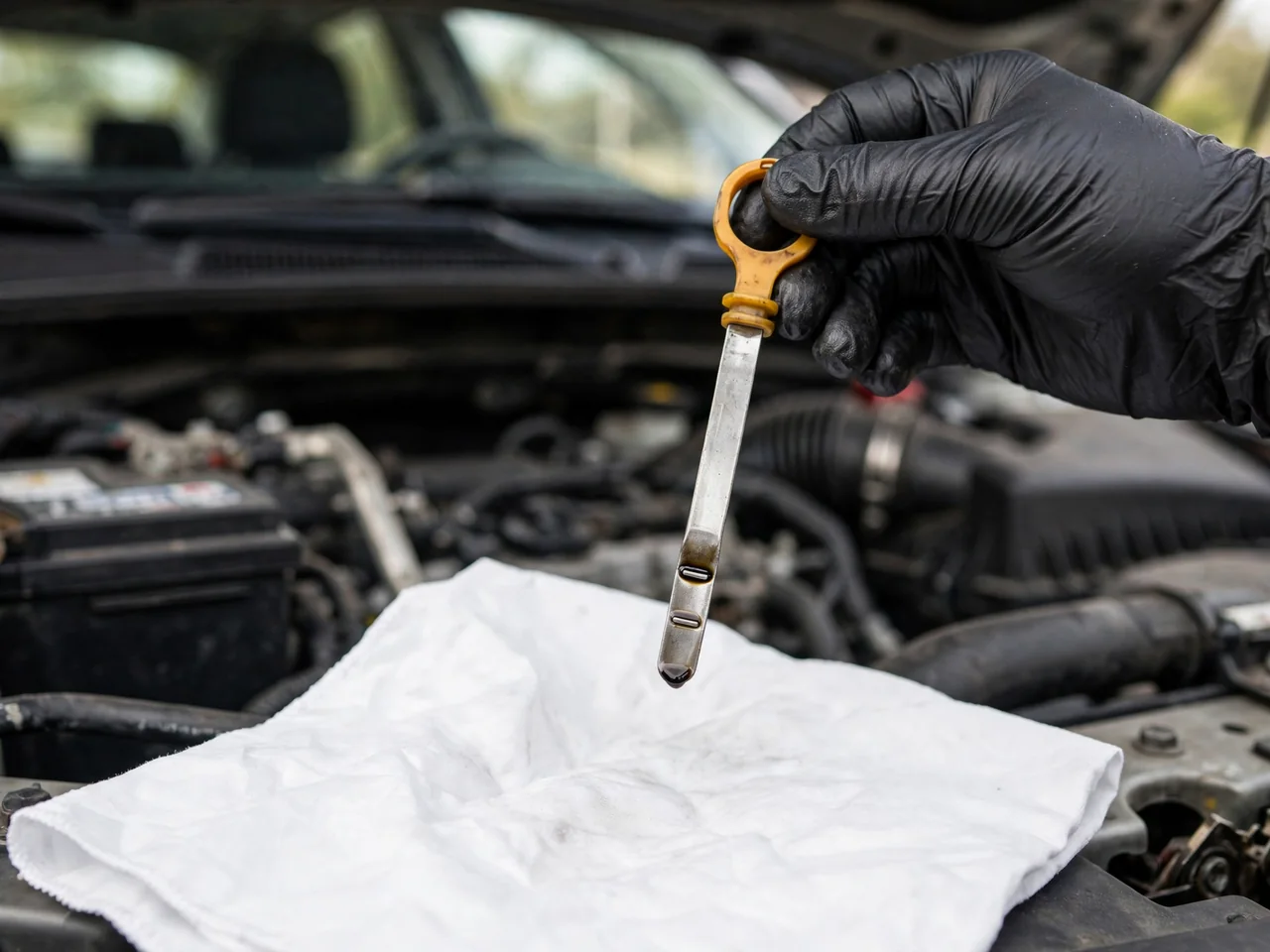
Checking engine oil takes only a few minutes, and it's one of the most useful habits a driver can have. The dipstick shows how much oil is in the engine and gives you a quick look at its condition. Some newer cars report the level electronically instead. Knowing how to read either one, and when to check, helps you catch small problems early.
What the Engine Oil Dipstick Is and Where to Find It
The engine oil dipstick is a thin metal or plastic rod that reaches down into the oil pan and works as a simple manual gauge. When you pull it out, the film of oil on its tip shows the level and gives you a sample of the oil itself. On most cars it has a brightly colored loop or T-shaped handle, often yellow or orange, placed where it's easy to reach. The location, handle color, and marking style vary by vehicle, so your owner's manual is the reliable reference.
Near the tip you'll find two reference points. They may be small dots or holes, a cross-hatched band, MIN and MAX lines, or the letters L and H. The space between them is the acceptable operating range. Make sure you're holding the right stick, because many cars with automatic transmissions have a separate transmission fluid dipstick, and the coolant, brake, and washer reservoirs have their own caps. Some newer cars have no oil dipstick at all and use an electronic readout, which is covered later.
Step-by-Step: How to Check Your Car's Engine Oil
Start by parking on level ground, because even a gentle slope can tilt the oil in the pan and push the reading up or down. Switch the engine off and give the oil time to drain back from the upper engine into the pan. If you pull the dipstick right after shutdown, it usually shows less oil than is really there. Once the oil has settled, pull the dipstick all the way out and wipe the tip clean with a lint-free cloth or paper towel.
Push the clean dipstick back in until it seats fully, then pull it out again and read the level right away. Hold it level or tip-down so oil doesn't creep up the stick and make the level look higher than it is. While it's out, check the oil's color, clarity, and texture, and note anything unusual, such as a milky tint, grit, or a fuel smell. Then put the dipstick back fully, make sure the filler cap is tight, and keep your hands and cloths away from belts and hot surfaces.
Reading the Oil Level: What the Marks Mean and When to Top Up
If the oil film ends anywhere between the lower and upper marks, the level is generally within the acceptable range. Ideally it sits near the upper mark rather than exactly on it, which leaves a comfortable margin until the next check. On many engines the gap between the marks equals roughly a quart or a liter. That's only a rule of thumb, though, and your owner's manual states what applies to your engine. When the level is near or below the lower mark, it's time to add oil.
Add oil through the filler cap using the grade and specification listed in the manual. Pour a small amount at a time instead of emptying a whole container. Wait a few minutes for the oil to reach the pan, then check again before adding more. Too much oil causes its own problems: moving engine parts can whip the excess into foam, extra pressure can strain seals, and some engines may smoke or run poorly. If you've overfilled, have a professional fix it rather than driving that way. If the level drops noticeably between checks, the engine may be burning or leaking oil, so have it inspected.
Hot or Cold? Running or Off? Getting an Accurate Reading
The engine should always be off when you pull the dipstick. A running engine keeps oil moving through its passages and filter, so much of the oil is away from the pan and the reading comes out misleadingly low. It also puts your hands near a spinning fan, drive belts, and hot parts. Beyond that, two approaches are widely accepted. You can check cold, before the first start of the day when all the oil has settled. Or you can check warm after a short drive, then wait several minutes for the oil to settle.
Readings differ slightly between the two because warm oil expands a little and some may still be draining back. Using the same method every time matters more than which one you choose, because it makes changes between checks meaningful. Some manufacturers call for a specific condition, often warm and settled, and that instruction overrides general advice. When checking a warm engine, remember that nearby exhaust parts can be very hot. Never open the cooling system while it's hot, because steam can burn you. Use a cloth to grip the dipstick handle if it feels warm.
Cars Without a Dipstick: Using the Electronic Oil Level Display
Many recent vehicles replace the dipstick with an oil level sensor and show the reading in the instrument cluster, on the infotainment screen, or in a service menu. These systems usually need certain conditions for a valid reading. The car has to be on level ground, the engine has to be running or off depending on the design, and the oil needs time to settle. If those conditions aren't met, the car may show a message asking you to wait or saying the level can't be measured right now.
To find the readout, you usually browse a vehicle, service, or settings menu using the steering wheel buttons or the touchscreen. Menu names and steps differ widely by make, so follow your manual. These systems have limits. A sensor reports the level but not the oil's color or contamination. If the sensor itself fails, the display may show an error instead of a reading, which calls for a check at a dealership or repair shop. On any car, treat a low oil pressure or oil level warning light as a reason to stop safely and check, not as a reminder for later.
How Often to Check Oil and Warning Signs Worth a Professional Look
Checking once a month is a sensible habit, and it's worth checking before long trips too. Older or higher-mileage engines, and any car known to use oil, need more frequent checks. Keep a simple log of each reading and how much oil you added. A clear trend is much easier for a mechanic to judge than a rough memory. Some signs call for a professional inspection: milky or foamy oil, metal particles, a strong fuel smell, very thick or sludgy oil, or a level that rises on its own.
The dipstick has limits. It can't show internal wear, measure oil pressure, or tell you how much useful life the oil has left. Oil level and oil pressure are different things, and an engine can show a reasonable level yet still lose pressure for reasons the stick can't reveal. Warning signs often linked to low oil include a red oil pressure light, ticking or knocking noises, and blue exhaust smoke. If any of these appear while driving, pull over safely, turn off the engine, and call for help rather than driving on.